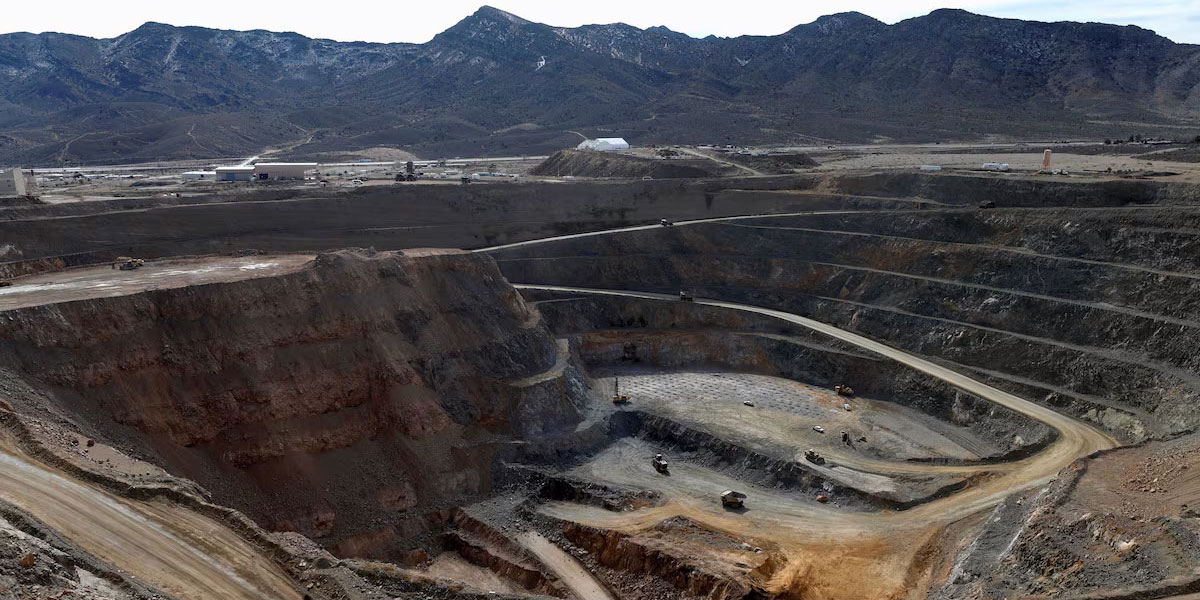
To achieve the mission’s goal, recyclers can reduce the government’s import burden, meet SDG and emission targets, and make India a key contributor to the global circular economy agenda
The intent to set up a Critical Mineral Mission articulated in the 2024-25 Union Budget is a welcome move. It comes at a time when the switchover to Lithium-Ion Battery (LIB) powered vehicles has become a priority area and the projected demand for these batteries – which also finds use in clean energy technologies, laptops, electric vehicles, mobile phones and a host of other products—are growing at an immense pace.
One of the key inputs for LIBs are minerals such as cobalt, copper, lithium, nickel and others rare earths. The prevailing universal wisdom vis-a-vis these rare materials is that not only must new deposits be identified but dependency on virgin output from mines and from imports must simultaneously be reduced by stepping up the recycling of used LIBs and E-waste and recovering precious minerals for re-use. This can plug the gap between supply and demand to a considerable degree.
The focus of the Critical Mineral Mission will be the exploration and mining of these critical minerals, research and development to optimise their use, assessing if any foreign acquisitions of assets will help to bring down costs in the long term, and the financial support to take the objective forward. Also in the matrix is the recycling component to enhance the supply through a circular economy.
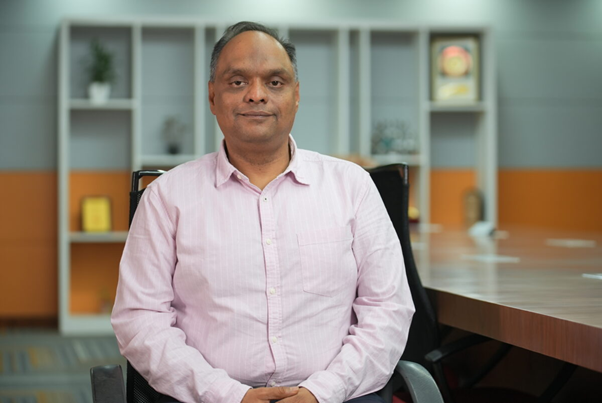 Fig 1: Nitin Gupta, CEO, Attero
Moving Towards A Circular Economy: The Way Forward
For the circular economy in the energy sector to have the desired impact, the government needs to give impetus to the extended producer responsibility (EPR) framework it has conceptualised so that Li-Ion battery recycling works at its optimum level. EPR, in simple terms, is the responsibility mandated for every producer of LIBs for channelisation of end-of-life Li-Ion batteries to an authorised recycler to ensure environmentally sound management and disposal of such waste.
Recovery and reuse of minerals is critical in the manufacture of LIBs. According to Niti Aayog estimates, the advanced cell manufacturing industry in India will need over 193,000 tons per annum of cathode active material (metal oxides including lithium cobalt oxide which goes into the manufacture of LIBs). This can help it produce about 100 GWh per annum of batteries by 2030.
The recycling industry can help in cutting costs and achieving the above target. In its June 2023 presentation--“Mine to market: critical minerals supply chain for domestic value addition in lithium-ion battery manufacturing”—the Niti Aayog makes this pertinent observation: “Policy should focus on scaling up LIB recycling infrastructure with production-linked incentives to complement mining and extraction efforts of critical minerals. This will aid in promoting environmentally sustainable waste management practices, reuse and disposal.”
The presentation notes that critical minerals and active materials used in the production of LIBs account for approximately 33 per cent to 48 per cent of the overall LIB pack cost. And that the synthesis of active materials from critical mineral precursors (cobalt, nickel, manganese, phosphate among others) of discarded batteries and e-waste alone can contribute about 12 per cent domestic value addition in LIB pack manufacturing.
This means that the Mission would do well to prioritise looking at how much critical minerals can be generated through recycling of discarded lithium-ion batteries. It is here that recyclers play an important role, with a heavy responsibility on their shoulders. The metals they retrieve from the end-of-life Li Ion batteries they collect and subject to the recycling process can help the country reduce its import bill.
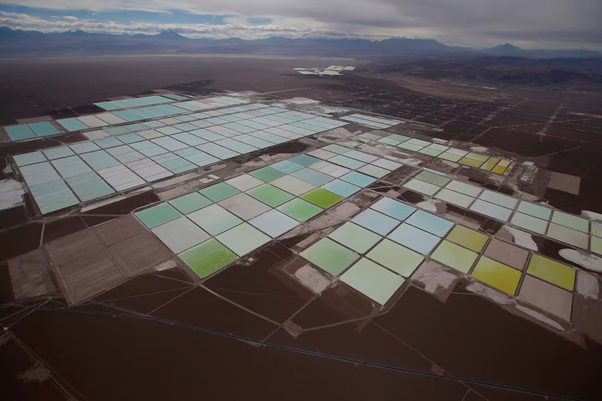 Fig 2: An aerial view shows the brine pools of SQM lithium mine on the Atacama salt flat in the Atacama desert of northern Chile, January 10, 2013. REUTERS/Ivan Alvarado/File Photo/File Photo
Apart from this, recyclers could move to further refine their clean technology methods and introduce state-of-the-art machinery to isolate and salvage critical minerals from the ‘black mass’ retrieved from end-of-life lithium-ion batteries and other e-products.
Processing black mass is at the heart of modern recycling. Its name is derived from the anode & cathode active material obtained once a battery has been shredded and processed for recycling. It is dark in colour and tightly packed with lithium, cobalt, copper, manganese, and nickel. Accurately separating the minerals from other metals, plastics and graphite makes the process a niche which requires specialised hydro chemical processes and is mostly performed through patented methods.
Almost all recyclers in India are already equipped to deal with testing of metals and extraction of black mass. But there is no recycler in India (apart from one) equipped to refine black mass and extract pure battery grade output. Refining black mass needs highly specialised technology, which will ensure high recovery rates (more than 95% with low Capex/Tonne-- less than USD 3500, Low Opex/Tonne) and ability to recycle all battery chemistries, including LFP (lithium, iron, phosphate) batteries which does not contain any cobalt or nickel.
It’s important to note that in the majority of middle and low-income countries, the dominant battery chemistry is LFP (over 75 percent) and less than 25 percent are high cobalt, nickel-containing batteries. Whereas in developed countries due to protectionist policies, high cobalt and nickel containing chemistries will be 60 percent whereas LFP will be 40 per cent. Recycling LFP batteries is very tough as they do not contain any cobalt and nickel and, thus, technologies which recycle LFP battery
Chemistries would be preferred in the Indian context. Other recyclers here could catch up in due course or play a role in the supply chain. Evidently recyclers are all geared up to carve out a larger contribution to the Critical Minerals Mission. In fact, our policy makers should aim to make India the Li-Ion battery recycling hub of the world, thus ensuring significant job creation, GDP growth and access to critical minerals.
Recyclers could contribute in other ways as well., They can supply domestic original equipment manufacturers (OEMs) critical minerals at a lesser cost than what they would be spent on importing them. For this, a government policy to mandate OEMs to use a certain percentage of recycled material would be an impetus.
Additionally, recyclers can aid the government in its mining activities. It can help in the process of testing and refining material that is being explored for minerals in states such as Jammu & Kashmir and Rajasthan.
Besides helping the Mission to achieve its goals, recyclers can help the government to reduce its import burden, meet SDG and emission targets, and most importantly, make India a significant contributor to the global circular economy agenda.
Nitin Gupta is the CEO and Co-Founder of Attero

