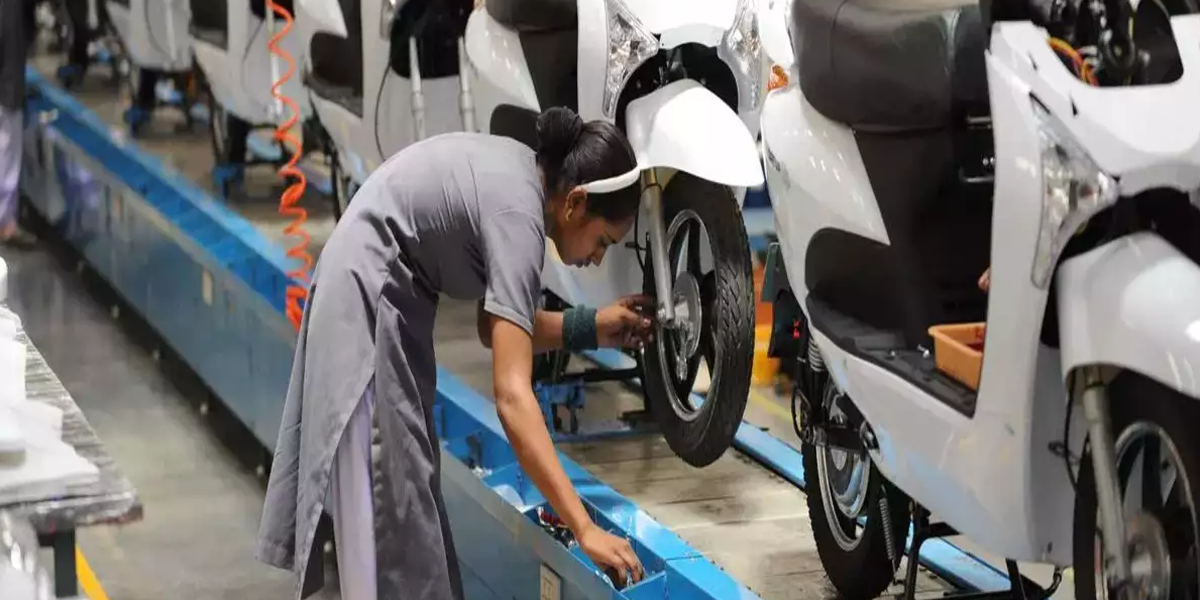
Across the emerging markets of South and Southeast Asia, $1.3 trillion in cumulative capital will be needed to power the EV revolution by 2030
Electric Vehicles have been catching the fancy of millions, registering a substantial growth in sales globally over the years. The rise in emissions and the looming climate crisis have promoted governments to focus more on these clean mobility solutions. In the emerging economies of Asia, increased savings, improved standards of living, smart financing and easy vehicle subscription models are enabling higher adoption of EVs, in turn helping put brakes on declining air quality and health.
As income levels rise and steam gathers among people to own their own vehicle, it makes sense to focus heavily on adoption of cleaner vehicles like EVs especially in the emerging Asian economies, including India. In the next 30 years, the emerging markets of Asia and Africa could account for up to 80% of population growth and 50% of GDP growth globally.
Countries like Vietnam, Thailand, Indonesia, Kenya, Nigeria and India have shown strong economic growth momentum which is likely to elevate a millions of people to the consuming class, thus ratcheting up income levels and the appetite for mobility, according to a recent study. “Across the emerging markets of South Asia and Southeast Asia, $1.3 trillion in cumulative capital will be needed to power the EV revolution by 2030,” the study said.
Emissions arising out of mobility in Europe and the United States have increased manifold amid a rise in Internal Combustion Engine (ICE) vehicles. At present, Asia accounts for 42% of the world’s greenhouse gas emissions but in the entire emission mix, mobility is responsible for a fraction – at around 10%. To prevent emissions from rising, it is crucial to limit them in Asia through increased adoption of clean solutions like EVs.
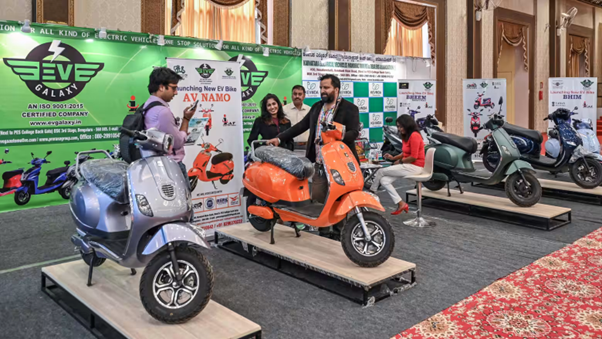 Fig 1: Two-wheelers are expected to lead the transition to battery-powered vehicles in India, the world's biggest market for scooters and motorcycles. © (AFP/Jiji)
Electric Vehicles Adoption In India: Surging Ahead Towards a Greener Future
According to the study, Indians bought over 28 million vehicles in the last financial year, 12.5% more than the previous year. “In Indonesia, motorbike sales grew 19.4% last year, topping six million units. This compares with 15.5 million in US auto-sales across 2023,” it said, predicting that these trends are going to continue.
“For instance, an Indian consumer earning under $12 a day spends only 7% of their income on mobility, while those earning more than $80 a day spend 21% on average. Whether these consumers choose an electric vehicle over an ICE vehicle largely comes down to cost,” it added. Across categories, Asian countries, including India, have witnessed an increase in demand for EVs, thanks to “scaled up manufacturing, innovative finance, EV- specific insurance products, government subsidies and improved charging infrastructure.”
An electric scooter in India emits 36-68% less CO2 than a petrol scooter while an electric three-wheeler produces 33-38% less than its fossil fuel equivalent. “As India’s grid connected renewables increase, electric vehicles will become even greener, and the mobility sector could feasibly achieve close to zero emissions under aggressive investment scenarios by 2050,” the study done by LeapFrog Investments, Temasek, Battery Smart, Mahindra Last Mile Mobility said.
India recently became the world’s third largest three-wheeler market surpassing China, and accounts accounts for 60% of global electric three-wheeler sales – 580,000 units in 2023, an increase of 65% year-over-year). India also ranks second behind China for sales of e-scooters – 880,000 units in 2023, an increase of 40% year-over-year).
Increasing Adoption of Electric Vehicles in Asia
To increase the uptake of EVs in the emerging Asian markets, there is a need for consistent support through green capital for all the segments of the electric vehicle landscape. Doing that has already shown positive results. “While subsidies like Indonesia’s $455 million electric motorcycle subsidy programme and India’s Faster Adoption and Manufacturing of Electric Vehicles (FAME II) programme have helped recent sales momentum, cost and convenience is also promoting adoption,” the study said.
To add to this, entrepreneurs working to further boost the uptake of EVs have also managed to bring significant global capital, requiring continued hand holding. The study advcocates that climate investors can “support and accelerate the electric mobility revolution not only through investments in Original Equipment Manufacturers (OEMs), but through funding for critical enabling infrastructure like battery swapping stations and charging networks.”
“Financial services companies like vehicle leasing and lending businesses, auto-insurance providers, and new vehicle-as-subscription models, are also accelerating adoption and deserve investment,” it said, adding that private capital markets can support low-income consumers to invest in electric mobility by “funding and scaling the critical parts of the EV ecosystem”.
“There is no doubt that reconfiguring an industry as complex as mobility around a new power source will have some unexpected twists. But thus far, a mix of entrepreneurial energy, innovative finance and insurance, committed investors, government support, and consumer appetite for change, have helped support incredible progress in the move away from ICE vehicles,’ it said.
About the Author


