
Launch of the national manufacturing mission and focus on clean technology will accelerate domestic production of EV batteries, solar panels, and other sustainable solutions
The Union Budget 2025-26 presented by Union Finance Minister Nirmala Sitharaman on February 1 presents an ambitious framework that aims to bolster India's manufacturing sector while contributing to a greener, more sustainable future. With the announcement of the National Manufacturing Mission at its core, the Union Budget provides a clear vision to plug India’s supply chain vulnerabilities by further boosting the ‘Make In India’ vision in the current geopolitical context.
To effectively manage the growing menace of air pollution as well as emissions and foster a sustainable transportation ecosystem, the government's focus on promoting electric mobility remains central. Sweeping reforms and tax soaps aimed at boosting local manufacturing are expected to bring down the costs for industries reliant on these materials, such as EVs, clean energy, and electronics manufacturing.
The country’s vision for a ‘Viksit Bharat’ and achieving net-zero by 2070 prioritizes the twin pillars of technology and innovation. The government’s announcement of bringing a Deep Tech Fund in the budget has the potential to further strengthen India’s industrial ecosystem, fostering a globally competitive, tech-driven economy.
India aims to achieve 30% EV penetration by 2030 and is at a crucial juncture. The government recognises the need for it to reduce its dependence on other countries for critical minerals to sustain the momentum of its e-mobility journey. With full exemption of Basic Custom Duty (BCD) on cobalt powder and other such elements announced in the Budget, the government has made its intentions clear – help secure the availability of such minerals for manufacturing in India and promote more jobs for our youth.
No wonder then that the Industry has hailed the budget as a “forward-thinking roadmap” for strengthening India’s manufacturing ecosystem, with a clear emphasis on clean technology, skill development, and infrastructure growth. The EV industry was, however, looking forward to a favourable tax structure that caters to different automotive technologies. But that did not find a mention in the Union Budget. Let us take a look at the key highlights of the Union Budget that aims at ratcheting up India’s transition towards a sustainable future.
Budgetary Allocations for Schemes Boosting the EV Ecosystem
The government has proposed an allocation of Rs 7,680.23 crores in 2025-26 for the Ministry of Heavy Industries, which has implemented several initiatives to promote electric vehicles, including Faster Adoption and Manufacturing of Electric Vehicles (FAME-II) scheme. The revised budget for 2024-25 for the ministry was Rs 4,560.63 crore against the budget estimate of Rs 7,242 crore. The government has also proposed an allocation of Rs 4,000 crore for the PM Electric Drive Revolution in Innovative Vehicle Enhancement (PM E-DRIVE) Scheme.
The scheme envisions promoting electric vehicles amid growing concerns about environmental pollution and the country’s fuel security. It aims to spur investments in the EV landscape, associated supply chains, streamline the buying process of EVs for the consumers, and integrate EVs in the health sector by deploying e-ambulances.
The budget also proposes an allocation of over Rs 2817.85 crores for Production Linked Incentive (PLI) Scheme for Automobiles and Auto Components while it allocates Rs 155.76 crore for Production Linked Incentive (PLI) Scheme for National Programme on Advanced Chemistry Cell (ACC) Battery Storage.
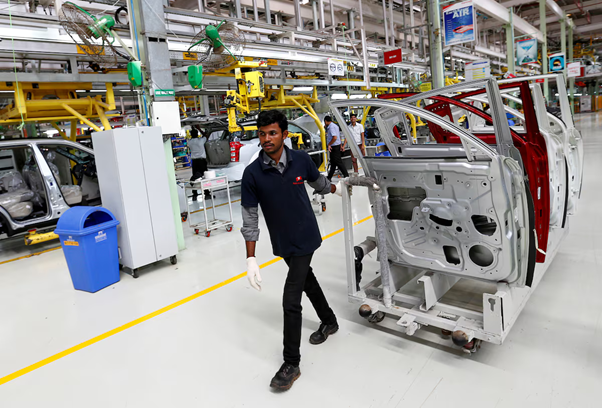 Fig 1: An employee works inside the Mahindra & Mahindra manufacturing plant in Chakan, India, September 30, 2016. REUTERS/Danish Siddiqui/File Photo
Boosting Domestic Manufacturing
The government announced a “National Manufacturing Mission” to cover small, medium and large industries for furthering the “Make in India” initiative. Finance Minister Nirmala Sitharaman said this will provide policy support, execution roadmaps, governance and monitoring framework for central ministries and states.
Through this mission, the government wants to lay emphasis on five focal areas – ease and cost of doing business, future ready workforce for in-demand jobs, a vibrant and dynamic MSME sector and availability of technology and quality products. She said the mission will support Clean Tech manufacturing and aims to improve domestic value addition and build the ecosystem for solar PV cells, EV batteries, motors and controllers, electrolyzers, wind turbines, very high voltage transmission equipment and grid scale batteries.
Industry leaders maintained that the budget has taken significant strides in strengthening India's clean technology ecosystem. “The launch of the National Manufacturing Mission and the Clean Tech Mission, as part of the Make in India initiative, will accelerate domestic production of EV batteries, solar panels, and other sustainable solutions. This will reduce import dependency, enhance India's global competitiveness, and drive innovation, investments, and job creation while supporting the country's net-zero ambitions,” said Nitin Gupta, CEO & Co-founder, Attero.
Nimit Aggarwal, Founder and Managing Director, EcoEx said the mission will boost domestic production of green technologies while fostering an enabling environment for responsible waste management and recycling. “As clean tech manufacturing scales up, the need for robust Extended Producer Responsibility (EPR) frameworks and efficient waste recycling will become even more critical,” Aggarwal said.
Others believe that the National Manufacturing Mission and the push for clean-tech manufacturing are key enablers that will accelerate the country’s transition to green mobility. “By prioritizing domestic production of EV batteries and solar panels, these measures are set to positively impact a wide array of sectors, including the tyre industry, which is essential to the electric vehicle revolution,” said Harinder Singh, CEO and M.D, Yokohama India
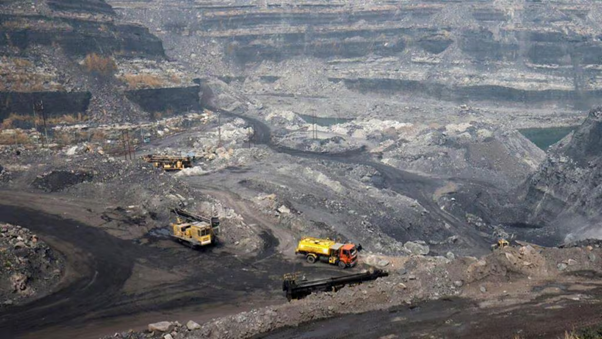 Fig 2: The Indian government recently approved the National Critical Mineral Mission. Representational Image/Reuters
Focus on Critical Minerals to boost EV landscape
To support domestic manufacturing and value addition, the budget also announced full exemption of Basic Custom Duty (BCD) on cobalt powder and waste, scrap of lithium-ion battery, Lead, Zinc and 12 more critical minerals. This comes on the back of the government's announcement of exempting BCD on 25 critical minerals, that were not domestically available, in July 2024.
Recently the government approved the launch of the National Critical Mineral Mission (NCMM) with an expenditure of Rs.16,300 crore and expected investment of Rs.18,000 crore by PSUs, etc. The approval is a forward-looking step, given the indispensable role of critical minerals in high-tech industries, clean energy and clean mobility solutions, especially in the current geopolitical context.
Sitharaman had announced the setting up of the Critical Mineral Mission in the Union Budget for 2024-25. The NCMM will encompass all stages of the value chain, including mineral exploration, mining, beneficiation, processing, and recovery from end-of-life products. The Finance Minister also announced that mining sector reforms, including those for minor minerals, will be encouraged through sharing of best practices while a policy for recovery of critical minerals from tailings will be brought out.
“The proposal to fully exempt Basic Customs Duty (BCD) on cobalt powder, lithium-ion battery waste, and other critical minerals is a crucial step toward securing raw materials for domestic manufacturing and building a self-sufficient supply chain. Additionally, the planned policy on recovering critical minerals from tailings will significantly benefit refining players like Attero,” Gupta added.
“Furthermore, the government's focus on strengthening the domestic electronics industry and developing a national framework for Global Capability Centers (GCCs) in Tier-2 cities will unlock new opportunities for skilled professionals, infrastructure development, and industry collaboration, further boosting demand for responsible e-waste management and recycling solutions.”, said Nitin Gupta.
Ashish Gupta, Brand Director, Volkswagen India said the exemption of BCD will strengthen India’s battery ecosystem. “While 35 additional capital goods added to the exemption list for EV battery manufacturing – will boost domestic production and reduce import dependency. Establishment of five National Centres of Excellence will upskill talent for future-ready automotive innovation and is a crucial step in shaping India’s clean tech ecosystem,” he said.
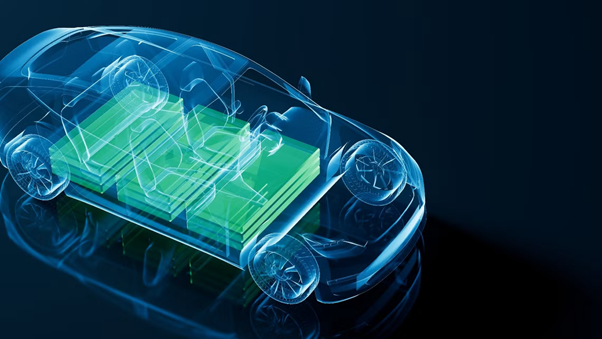 Fig 3: A representational image of a lithium-ion battery in an electric vehicle. Pic Credit: JLStock | Shutterstock
Focus on Lithium-Ion Batteries
During her budget speech, the finance minister proposed the addition of 35 additional capital goods for EV battery manufacturing, and 28 additional capital goods for mobile phone battery manufacturing to the list of exempted capital goods. She said this will boost domestic manufacture of lithium-ion battery, both for mobile phones and electric vehicles.
Dinesh Arjun, Co- Founder and CEO, Raptee said a crucial boost to the EV industry comes with this move which will significantly reduce battery costs and encourage further investment in domestic battery manufacturing.
“Given that batteries make up 30-40% of an EV’s cost, this move will make EVs more affordable and accessible to consumers, driving mass adoption across two-wheelers, three-wheelers, and four-wheelers alike. By addressing a fundamental cost barrier, this initiative lays a strong foundation for the future of electric mobility in India. We are confident that these strategic measures will have a lasting positive impact on the EV ecosystem in the months to come,” he said.
Deep Tech Fund: Moving Towards Tech Driven Economy
The Budget also announced a Deep Tech Fund of Funds will be explored to catalyze the next generation startups. “The Finance Minister’s focus on nurturing and investing in innovation is a commendable step toward accelerating new technologies that will shape our future. The allocation of a Deep Tech Fund will further strengthen India’s industrial ecosystem, fostering a globally competitive, tech-driven economy,” said Arjun.
Terming it a welcome move, others pointed out that the move will drive innovation in sustainable technologies, including advanced recycling solutions and circular economy initiatives. “...it will leverage technology like AI to streamline waste collection, segregation, and processing will be essential for efficiently managing India’s complex waste ecosystem, and driving India’s green transition,” said Nimit Aggarwal from EcoEx.
Bolstering the Start-Up Ecosystem
Rashi Aggarwal, co-founder & Chief Business Officer, Zypp Electric said that the budget reaffirms India's commitment to fostering entrepreneurship and empowering the gig economy. “The government's decision to establish a new ‘Fund of Funds for Startups’ with an additional Rs 10,000 crore infusion will provide a significant boost to innovation and job creation. This initiative, coupled with the dedicated support for 5 lakh women, SC, and ST first-time entrepreneurs, will drive inclusive growth and encourage diverse participation in the startup ecosystem,” Aggarwal said.
Focus on Gig Workers and Skilling
During her speech, the Finance Minister also announced that the government will arrange for gig workers’ identity cards, their registration on the e-Shram portal and healthcare under PM Jan Arogya Yojana. The industry termed this as a “landmark” move towards recognizing and securing the livelihoods of millions in the gig economy.
“These measures are a game-changer at Zypp Electric, where our fleet is powered by thousands of gig workers enabling sustainable last-mile deliveries. Access to social security and financial support will empower our rider partners, enhance workforce stability, and accelerate the adoption of green mobility solutions across India. We welcome these forward-thinking initiatives, which will not only strengthen India's entrepreneurial landscape but also ensure social security for the workforce driving the nation's digital and mobility revolution,” Rashi Aggarwal added.
Hyder Ali Khan, CEO & Director, Godawari Electric Motors pointed out that the establishment of five National Centres of Excellence for Skilling will strengthen the EV workforce, while the exemption of Basic Customs Duty on critical minerals like cobalt and lithium-ion battery ensures a steady supply of key raw materials for domestic manufacturing.
About the Author


