
Toll and road tax exemptions, subsidies for electric trucks, implementation of viability gap funding mechanism and boosting EV infrastructure among key highlights of the policy
Maharashtra has been a frontrunner in India's electric vehicle revolution and was one of the first states to launch a progressive and forward looking EV policy, notified in 2021, that helped in significantly increasing the uptake of clean vehicles. The state, whose industrial economy relies significantly on the automobile sector and contributes nearly 7% to the gross state domestic product (GSDP), accounts for nearly 20% of the vehicles manufactured in India, according to a report by iFOREST.
Maharashtra has been leading from the front with respect to India’s EV transition, increasing its penetration from just 0.4% share of all vehicle sales in 2020 to 7.6% by 2023. According to the Clean Mobility Shift’s EV Dashboard, the state ranked second only after Uttar Pradesh in overall sales of EVs from 2021-March 2025. In the same time period, Maharashtra topped the charts in E2W sales, clocking sales of nearly 4,44,127 units. The state also secured the top position in the country in E4W sales from 2021-2025 combined, selling 40,892 units.
 Fig 1: Overall EV sales and penetration in Maharashtra from 2014-2025. Credit: Clean Mobility Shift EV dashboard
Building upon the ambitious goals set during the first policy period, the state has now given the nod to its new EV policy 2.0 which lays emphasis on further ratcheting up EV adoption by hand holding consumers through subsidies and incentives and building a robust infrastructure to support the sector. Being a major automobile hub of the country, the EV policy 2.0 policy also aims to boost manufacturing and also establish a strong battery recycling ecosystem.
The EV industry has hailed the new EV policy, terming it as “comprehensive and forward-thinking”. They said it will position the state as a national leader in sustainable mobility and its focus on expanding charging infrastructure will address the key challenge of accessibility that till now is hampering EV adoption. Let us take a look at some of the key highlights of the policy.
Maharashtra’s EV Policy 2.0: Key Highlights
The new policy that was approved by the Maharashtra cabinet envisions bold targets for 2030, aiming to have 30% of all new vehicle registrations to be EVs, including 40% for 2Ws and 3Ws, 30% for 4W passenger vehicles, and 50% adoption by fleet operators and utility vehicles in urban areas. The state also aims to dole out subsidies to hand hold consumers.
The policy plans to give EV buyers purchase incentives ranging from Rs 10,000 to Rs 20,00,000, based on vehicle type – for example, it plans to give Rs 2 lakh for electric 4W transport cars and Rs 20 lakh for e-buses and heavy-duty trucks. Maharashtra is one of the few states which has launched subsidies for electric trucks. At the same time, it also plans to provide 100% exemption from road tax and registration fees during the policy period.
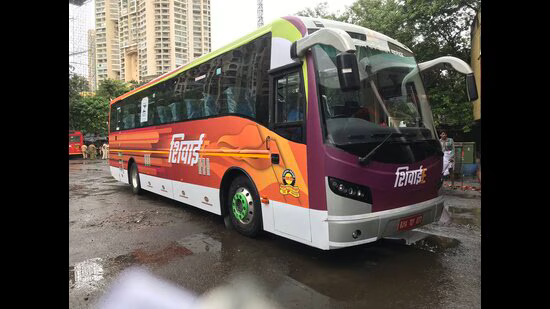 Fig 2: MSRTCs first e-bus, Shivai, will ferry passengers from Pune to Ahmednagar on June 1, which is also their foundation day (HT PHOTO)
To further incentivise consumers and boost EV adoption, the EV policy 2.0 also aims to provide 100% toll exemption for electric cars and buses on specific routes, that include the Mumbai–Pune Expressway, Atal Setu, and Samruddhi Mahamarg. It plans to give a 50% toll waiver on other state highways. The policy also aims to boost the charging infrastructure, one of the key identified challenges in boosting EV uptake in the state.
It plans to install charging stations every 25 km on major highways, including fuel stations and MSRTC bus depots, supported by viability gap funding (VGF). With this, Maharashtra again becomes one of the few states in the country to implement this mechanism. The policy also aims to provide “15% VGF for setting up DC charging and battery swapping stations, with up to Rs 10 lakh per station support, targeting over 1,500 fast-charging stations.” Authorities also said the municipal corporations will be instructed to allocate 1% of their annual budgets specifically for the development of EV-related infrastructure.
To further position Maharashtra as a premier destination for manufacturing and boost battery recycling, the state aims to give EV battery and component manufacturing ‘D+ category’ industrial incentives across the state, with dedicated battery recycling hubs in Mumbai, Pune, Nagpur, and Aurangabad. It also focusses on ‘Flagship Sustainable Mobility Corridors – Mumbai–Pune and Mumbai–Nagpur Expressways’ and aims to transform them into EV demonstration corridors, with support for hydrogen vehicles under the National Green Hydrogen Mission.
The policy aims to provide Rs 15 crore Chief Minister’s EV R&D grant to support work on sodium-ion batteries, V2G integration, green hydrogen from biomass, and development of rare-earth free motors apart from starting special EV courses with reskilling programs for ICE vehicle workers and certifications via the MahaSwayam portal.
EV Policy 2.0: Industry Speak
The industry has hailed the announcement. Shailesh Chandra, Managing Director, Tata Motors Passenger Vehicles Ltd & Tata Passenger Electric Mobility Ltd said, “The EV policy announced by the Government of Maharashtra is comprehensive and forward-thinking. It positions the state as a national leader in sustainable mobility. The focus on expanding charging infrastructure across key urban centers and highways, directly addresses accessibility—one of the main challenges to EV adoption.”
He added that the introduction of toll-free highways for EVs reduces operational costs, making electric vehicles more economically viable. “The continuity of registration and road tax benefits further ensure long-term stability for both consumers and manufacturers,” Chandra said.”
About the Author


