Norway’s story is all about putting consumers in the spotlight and formulating enabling policies that make it an easy decision for them to switch from ICE to electric vehicles
Welcome to Norway. A country stretching above the Arctic Circle – divided by mountains and fjords, and annually challenged by a long, hard and ice-cold winter. So far this year, 89% of all new cars sold in Norway are electric vehicles. So how did we get here?
For several years now, the majority of new car buyers in Norway have chosen an EV, and the results have been fantastic. Norwegians have fully embraced the electric car era, and now, about 26% of the entire car fleet consists of EVs. The outcome: a better urban environment, less local air pollution and a drastic reduction in CO2-emission from passenger cars. This is the story about how policies changed the game.
Early Days
In the early 1990s, the Norwegian parliament looked for different ways to reduce climate emissions. Electrifying road traffic alone would mean a huge cut in Norwegian climate emissions, with the potential effect boosted by the notion that the new electric vehicles would tap in to chargers powered by a fully renewable energy mix.
Levelling The Playing Field With Green Taxes
Norway already had a long history of taxing the sales of new cars, with a high purchase tax in addition to Value-Added Tax of 25%. To make EVs more competitive, they were exempted from these taxes. As time passed, around 2010, Mitsubishi, Nissan, Tesla and others started introducing their electric models. And the sales increased immediately. At the same time, Norwegian politicians have increased taxes on polluting cars, based on their weight and emission.
Incentivizing ‘The Everyday’ Of The Consumer
Still, levelling the playing field for EVs and their drivers is not only about adjusting purchase prices. It is also about the struggles and costs of everyday life. The Norwegian policy makers therefore complemented the purchase incentives with different types of EV user benefits.
Passing the toll ring for free or passing the congestion in the bus lane did become an important reminder for all EV drivers of the smart choice they made. Additionally, they enjoyed discounts on parking and ferries.
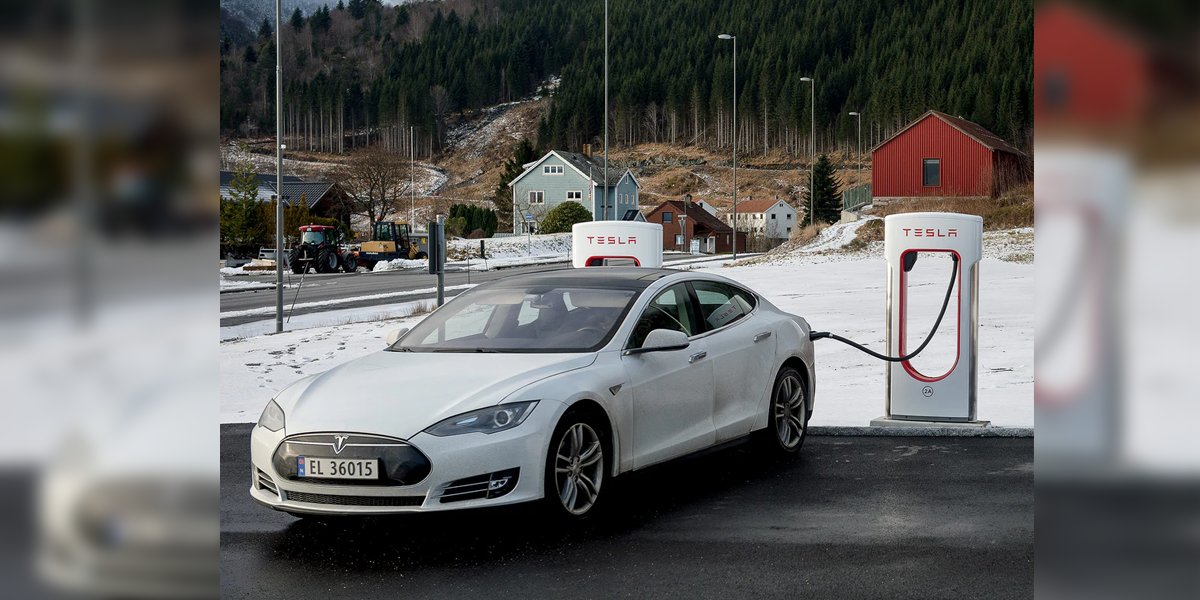
 Fig 1: A Tesla charging station in Skei, Norway. The country has the world’s highest rate of electric car adoption. | Sean Gallup/Getty Images
New Policies To Cater For This New Reality
When electric vehicles become the new normal, it creates a need for more new policies to cater to the new reality. To help accelerate the development and cut emissions, several bigger cities of Norway introduced zero emission as non-negotiable terms when buying new cars or services.
In the capital, Oslo, all municipal public transportation, both on roads and at sea, are now zero emission. The different construction sites in the city are increasingly becoming electric and all cars or lighter vehicles bought to be used by the city administration are zero emission.
Charging for all!
All of the purchase incentives and discounts set aside, the electric vehicle depends on one vital thing more than anything else – charging – the first and the last piece of the big EV policy puzzle. Most Norwegian EV drivers use home charging in their daily life, but for longer trips on weekends and holidays, they rely on a robust fast-charging network.
In 2023, the fast charging network began developing faster than the EV uptake. The big questions are, was it policies or the commercial market that fixed it? Through a state enterprise, the government introduced public tenders for an initial network of fast chargers (more than 50kW) along Norwegian highways. The network was mostly finished by the end of 2017, although some corridors up north still lacked fast charging stations. This was solved by introducing a support scheme for these areas.
The government has only spent around 350 million NOK on this infrastructure, equalling to Approximately USD 31.5 million. In other words, the Norwegian government stepped up to secure an initial network of charging, while the rest of the Norwegian charging adventure has been financed by the charging industry, seeing it as a good market case. Simultaneously, Norwegian cities have established public curbside charging to serve as home charging for urban residents who lack their own parking space.
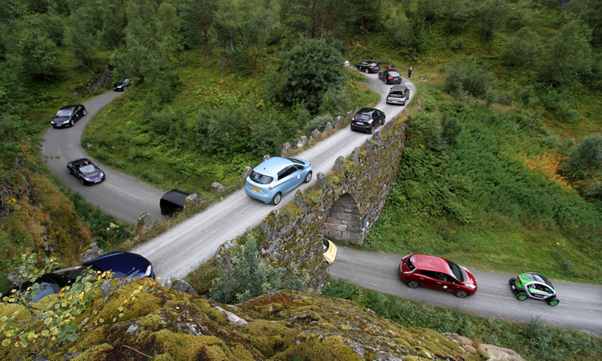 Fig 2: Electric car rally in Geiranger, Norway. Pic by Norsk elbiforening via Flickr
Introducing VAT, Little By Little
Now, with almost all new sold cars being electric, the existing policies and exemption from taxes and VAT, become increasingly expensive. Some of the policies were doomed to be changed or even removed. In 2023, the government started introducing VAT, little by little. Today EVs with the price above 500 000 NOK, which is about US 45 000, pay VAT.
This meant that a car costing 500 000 NOK or below, would still have exemption from VAT, while a car costing 600 000 NOK now pays a Value Added Tax of 25 000 NOK (25% of the 100 000 NOK above the benchmark).
Today, EVs also pay a small registration tax based on their weight and they no longer enjoy free passing in the toll roads. From 2023, they pay a maximum of 70% of the regular fee for fossil cars. Despite the reduction in incentives, EVs continue to outperform fossil fuel cars.
What’s next
It’s a delicate balance. We still need tax and VAT policies to ensure consumers choose an EV when buying a new car. Additionally, we need a more consumer-friendly charging system, a need that grows alongside the increasing adoption of EVs by the general public.
The story about Norway, is a story about putting the consumers in the spotlight and policies, that made changing from an Internal Combustion Engine (ICE) car to an EV, an easy decision for anyone. Now, we must ensure that everyone who has already chosen an EV, never wants to go back.
For the Norwegian EV Association, it’s also crucial to share this story with the rest of the world. For instance, we visited Delhi this August, to meet with Indian organisations and EV-stakeholders, to share Norway’s experience. As many countries find themselves in similar situations, where the adventure of electric transport is just beginning, sharing experiences and leapfrogging can have substantial impact.
Thomas Haug is the Communication Advisor of Norwegian EV Association
Markus Nilsen Rotevatn is the Project lead, Analysis and Advisory Services of the Norwegian EV Association
About the Author


