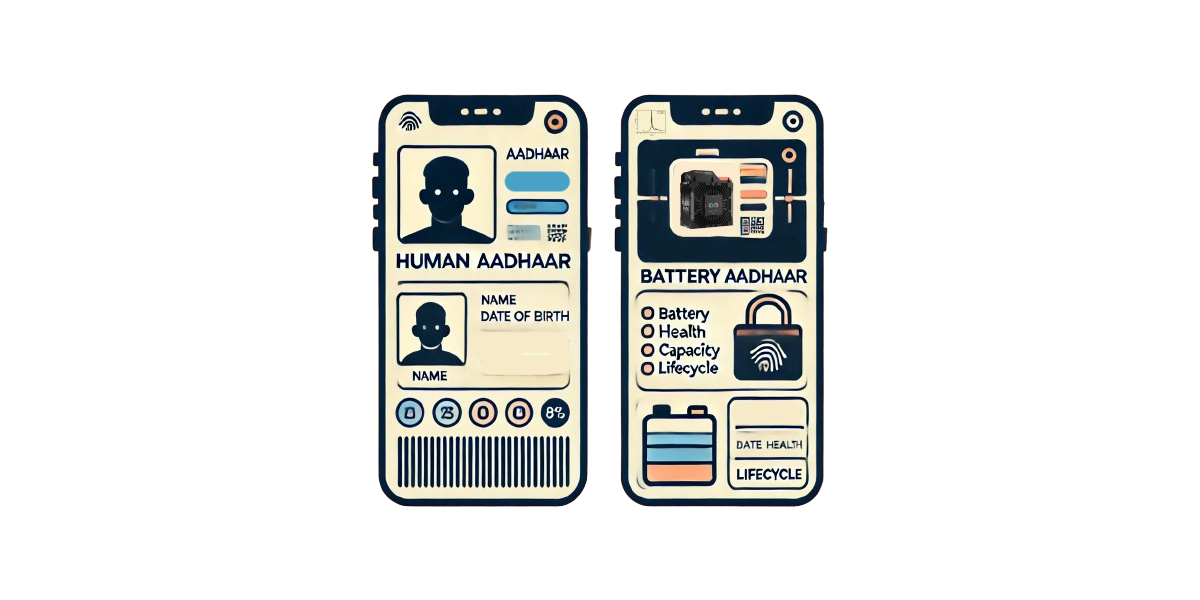
The initiative could help boost circularity, reduce import dependence, and ensure resource security and resilience of batteries.
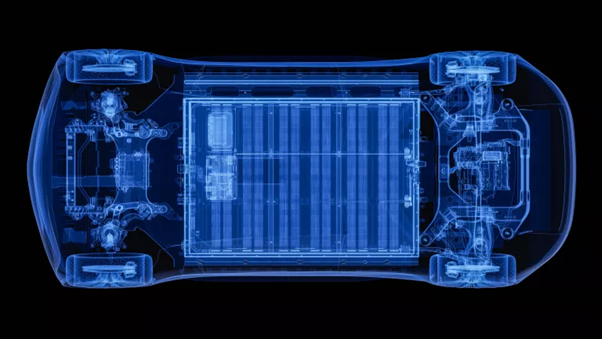 A 3D rendering of an electric vehicle
Credit: Xia Yuan/Getty Images
What prevents people from switching to electric vehicles? For many, it is not just the up-front cost or range anxiety but the uncertainty surrounding their resale and salvage value. A major concern for financiers, specifically, is the battery, as it accounts for nearly 40 percent of an electric vehicle's (EV) total cost. The uncertain value of used EV batteries largely stems from difficulty in accurately determining their state of health (SoH), which is key to estimating remaining life, second-life potential, and the residual value of critical minerals like lithium, nickel, cobalt, and graphite.
To address these various issues, the United Nations Environment Programme and NITI Aayog, in collaboration with the Department of Science & Technology, Government of India, organized the Battery Summit 2025. This high-level event convened key stakeholders—including government representatives, industry leaders, academia, start-ups, and financial institutions—to deliberate on the critical challenges and emerging opportunities in the evolving battery ecosystem. One major proposed framework to come out of the event is the Battery Aadhaar, which could help boost circularity, reduce import dependence, and ensure long-term resource security and resilience. The core objective of this initiative is to assign a unique digital identity to each battery, enabling comprehensive traceability, regulatory compliance, and life cycle tracking.
 A battery recycling facility in Jingmen, China Credit: Qilai Shen/Bloomberg via Getty Images
Countries are taking action to extend battery life
Around the world, countries are increasingly focusing on strategies to extend the life cycle and economic value of EV batteries. These include both recycling—to recover critical minerals—and repurposing batteries for secondary applications like stationary energy storage, grid stabilization, and renewable energy integration. Such approaches not only support circular economy principles but also help lower the life cycle costs of batteries and reduce pressure on the demand for more raw materials. A few of these notable international strategies and initiatives:
- China introduced unique identification numbers for batteries in 2018, allowing for the tracking of their entire life cycle, from production to scrapping/second use and recycling. This regulation requires a national platform for EV batteries where EV manufacturers must register.
- The Council of the European Union adopted the EU Batteries Regulation in July 2023, aiming to achieve sustainable battery life cycles. The amendment mandates digital battery passports for EV and industrial batteries above 2 kilowatt-hours by February 2027, with physical batteries having a QR code as a unique product identifier. The passport must include unique information, production date, battery type, model, chemical composition, intended use, performance, durability statistics, and the carbon footprint of the battery.
Most batteries in India have yet to reach their end of life
India is currently in the early stages of EV adoption, and most batteries currently used in electric vehicles have not yet reached the end of their usable life. To promote circularity in the battery supply chain, India has introduced the Battery Waste Management Rules (2022) and Extended Producer Responsibility (EPR) mandates, which aim to establish a standardized mechanism for the collection, recycling, and reuse of used batteries to develop a sustainable end-of-life battery management plan that reduces the dependency on raw material imports.
In this context, establishing a framework like the proposed Battery Aadhaar could be instrumental in promoting battery circularity by providing complete life cycle traceability—from production to repurposing and eventual recycling.
The “Battery Aadhar” framework: A key to establishing battery circularity in India
The uncertain value of used EV batteries largely stems from the difficulty in accurately determining their state of health. Without real-time insights of battery health and battery usage, a financier’s ability to assess asset risk is hindered. The lack of strong regulations and circular infrastructure leads to resource loss. Lack of standard metrics complicates the valuation of batteries for resale, refinancing, or buyback, which stalls the growth of the second-hand EV market. Building a closed-loop battery ecosystem is essential to boosting circularity, reducing import dependence, and ensuring long-term resource security and resilience. In comes the Battery Aadhar framework.
This framework could function as a secure digital identity for each battery, recording essential information such as:
- General details (capacity, date of registration, weight)
- Battery chemistry
- Usage history
- Safety incidents
- SoH
- Repair and maintenance records
- Recycling and second-life status
Battery Aadhar could allow various stakeholders—including manufacturers, service providers, recyclers, and regulators—to verify a battery’s condition, determine its resale value, and assess its suitability for reuse or recycling.
To support multiparty usage, the framework could incorporate tiered data access levels with appropriate security and privacy measures. These access levels could include:
- Public access: Limited, nonsensitive data for general users
- Licensed users: Verified stakeholders such as vehicle Original Equipment Manufacturers (OEMs), battery tech providers, recyclers, fleet operators, insurance companies, and financiers, including banks and nonbank financial companies
- Government/regulators: Full access for monitoring, policymaking, and compliance
While aligning with global standards, the Battery Aadhaar framework would also be adapted to India’s unique realities, such as the widespread presence of informal battery recycling sectors, the affordability constraints faced by manufacturers and recyclers, and the uneven access to digital infrastructure across regions.
Such a system—which facilitates Internet of Things access, anonymized battery health metrics, and vehicle usage behavior—would help to establish standardized procedures for assessing the condition, composition, and residual value of used batteries, thereby facilitating more accurate valuation and boosting confidence among stakeholders across the EV ecosystem.
A well-established framework of Battery Aadhaar could address the following key concerns:
Safety & traceability: The Battery Aadhar framework facilitates root-cause traceability in EV battery mishaps or fire incidents, enabling identification of defects, liability assignment, and corrective measures to prevent future incidents.
Critical mineral security & import reduction : India is expected to retire around 128 gigawatt-hours (GWh) of batteries annually by 2030, up from just 2 GWh in 2023. This could represent a market opportunity of approximately INR 8,300 crore (approximately $1 billion USD) per year. Advanced Chemistry Cell Battery Reuse and Recycling Market in India Battery Aadhaar could enable efficient recovery of critical minerals from used batteries, potentially reducing import dependency by up to 30 percent by 2030.
Improved & attractive financing: Standardized battery valuation of used batteries based on their SoH, chemistry, and potential second-life use could boost financial institutions’ confidence, offering attractive financing options like lower-interest rates and longer tenures, thereby accelerating EV adoption.
Optimized second-life utilization: The Battery Aadhar framework empowers stakeholders to evaluate EV batteries’ health and conduct detailed diagnostics at cell and pack levels, enabling informed decision-making regarding second-life applications like repurposing, refurbishment, or recycling for mineral recovery and ensuring optimal utilization of critical minerals. Such insights help determine the most appropriate post-mobility use case for optimal resource utilization.
Newer business models: The Battery Aadhaar framework can unlock new business models by allowing traceability and performance tracking of battery data and supporting the identification of batteries suitable for alternative applications, such as second-life markets and carbon credit trading platforms.
However, the implementation of the Battery Aadhaar framework faces several challenges, including high infrastructure costs, regulatory uncertainty, fragmented supply chains, lack of common standards, and reluctance among original equipment manufacturers to share data. These limitations highlight the need for a robust governance structure, similar to the Unique Identification Authority of India model for Aadhaar and the Unified Payments Interface framework.
For the Battery Aadhaar framework to be effectively implemented and scaled, it could be harmonized with existing policy frameworks, such as the Battery Waste Management Rules (2022), PM Electric Drive Revolution in Innovative Vehicle Enhancement, the Production Linked Incentive Scheme, and EPR mandates. Currently, several battery manufacturers in India have already initiated efforts to collect, store, and analyze battery data using proprietary technologies. Yet, the absence of a unified and standardized framework presents challenges in data consistency and interoperability. Active participation from stakeholders across the ecosystem of OEMs, recyclers, digital solution providers, and regulators is critical to driving this initiative forward and establishing a resilient, transparent, and sustainable battery ecosystem for India’s electric mobility future.
Disclaimer: This blog is written by Nitish Arora and Divyansh Khare from NRDC India, Prashant Rathee from The Energy Company and Anmol Jain from Alliance for an Energy Efficient Economy; originally published on Natural Resource Defense Council's website.

