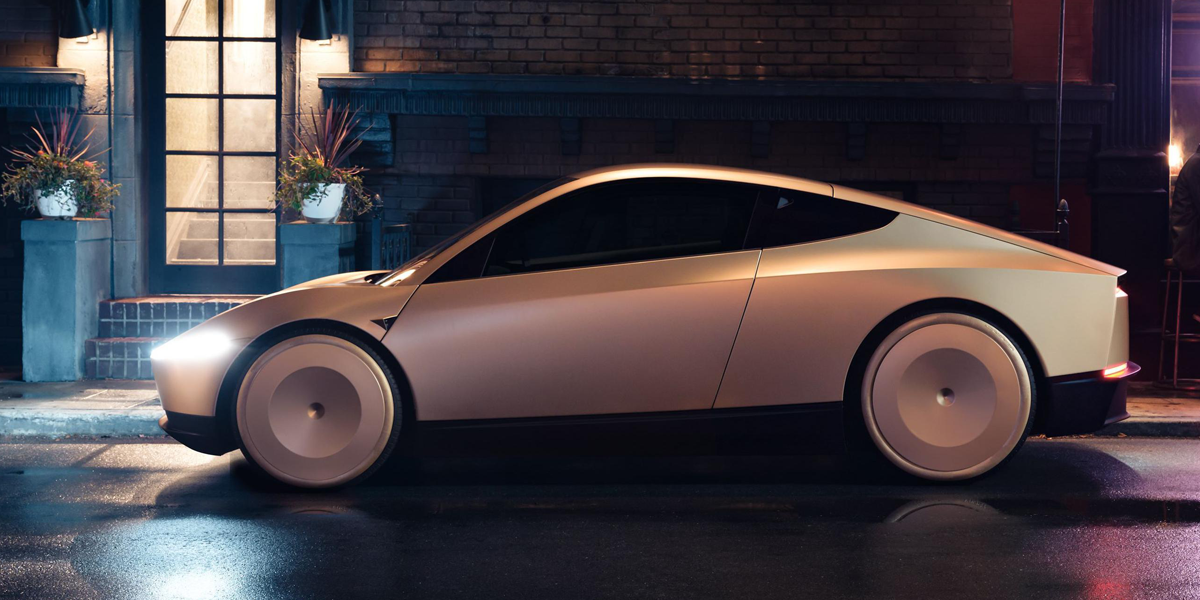
Despite geopolitical uncertainties, emerging economies in Asia and Latin America are becoming new centres of growth, witnessing record electric car sales
The new world order has undergone a major shift and traditional ways of trade have given way to inward-looking policies, tariff wars and self-reliance. However, even in this landscape, there has been an upstick in adoption of electric vehicles worldwide, driven by technological advancements, policy support and appetite for clean mobility solutions. The global embrace of electric vehicles (EVs) has accelerated markedly in recent years, with nations signaling a definitive shift toward cleaner, more sustainable mobility.
As public awareness of climate change grows, the cost of EV ownership continues to decline coupled with decline in range anxiety owing to technological advancements, transforming electric vehicles being a niche market to the new standard in personal and commercial transportation. And the projections for the future also look encouraging.
According to the International Energy Agency’s Global EV Outlook 2025, sales of these clean vehicles this year is expected to exceed 20 million globally to represent “more than one-quarter of cars sold worldwide.” The year started off on a good note, with sales going up “35% year-on-year in the first three months of 2025, with record first-quarter sales in all major markets.” The report predicts that even in emerging economies like India, sales are expected to continue growing strongly, increasing by 50% to reach 1 million in 2025.
 Fig 1: An electric vehicle (EV) by Mercedes-Benz moves on a street in Beijing, China October 31, 2023. REUTERS/Tingshu Wang/File
Electric Vehicle Sales Across Major Economies
According to IEA’s latest report, electric car sales exceeded “17 million globally in 2024, reaching a sales share of more than 20%”. It said “just the additional 3.5 million electric cars sold in 2024 compared with the previous year is more than the total number of electric cars sold worldwide in 2020.” China, which has been aggressively pushing the adoption of electric vehicles, remained the dominant force last year as well, with electric cars accounting for almost half of all car sales in 2024 – “the over 11 million electric cars sold in China last year were more than global sales just 2 years earlier,” the report said.
“As a result of continued strong growth, 1 in 10 cars on Chinese roads are now electric,” the report said. However, in Europe, sales of these vehicles witnessed a stagnation last year, a trend which the report attributed to “waning” subsidy schemes and other supportive policies. However, the sales share of electric cars remained around 20% as stronger sales in some countries compensated for lower sales in others. “In the United States, electric car sales grew by about 10% year-on-year, reaching more than 1 in 10 cars sold,” it added.
The emerging economies of Asia and Latin America too were not far behind and increasingly becoming a major part of this growth story, owing to the supportive policies, environmental awareness and economic incentives. Electric car sales jumped by over 60% in 2024 to almost 600 000 – about the size of the European market 5 years earlier. “In Southeast Asia, electric car sales grew by nearly 50% to represent 9% of all car sales in the region, with notably higher sales shares in Thailand and Viet Nam,” the report said.
In Brazil, the largest car market in Latin America, electric car sales more than doubled to 125 000 in 2024, reaching a sales share of over 6%, it said. “Sales in Africa also more than doubled, too, mostly thanks to growing sales in Egypt and Morocco, though electric cars still represent less than 1% of total car sales across the continent,” the IEA report said, adding that “policy support and relatively affordable electric car imports from China played a central role in increasing sales in some emerging electric vehicle (EV) markets, accounting for 85% of electric car sales in both Brazil and Thailand, for example.”
India’s Electric Vehicle Outlook
The IEA report pointed out that electric car production also increased in Asia Pacific countries other than China to reach about 1 million. “While incumbent carmakers such as Japan’s Toyota and Korea’s Hyundai were behind most of the region’s output, emerging EV players like VinFast in Viet Nam or Tata in India were responsible for an increasing share of production, growing from 10% in 2023 to 15% in 2024,” it said, adding that in India, in particular, “domestic OEMs (Tata and Mahindra) accounted for more than 80% of the 75 000 electric cars produced domestically in 2024.”
Maneuvering The EV Landscape Amid Global Uncertainties
The tariff wars, unilateral trade measures, inward policies of governments and issues related to the global supply chain have thrown a host of challenges, affecting the transition to these clean vehicles worldwide. However, the IEA report pointed out that despite these uncertainties, “the share of electric cars in overall car sales is set to exceed 40% in 2030 under today’s policy settings.”
“China is poised to continue leading in electric car sales to 2030, achieving a sales share of around 80% on the back of significant market momentum and competitively-priced EVs. In Europe, carbon dioxide (CO2) targets support the achievement of a sales share of close to 60% by 2030, slightly below last year’s projection,” it pointed out.
At the same time, the report projects that the sales share in the United States “grows much more modestly than in our Outlook last year, reaching around 20% by 2030 based on today’s policy direction – less than half the share projected for 2030 last year”. The numbers projected for Southeast Asia, however, paints a positive picture. It said “electric car sales are boosted by strong policy support and available domestic manufacturing capacity: by 2030, one in four cars sold in the region is poised to be electric.”.
“Two/three-wheelers – an important mode of road transport in the region – electrify faster: by 2030, almost 1 in 3 such vehicles sold are electric. Across all vehicle modes, the deployment of EVs replaces the use of more than 5 million barrels of oil per day globally in 2030, an important energy security consideration. Half of these savings are the result of EV adoption in China,” it added.
About the Author


