
The PM E Drive initiative is poised to address concerns about environmental pollution and the country’s fuel security, and make significant progress in promoting sustainable transportation solutions
Taking another step towards leapfrogging to sustainable transport solutions, the Indian government recently approved a scheme to promote electric vehicles amid growing concerns about environmental pollution and the country’s fuel security. The move, aligned with the country’s net zero goals and climate commitments, also aims to spur investments in the EV landscape and associated supply chains.
The latest initiative by the government not only aims to streamline the buying process of EVs for the consumers, but also paves way for integrating electric vehicles in the health sector by deploying e-ambulances. The government’s focus on electrification of Heavy Duty Vehicles (HDVs), which are among the significant contributors to air pollution, is also clear as the PM Electric Drive Revolution in Innovative Vehicle Enhancement (PM E-DRIVE) introduces targeted approaches to facilitate this transition.
The scheme, which has an outlay of Rs 10,900 crore for two years, aims to provide subsidies worth Rs. 3,679 crore to incentivize e-2Ws, e-3Ws, e-ambulances, e-trucks and other emerging EVs and boost greener transport solutions in India. The scheme will support 24.79 lakh e-2Ws, 3.16 lakh e-3Ws, and 14,028 e-buses. However, to the disappointment of many, the scheme does not talk about providing subsidies for e-cars.
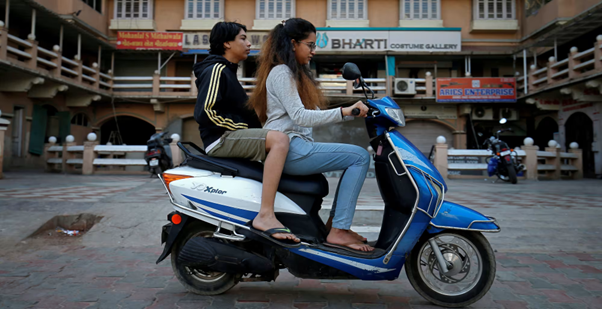 Fig 1: Riders on an electric scooter in Ahmedabad, India. Pic Credit: Amit Dave/Reuters
On the other hand, the scheme does take a comprehensive approach to include promotion of other segments of the EV landscape like supporting public transport transition, establishing robust charging infrastructure, strengthening EV supply chains and upgrading testing agencies to align them with emerging technologies.
These measures are poised to drive EV adoption further in India. The progress made so far in the country has been predominantly led by the two-wheeler segment with sales contributions of 14–21 million units annually over the last six years between FY19 to FY24, while passenger vehicles have contributed 3–4 million units over the period.
According to reports, the other significant contributors are three-wheelers (3Ws), which added 0.3–0.7 million units annually in sales between FY19 and FY24. India also surpassed China recently to become the largest E-three wheeler market in the world. At the same time, commercial vehicles, including trucks, smaller vehicles, and buses, added around 0.6–1 million units in sales to the total auto market, which varied between 18–26 million units in annual sales during this period.
These measures are intended to handhold the EV industry, which has hailed the scheme as a “significant milestone in India's journey towards sustainable mobility’ and one that will accelerate the adoption of electric vehicles across multiple segments, including public transport and essential services like hybrid ambulances and electric trucks.
Through the PM E Drive initiative, the government aims to promote “competitive and resilient EV manufacturing industry” by incorporating phased manufacturing programmes (PMP) that will encourage domestic manufacturing and strengthen the EV supply chain. This, the government believes, will spur investments in the EV sector and associated supply chain and create significant employment opportunities along the value chain. Let us take a look at some key measures of this scheme.
Focus On Transition of Heavy Duty Vehicles
According to the government, a sum of Rs. 4,391 crore has been provided for procurement of 14,028 e-buses by STUs/public transport agencies. The demand aggregation will be done in the nine cities with more than 40 lakh population – Delhi, Mumbai, Kolkata, Chennai, Ahmedabad, Surat, Bangalore, Pune and Hyderabad. In consultation with states, the government also plans to support Intercity and Interstate e-buses.
While allocating buses to cities or states, first preference will be given to those vehicles, that are procured after scrapping old STU buses, through authorised scrapping centres (RVSFs) following the Ministry of Road, Transport and Highways’ (MoRTH) Vehicle Scrapping Scheme guidelines, according to the scheme.
 Fig 2: A Volta Zero electric truck is seen during the 2023 Munich Auto Show IAA Mobility, in Munich, Germany, September 6, 2023. REUTERS/Angelika Warmuth/File Photo
These measures come following the government’s earlier approval of a scheme that envisages a deployment of 10,000 electric buses – along with charging and associated infrastructure – in nearly 170 cities. Named ‘PM-eBus Sewa', the government had estimated its cost to be over Rs 57,000 crore. The government eventually aims to introduce 50,000 electric buses nationwide to curb harmful emissions in the transport sector.
Another key measure of the PM E-Drive scheme is the transition of Internal Combustion Engine (ICE) trucks into electric. The scheme with an outlay of Rs 500 crore plans incentivise e-trucks, especially those who procure a scrapping certificate from MoRTH approved vehicles scrapping centres (RVSF).
So why is the government focussing on deployment of e-trucks? It is crucial to understand that around 70% of India’s 4.6 billion tonnes of goods are moved annually by the rapidly growing freight transport industry, which comprises mostly diesel trucks. These trucks represent just 3% of the total vehicle fleet but are responsible for 53% of PM emissions.
Converting the fleet to electric, whether through retrofitting or electric replacements, should lower the sector’s emissions by 2.8-3.8 gigatonnes of CO2 (cumulatively) by 2050. E-truck adoption can also help India chart a path towards greater energy security. Road freight accounts for more than 25% of annual oil imports. Zero Emission Trucking (ZET) can reduce oil spending by 993 billion litres of diesel cumulatively by 2050, resulting in upwards of Rs 161 lakh crore of reduced oil expenditures.
Not only this, ZETs could create a cumulative battery demand of up to 5,400 GWh in the country by 2050, providing the impetus for India to become a low-cost, low-carbon manufacturing hub. ZETs also have no tailpipe emissions and can reduce PM and nitrous oxide pollution by over 50% by 2050, substantially improving air quality and public health.
Amit Bhatt, India Managing Director of the International Council on Clean Transportation (ICCT) said with the introduction of the PM E-DRIVE scheme, the Indian Government has ushered in a new era of electrification that expands the scope of vehicle categories and strengthens existing policies.
“EVs play a crucial role in combating climate change and promoting sustainable development. And one of the most transformative elements of the PM E-DRIVE scheme is its focus on electrifying new vehicle segments such as e-trucks. This scheme will have far reaching, positive implications on various aspects in the coming years,” said Bhatt.
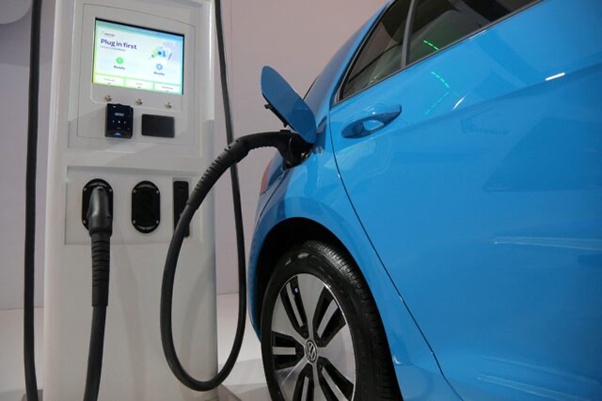 Fig 3: An electric vehicle charging station is seen at the Volkswagen display during the media day at the Canadian International AutoShow in Toronto, Ontario, Canada, February 14, 2019. REUTERS/Chris Helgren/File Photo
Streamlining EV Buying Process, Addressing Consumers’ Range Anxiety
The scheme envisages the introduction of e-vouchers for EV buyers. Elaborating about the process, the government said at the time of purchase of the EV, the scheme portal will generate an Aadhaar authenticated e-Voucher for the buyer. A link to download the e- voucher will be sent to the registered mobile number of the buyer.
This e-voucher will then be signed by the buyer and submitted to the dealer to avail demand incentives under the scheme. The e-Voucher will, thereafter, also be signed by the dealer and uploaded on the PM E-DRIVE portal. “The signed e-voucher will be sent to the buyer and dealer through an SMS. The signed e-voucher will be essential for the Original Equipment Manufacturer (OEM) to claim reimbursement of demand incentives under the scheme,” a government document said.
The scheme also aims to address range anxiety of EV buyers by promoting in a big way the installation of electric vehicle public charging stations (EVPCS). These EVPCS are planned to be installed in cities with high EV penetration and also on selected highways. Elaborating on the roadmap, the government said it proposes to install 22,100 fast chargers for e-4 Ws, 1800 fast chargers for e-buses and 48,400 fast chargers for e-2W/3Ws, with an outlay of Rs 2,000 crore.
A significant part of India’s growth story in terms of EV adoption hinges on establishing charging infrastructure at scale. According to a report, India will require to install 400,000 EV chargers annually to meet the anticipated demand of around 1.32 million chargers by 2030. Experts believe that while the government has laid the foundation for EV adoption through various subsidies and incentives, upscaling this further would require establishing charging infrastructure at scale to build consumers’ confidence in these clean vehicles.
"The scheme (PM E Drive) will give a much-needed boost to India’s EV charging infrastructure. This is critical to support the growing EV ecosystem, particularly in urban areas where EV penetration is increasing rapidly. These measures will contribute to enhancing fleet management, supporting local manufacturing, and creating a more resilient EV ecosystem.
“By reducing the financial burden on operators and ensuring a comprehensive network of charging stations, PM E-DRIVE lays the foundation for a cleaner, more efficient future for India's transport sector," said Sameer Aggarwal, Founder and CEO, Revfin.
The government also plans to modernise the testing agencies under the Ministry of Heavy Industries to deal with new and emerging technologies. “The upgradation of testing agencies with an outlay of Rs.780 crore under the aegis of MHI has been approved,” the government document said.
This is also a crucial measure taken by the government to scale up the adoption of clean mobility solutions. Given the consistent uptake of EVs in India, it is essential to have a robust network of testing centres to ensure the vehicles comply with the laid down standards and consumer safety is addressed.
EVs undergo rigorous testing to ensure compliance with set standards, smooth and efficient operation of each vehicle component, and the safety of users, equipment, and infrastructure. In India, government agencies such as the International Centre for Automotive Technology (ICAT) in Manesar, the Automotive Research Association of India (ARAI) in Pune and the Global Automotive Research Centre (GARC) in Oragadam, Chennai, conduct these tests. Some private agencies, like TUV SUV India, assist manufacturers with product testing and reporting as well. However, only government testing agencies are authorised to provide homologation and certification.
In another significant step, the PM E Drive scheme also allocates Rs.500 crore for the deployment of e-ambulances, an initiative that aims to provide comfortable patient transport. “The performance and safety standards of e-ambulances will be formulated in consultation with the Ministry of Health and Family Welfare (MoHFW), the MoRTH and other relevant stakeholders,” the government document added.
“The launch of the PM E-Drive scheme aims at setting a strong foundation in the Indian electric mobility sector. As the deployment of electric vehicles accelerates under this scheme, we anticipate a significant surge in lithium-ion batteries reaching end-of-life. This presents an immense opportunity for us to scale up our recycling operations to meet the growing demand for sustainable solutions,” said Nitin Gupta, CEO & Co-founder, Attero.
With the government’s investment in fast chargers, e-ambulances, e-trucks, and e-buses, we see opportunities to form strategic partnerships with EV manufacturers and public transport agencies, he added.
How Has The Government Helped Scale Up EV Adoption So far
- FAME Scheme: The Government of India launched the Faster Adoption and Manufacturing of (Hybrid &) Electric Vehicles (FAME) scheme in 2015 to boost the uptake of electric and hybrid vehicles. The first phase (with a budget of Rs 895 crore) operated from 2015 to 2019, while the second phase (with a budget of Rs 11,500 crore) was from 2019 to March, 2024. The Electric Mobility Promotion Scheme (EMPS) with a budgetary allocation of Rs 500 crore was thereafter introduced by the government.
- PLI Schemes: The Ministry of Heavy Industries under the Government of India has two PLI schemes that incentivise the production of EVs - PLI for Advanced Chemistry Cells (ACC) and PLI for Automobiles and Auto Components (AAC). These schemes provide subsidies to EV, advanced EV battery and EV component manufacturers, based on their production capacities.
- Focus on Zero Emission Trucking: India has already announced a unique High Level Ambition Group (HLAG) that will work with the government towards framing a comprehensive policy towards zero freight emission in the country. Prominent OEMs have also come together under the Zero Emission Vehicles Emerging Markets Initiative (ZEV-EMI) and the government's E- FAST (Electric Freight Accelerator for Sustainable Transport) programme to advance the electrification of trucks in India.
About the Author


