
Active participation among nodal agencies to bolster demand and provision of fiscal subsidies to increase adoption are key to realise this potential
Anganwadi and Accredited Social Health Activists (ASHA) workers play a crucial role in providing health and nutrition services across India and are the primary frontline officials who come in direct contact with the people, especially in the rural areas. There are nearly 10 lakh ASHA workers and 24 lakh Anganwadi workers across India.
These workers often have to travel long distances and also carry substantial weight with them depending on their work requirement, which leads to fatigue and affects their efficiency, resulting in lower wages.
Many regions in the country have limited options of public transport that give rise to use of motorised means of commuting, thus leapfrogging emissions and fuel consumptions. In such a scenario, electric cycles and electric mopeds can provide an ideal solution to address the conveyance hurdles of these workers in the rural and semi-urban areas. Given the large number of such workers present across the country, it only makes sense to tap into this opportunity and enable this transition to electric mobility to further promote India’s clean mobility targets.
To assess the potential of adopting electric cycles among people who travel short distances, a team from the Convergence Energy Services Limited (CESL) conducted field visits in Raipur and its adjoining districts in Chhattisgarh, Lucknow in Uttar Pradesh, Nalanda in Bihar, and Trivandrum in Kerala last year.
Following this, the CESL and Council on Energy, Environment and Water (CEEW) collaborated with the Energy Management Centre (EMC) of Kerala to conduct a survey to assess the viability of electric cycles as an alternative to the modes of travel being used at present among the identified beneficiaries at Manikkal Gram Panchayat, known for being one of Kerala’s net-zero Panchayats.
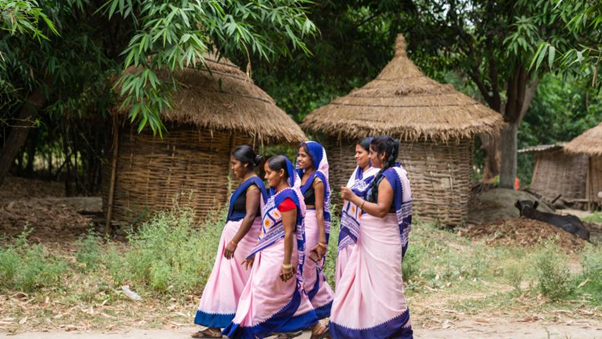 Fig 1: ASHA workers in Dariyapur village. Photo by DNDi
Viability of E-Cycles Among Beneficiaries
The survey found that the majority of the beneficiaries were of the opinion that e-cycles would reduce fatigue and improve work efficiency, resulting in higher wages, with ASHA workers and Haritha Karma workers showing a keen interest in owning e-cycles. The survey at the Manikkal Gram Panchayat came to the conclusion that while a cargo e-cycle was suitable for Haritha Karma Sena workers and the Kudumbashree members, a low speed e-moped was the best option for Anganwadi workers and ASHA workers.
Since these beneficiaries are present across the country, the survey concluded that there is a potential demand of around 9.4 lakh e-cycles among ASHA workers, 7.4 lakh e-cycles among Anganwadi workers and 5-6 crore e-cycles among SHG members. But to achieve this, active participation among nodal agencies to increase and fast track this demand and provision of fiscal subsidies was the need of the hour, the survey concluded.
The Road Ahead For Adoption of E-Cycles Among Identified Beneficiaries
Fiscal Incentives: Taking a two-pronged approach, the survey advocates making available fiscal incentives from the government to bring down the high upfront cost of e-cycles and low-speed mopeds. This should be followed by holding regular awareness campaigns to disseminate the various benefits of this technology that include zero emissions, fuel cost savings among others. In the second phase, it recommends the government to provide interest-free loans to help consumers invest in e-cycles.
Improving E-Cycle Designs: Given the substantial number of items carried by the beneficiaries according to the nature of their work, the study suggests improvements to the design of the existing e-cycles like adjustable seat heights, extra wheelers for balance, front and back carrier etc to cater to their needs.
Strengthening Institutional Structure: To ensure efficient allocation of funds while increasing accountability and oversight at the same time, the survey also suggests strengthening the institutional structure to make the process of disbursement of funds transparent.
Data Collection: Systematic collection of data helps in gaining insights to the usage and impact of the e-cycles and e-mopeds on the users’ livelihood, says the survey, advocating holding on-ground e-cycle demonstrations to gather real-time operational data.
India has announced its ambitious target to achieve net-zero by 2070 and given the large number of members of SHG groups, ASHA and Aaganwadi workers, e-cycles emerge as a viable option to address both mobility hurdles and lowering emissions. Apart from saving fuel costs and improving livelihood, it also provides these workers, mostly women, to attain greater self-sufficiency in their lives.
About the Author


