
If all trucks in India were electrified, either to battery electric units or ones run on hydrogen fuel cells, the country could avoid 838 billion litres of diesel by 2050
A new report by NRDC brings out several interesting points about the global measures to promote electric trucks and buses. It shows how state-level policy is critical to progress, and the extent to which India’s road freight sector contributes to the country’s air pollution.
 Fig 1. Diesel trucks in India carry the majority of the goods by road but are heavily polluting | Image: Flickr
The report finds that India moves 4.6 billion tonnes of freight annually and its trucking sector alone accounts for 70% of the goods ferried. Its number of trucks on the road too is set to grow by more than 4X by 2050, by which time its current fleet of 4 million trucks will have grown to around 17 million.
If all of its trucks were electrified, either to battery electric units or ones run on hydrogen fuel cells, the country could avoid 838 billion litres of diesel by 2050. That’s about $1.3 trillion in imports. The sector is also responsible for 70% of all the NOx and PM2.5 emissions that emanate from India’s road transport; truck electrification would lower the NOx load by 40%. The diesel trucks also account for around half of India’s road transport CO2 emissions and electrifying them could avoid up to 3.8 gigatonnes of carbon emissions by 2050.
International measures to electrify freight transport
At the moment, the Global Memorandum of Understanding on Zero emission Medium - and Heavy-Duty Vehicles (instituted in 2021) has 27 signatories, with an interim goal of 30% ZE bus and truck sales by 2030 and 100% by 2040.
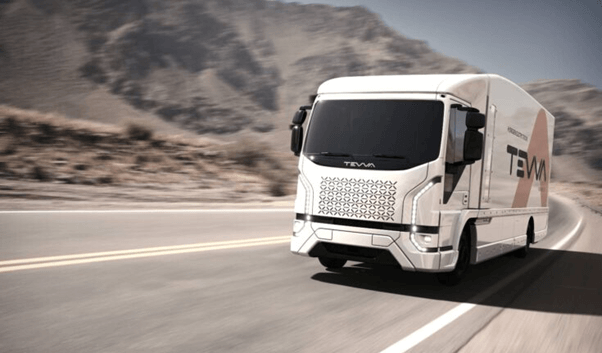 Fig 2. Electric trucks are steadily gaining market share on the back of their lower running costs and zero on-road emissions | Image: UKRI
Currently the international market offers 840 models (in use and announced), and research indicates that a 12-ton truck that has a 222kWh battery pack and 300 km range costs 18% less per km than a diesel truck. Even more encouraging is that their payback period (to recover the higher purchase cost) is 3.1 years and it would save the owner $86,528 over a 15-year lifespan. The following table lists some of the most important regulations and targets adopted across the world:
Table 1: National electric heavy duty vehicle targets by country

In terms of vehicle fuel efficiency and emission standards as well, the report lists some important regulations:

Meanwhile, the purchase incentives are equally important. Electric buses and trucks cost more than their diesel versions on account of the more expensive powertrain and the lower production volumes. The governments are trying to make them more affordable with incentives such as:
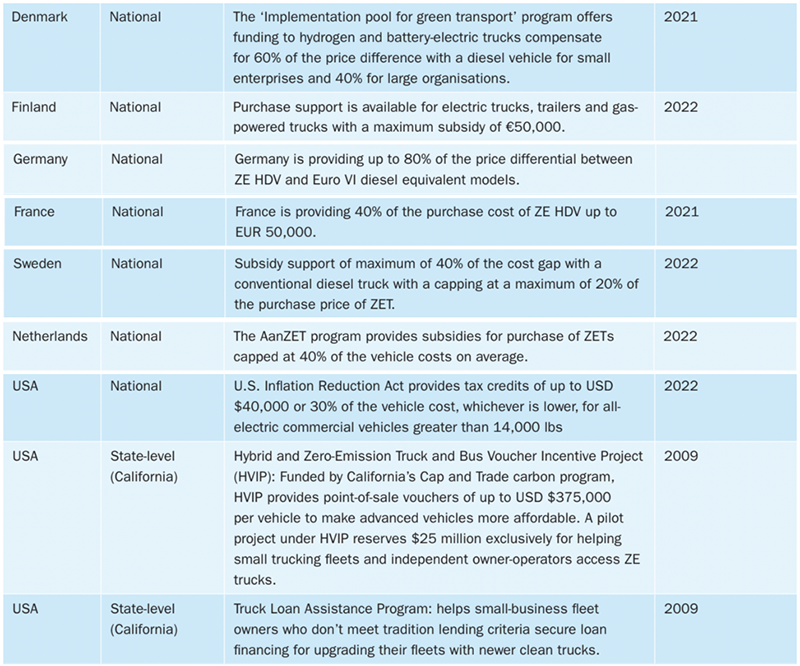
It’s worth noting that California as usual leads the US states in clean mobility. California accounted for 27.55 plug-in EVs per 1000 people in 2022 where the US national average was a mere 8.66.
Measures taken by India to build its E-Truck market Share
The report also examines the measures taken by India to build its e-truck market share. Interestingly, the market was predominantly dominated by medium duty trucks (MDTs) but in the last few years the demand for heavy duty trucks (HDTS) has been climbing. And 50% of the country’s road freight traffic travels along seven major corridors (on the national highways). To electrify the sector, the NITI Aayog launched the E-FAST (Electric Freight Accelerator for Sustainable Transport)in September 2022 and it brings together players from across the trucking industry.
The Zero Emissions Truck High-Level Ambition Group (ZET HLAG) was also launched in Goa this year at the 14th Clean Energy Ministerial. It is working to fine tune and develop new policies and partnerships to promote electric HDVs in the country. A ZET corridor that feeds off of solar power or electric power embedded into the road was also announced at the meetings; Germany is already doing it and could offer valuable insights. The demand aggregation at the Clean Energy Ministerial meanwhile identified the need for 7,750 ZETs by 2030.
The industry is therefore moving in the right direction. Affordable financing will be key to unlocking even more demand, but with the government incentives in place and many states also joining the transition, electric trucking in India should see a healthy rise in market share within the next decade.

