
Decarbonization of the freight sector transcends mere emission reduction. It can potentially mitigate energy dependency and redefine India’s geopolitical dynamics
Recently I read an insightful article by Artha Global’s Dr. Niranjan Rajadhyaksha, paying tribute to MS Swaminathan, the pioneer behind India’s Green Revolution. Titled “Lessons of the Green Revolution Could Aid Our Climate Transition”, the piece made me wonder if these lessons could be applied to another national challenge—the decarbonization of road freight.
While greening the freight sector may not mirror the past urgency of addressing the country’s hunger crisis, its magnitude holds far-reaching implications for the planet in the long term. Just as the Green Revolution resolved escalating food grain imports and secured the nation’s food supply, India now seeks energy security.
Our country’s heavy reliance—87%—on imported crude oil, with nearly half of all road transport fuel being used by freight, specifically heavy trucks, signifies the need to reduce their energy consumption. It is crucial to achieving energy independence and mitigating issues like air pollution and greenhouse gas emissions.
Like agriculture, the freight industry is a cornerstone of the economy, operating in demanding conditions and within a highly competitive landscape with narrow profit margins. So, how can we apply the pivotal lessons learned to navigate this transition?
Most impact comes from actions on the supply side rather than the demand side. In his piece Dr. Rajadhyaksha, exemplifies this through an anecdote from history when, during the 1965 war with Pakistan, Prime Minister Lal Bahadur Shastri encouraged citizens to reduce their meals to one a day to conserve the limited food stocks. This brief period of voluntary demand management starkly contrasts against the subsequent success achieved by bolstering food production—a clear increase in supply.
Likewise, we usually use the ‘Avoid, Shift, and Improve’ framework when considering the freight sector. While demand-side policies like optimising routes and shifting to alternate modes such as rail and water can offer some relief by curbing vehicle kilometres travelled (VKTs), their scope remains limited. The freight sector, pivotal in propelling India towards its aspirations, is set to grow, and so will the road freight.
The final strategy, improvement, aligns with supply-side efforts that wields significant potential. On the supply side, like hybrid seeds in the 1970s, we have technologies for freight decarbonization ready. Electric heavy-duty vehicles have already been deployed as buses in India and so has trucks in international markets. We can now focus on providing ample vehicle models and configurations to meet the needs of the freighters.
To ensure a robust supply, government intervention through stringent efficiency standards for heavy vehicles are crucial. This will incentivize Original Equipment Manufacturers (OEMs) invest in securing the supply chain. Increased supply will naturally lead to price reductions, driving demand as freighters find it more feasible to adopt zero-emission vehicles. Simultaneously, building confidence among key stakeholders are essential, achieved through pilot demonstrations.
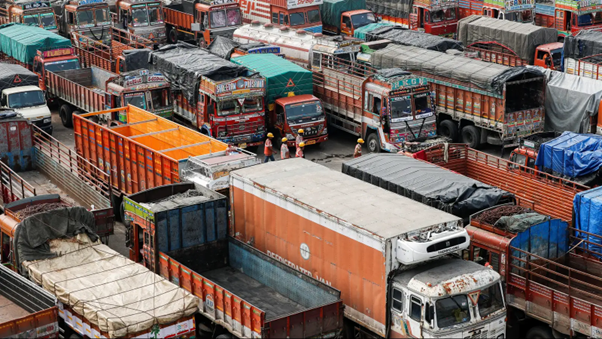 Fig 1: Trucks lined up at a depot. Image: REUTERS/Francis Mascarenhas
Supportive Policies for Greening The Freight Sector
In the second lesson, Dr. Rajadhyaksha stated that a comprehensive suite of policies underpinned the Green Revolution's success in facilitating the transition to innovative farming methods. These include input subsidies, price support mechanisms for agricultural produce, improved access to credit, and significant public investments in irrigation infrastructure.
The government and policymakers have already made headway in this area, but only for other transport segments. FAME, the central government’s flagship electrification policy, helped deploy more than 10 lakh electric two-wheelers, 1.2 Lakh three-wheelers, 15,000 four-wheelers, and nearly 7,000 buses.
Unfortunately, trucks were excluded from this initiative, leading to a lack of electrification in the heavy road freight sector. In future revisions of the scheme, extending subsidy benefits to heavy freight vehicles will catalyse the transition of this sector toward more sustainable options.
Just as the Green Revolution implemented schemes to build vital irrigation canals, we now require policies to establish essential charging infrastructure for the freight sector. Key freight corridors can be targeted first. An example is the EU’s 2023 Alternative Fuels Infrastructure Regulation, which accelerates the deployment of alternative fuel infrastructure, notably for electric vehicles, setting specific charging targets along priority corridors.
Proactive actions at sub-national levels for road freight decarbonisation
In 1969, as global aid agencies convened in Italy, India selected Punjab to receive the Green Revolution support package due to its track record and proactive efforts towards increasing agricultural production. An illustrative example of this proactive stance of Punjab is seen in 1966 when, before the Green Revolution, India imported 18,000 tons of dwarf wheat seeds from Mexico. While other states awaited trains, Punjab efficiently transported its share via trucks, ensuring timely delivery. These state-level proactive measures contributed to the significant success of the Green Revolution, first in Punjab and subsequently across India.
Likewise, in the realm of road freight decarbonization, certain states have recognized the dual advantages of environmental sustainability and economic prosperity. States such as Telangana and Goa have taken proactive steps by signing a global MoU, committing to achieving 100% zero-emission new truck and bus sales as well as manufacturing by 2040. This not only aligns with environmental goals but also positions them to attract investments and foster manufacturing growth. Other initiatives at the state level can include trucks in EV policies to support the transition and inclusion of zero-emission trucks in government utility vehicles.
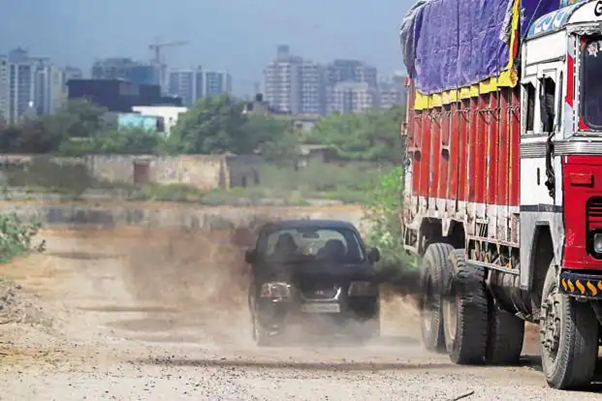 Fig 2: Emissions from trucks are a major cause of concern. Image AP
The transformative impact of the Green revolution
In his op-ed, Dr. Rajadhyaksha mentions how the impact of the Green Revolution extended far beyond enhancing India’s food supply. While its primary triumph was mitigating widespread hunger, its effects reached broader horizons. Increased food production relieved India from the constraints of food scarcity, fostering growth and political empowerment in the farming community. Additionally, the availability of domestic food grain significantly reduced India’s dependence on international food aid, granting greater autonomy in shaping foreign policy.
Similarly, the decarbonization of road freight transport transcends mere emissions and pollution reduction. It can potentially mitigate energy dependency, redefining India’s geopolitical dynamics.
This transition is crucial for nurturing industry and workforce proficiency. With global acknowledgment of the need for electric transportation, its vital to redirect our workforce, acquire specialised skills, and upgrade manufacturing facilities. The electric revolution is reshaping the landscape, offering a unique opportunity. Swift adoption of this transition positions us to emerge as leaders and potentially major exporters of zero-emission heavy freight vehicles.
Way forward
In conclusion, while the Green Revolution had various positive outcomes, it also introduced soil and water sustainability challenges. Similarly, road freight decarbonization encounters concerns like material security and employment uncertainty. This emphasises the importance of thoroughly assessing all freight decarbonization pathways to prioritise long-term solutions over temporary fixes.
Mark Twain once said, “History doesn’t repeat itself, but it often rhymes.”
Thus, just as the Green Revolution shattered food constraints and made India the breadbasket, those lessons can help us navigate through the challenges of decarbonizing road freight, offering hope for a greener, more sustainable future where the food basket is transported cleanly.
Aviral Yadav is a Researcher – EV & HDVs - at ICCT

