
Mumbai, the financial hub of India and one of the world's busiest megacities, is struggling with increasingly escalating pollution and increasing congestion. With over 4.6 million cars, including scooters, motorbikes, autorickshaws, taxis, private vehicles (particularly a fast-growing number of SUVs), buses, and commercial vehicles, jostling space on a mere 2,000 km of road space, the city boasts one of India's top vehicle densities at almost 2,300 vehicles per square kilometer.
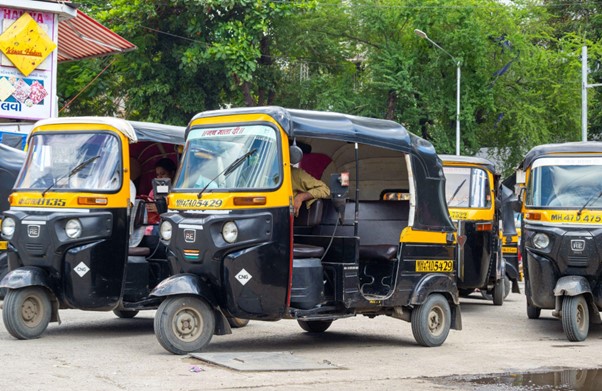
Railways and buses form the arteries of Mumbai’s public transport system, but for millions of commuters, the city truly runs on the wheels of its auto-rickshaws and taxis. Together, an estimated 650,000 auto-rickshaws and kaali-peeli taxis form the bedrock of first- and last-mile connectivity. Auto-rickshaws fill the suburban roads outside Sion and Bandra, navigating through crowded, narrow streets, while the black-and-yellow taxis, iconic and mostly found in South Mumbai, are a part of the city's fabric, connecting business centers, train stations, and airports. Running up to 12 hours a day, these drivers transport millions along the city's crowded streets, offering a service that is invaluable, even as private cars fan out around them.
Yet this service comes with a challenge: securing drivers’ livelihoods while reducing the vehicular emissions that worsen Mumbai’s already precarious air quality. This was exactly the focus on World EV Day 2025, when the need—and the willingness of drivers, policymakers, and industry to act—took center stage at the launch of Wheels of Change: Understanding EV Adoption for Mumbai’s Auto & Taxi Drivers. The report, published by Waatavaran Foundation and Climate Research Consultancy, in partnership with Asar, Purpose and the Sustainable Mobility Network, presents one of the clearest pictures to date of what the auto-rickshaws and taxi drivers think about electric vehicles (EVs), the impediments holding them back, and the prospects that could put Mumbai firmly on the trajectory of cleaner, more sustainable transportation.
 credits: iStock
Last-Mile Connectivity and Livelihoods
Mumbai’s auto-rickshaws and taxis are more than just vehicles on the road; they are essential connectors of people and places. Resilient in all seasons—including the city’s relentless monsoons—they provide indispensable last-mile connectivity where buses and trains cannot reach. Their adaptability, accessibility (through both street-hail and app-based platforms), and local expertise make them irreplaceable, especially for vulnerable populations who rely on affordable and reliable transport options.
The Wheels of Change study surveyed 1,200 drivers—55% operating auto-rickshaws and 45% taxis—across all 24 municipal wards of Mumbai. Nearly all respondents (99%) were men, predominantly aged 36–55, and over half had more than 16 years of professional driving experience. Ownership was relatively strong, with 65% of drivers owning their vehicles, while the rest hired them from fleet owners or operators. On average, drivers covered between 75–200 kilometers daily, with 51.5% reporting daily earnings above ₹600 after expenses—though this often came at the cost of grueling 12-hour shifts and rising fuel expenditures.
The message is unmistakable: awareness is not the obstacle. Drivers understand the potential of EVs, but the roadblocks lie in affordability, infrastructure, and confidence in daily operations.
Support needed:
At the launch roundtable, leaders representing tens of thousands of auto and taxi drivers voiced unanimous support for Mumbai’s transition to electric mobility—but with a clear caveat: it must be a just transition. Drivers are ready to embrace EVs, but they cannot be left to shoulder the financial and operational risks alone.
These leaders emphasized that without targeted support measures, many drivers—already stretched by long shifts, rising costs, and precarious earnings—would be excluded from the EV shift. Their collective demands centered on practical steps that could make the transition both fair and viable:
- Affordable Finance: Access to low-interest loans and streamlined subsidies, ensuring that drivers can enter the EV market without prohibitive debt burdens.
- Reliable Infrastructure: Deployment of fast-charging and battery-swapping stations in high-demand corridors as well as informal neighborhoods where a large share of drivers live and operate.
- Dedicated Facilities: Provision of EV parking zones and structured maintenance networks to minimize downtime that directly impacts daily earnings.
The message was clear: drivers see promise in electrification, but they need systemic support to make the leap. Without enabling policies and infrastructure, the EV transition risks leaving behind the very workforce that keeps Mumbai moving.
 Credits: Interaction between various Auto rickshaw and Taxi owners : SMN team
Recommendations: The report lays out a roadmap that directly addresses drivers’ concerns:
- Fast-Charging and Swapping Networks: Deploy high-capacity stations across key demand corridors and inside dense neighborhoods.
- Innovative Financing Solutions: Provide low-interest loans, simple subsidy disbursement, and flexible repayment options such as daily micro-EMIs.
- Dedicated EV Facilities: Create EV parking and charging spaces near depots, markets, and informal settlements.
- Stable, Long-Term Policy Framework: Give drivers and investors certainty with clear timelines for subsidies, scrappage incentives, and fleet electrification targets.
- Enhanced Scrappage & Recycling: Offer attractive incentives to retire older, polluting vehicles responsibly.
Mumbai’s auto-rickshaws and taxis are more than just transport-they’re a lifeline for millions and a key source of jobs. Shifting these vehicles to electric power can sharply cut particulate and greenhouse-gas emissions, improving air quality and public health, especially for vulnerable groups like children and the elderly. At the same time, electrification protects drivers’ livelihoods by reducing fuel costs and opening new work opportunities in EV maintenance and charging. The stakes for both the economy and the environment are significant, and so are the benefits of acting quickly.
The September 2025 World EV Day launch of this report was both a milestone and a starting point—a rallying cry for Mumbai’s collective move toward a cleaner mobility future. Drivers are not only open to change but eager, if supported. Government, industry, and civil society must work in coalition to turn policy promises into on-ground realities.
The city’s legendary auto-rickshaw and kaali-peeli taxis, so integral to Mumbai’s identity and lifeblood, can now pave the way for an inclusive and just green mobility revolution.
About the Author


