
Trade barriers, supply chain issues and concentration of these minerals in a handful of geographical areas have thrown up immense challenges for countries keen on transforming to sustainable solutions
Critical minerals, which are crucial for electric vehicles and sustainable energy storage solutions, have been an important topic for policy makers globally, owing to their rising demand on the back of transformation to clean technologies, supply chain challenges and the ever-changing geopolitical landscape. Like all other countries keen to fast track the transition to clean solutions, India too has been approaching the challenge of securing its supply chains head-on. In this direction, it recently signed a pact with the International Energy Agency (IEA) on cooperation on critical minerals.
Apart from providing access to reliable data, this Memorandum of Understanding (MoU) with the IEA will allow India to get valuable policy recommendations in the critical mineral sector, thereby enhancing its decision-making capabilities and ensuring strategic resource management. At the same time, it will also help India “streamline its policies, regulations and investment strategies” to align them with global standards. The signing of this pact is one of the many crucial measures taken by India to secure its critical mineral supply chain and end its dependence on other countries for its imports.
But why are critical minerals so important in the present geopolitical context? These rare minerals are increasingly being considered as “strategic assets” by nations who have committed to reduce their dependence on conventional sources of energy and ensure a green transition. Trade barriers, supply chain issues and concentration of these minerals in a handful of geographical areas have made matters worse, thus increasing the rush to secure their supply.
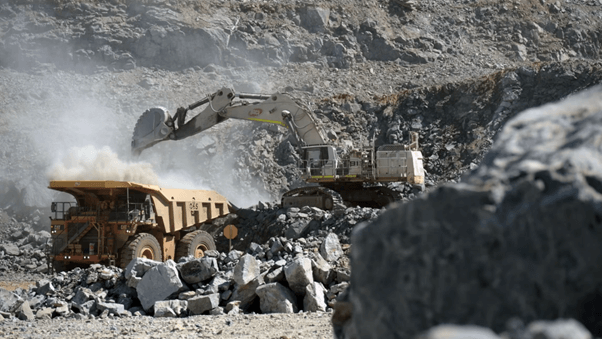 Fig 1: Prices for lithium fell by 75% in 2023, whereas demand for the critical mineral increased by 30%. Image: 0 Carla Gottgens/Bloomberg
Places where Critical Minerals are Mined Globally
The International Energy Agency (IEA) predicts that the global demand for lithium will rise 40-fold by 2040 — along with a 20-25 time growth in demand for graphite, cobalt and nickel —as electric vehicles and clean energy storage systems conquer market shares across all major economies. The metal is categorised as a “critical mineral” by the United States Geological Survey (USGS) — along with 49 others — as it is used extensively in making the cathodes for most commercial-grade EV batteries.
As the world transitions to clean energy sources like e-mobility and renewable energy, the role of critical minerals in global energy security becomes all the more critical. It is further complicated by the fact that critical mineral reserves are concentrated in very few geographies on earth.
The “lithium triangle” of Chile, Argentina and the salt flats of Bolivia holds 56% of all known lithium deposits, while 7.9% falls within China.
Cobalt is another highly sought-after metal that’s used in EV batteries, and 70% of it is mined by the Democratic Republic of Congo. EV batteries also depend on a combination of several rare earth metals, such as Ruthenium, Chromium and Iridium. However, China at the moment accounts for around 70% of the world’s rare earth minerals supplies, while North Korea is reported to have $10 trillion worth of minerals and two thirds of the world’s rare earths. Yet, due to its political isolation, it may be difficult to bring the deposits to the global supply chain.
How Are Major Economies Securing Their Critical Mineral Supply Lines
According to the IEA’s Critical Minerals Outlook 2024, most of the major economies across the world have put in place “high-level” critical mineral strategies, driven mostly by their pledges to transition fast towards clean and sustainable energy sources. However, in other nations, mostly emerging economies, these strategies are either under development or have been announced.
“The African Minerals Development Centre (ADMC) is developing an African Green Minerals Strategy which will aim to guide African countries as they consider how to exploit their raw materials,” the IEA said in its report. The AMSG has also announced that it will join the Council for Critical Minerals Development in the Global South, an initiative of Sustainable Energy for All (SEforALL), the Institute of Transportation Studies, UC Davis and Swaniti Global.
The IEA said some nations which produce minerals have also created a public strategic minerals investment fund, prominent among whom is Brazil, which announced a USD 200 million fund to support both exploration and improvements in ESG practices. “In October 2023, Australia expanded its Critical Minerals Facility with a USD 1.3 billion investment, financing extraction and processing projects. Canada’s CAD 1.5 billion (Canadian dollars1) Strategic Innovation Fund, as part of the CAD 2.8 billion Critical Minerals Strategy, aims to prioritise innovative critical minerals manufacturing, processing and recycling projects,” it said.
In Latin America, countries like Mexico and Chile have enacted policies to develop their domestic lithium mining industries. “Mexico followed its 2022 Mining Reform with legislative amendments in 2023 that streamlined the mining permitting process and strengthened environmental and social protections. Chile also followed its 2023 National Lithium Strategy with an update to its Mining Royalty Law in 2023. The law established a mining royalty for the exploitation of copper and lithium to distribute economic benefits across the country, along with a legal body to administer it,” the report said.
The United States, which has pledged to fast track its green transition, has already announced the Inflation Reduction Act which provides funding to various government agencies to hire new personnel and develop tools and guidance to strengthen and accelerate environmental reviews. “The proposed Critical Raw Materials Act (CRMA) of the European Union would allow certain projects to be designated as ‘strategic’ that would have a streamlined permitting process. The act lays out criteria for a project to be designated as ‘strategic’, including whether the project would be implemented sustainably and responsibly,” the IEA said.
Similarly, Japan has also announced a policy to ensure a stable supply of critical minerals. The policy also provides subsidies for exploration, feasibility studies, mine development, smelting and research and development to develop supplies. On the other hand, Korea announced a list of 33 critical minerals and 10 strategic critical minerals, of which the latter will be prioritised to stabilise the supply chain of high-tech industries such as semi-conductors and secondary batteries.
Plans have also been set in motion by some countries to put in measures for boosting battery recycling to secure critical minerals, the IEA said. “The European Union’s Critical Raw Materials Act will require member states to identify, adopt and implement measures to improve the collection and recycling of critical mineral-rich waste, as well as investigate the potential for recovery of critical raw materials from extractive waste in active and historic mining sites,” the IEA report stated. Among other countries, the US too has come out with various measures to upscale recycling.
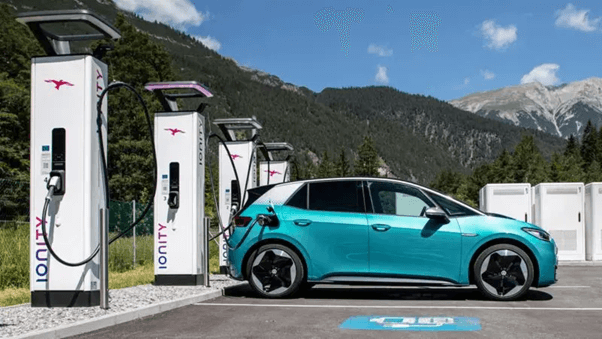 Fig 2: A car at an electric vehicle charging station. Image: IONITY
Critical Minerals: Measures Taken by India to Become Self-Sufficient
- Forging Partnerships: India joined the Minerals Security Partnership, or MSP, a US-led alliance of 14 developed economies aimed at ensuring uninterrupted supply of critical minerals and rare earth essential for sustained economic growth. These minerals and metals are key to India’s ambition of becoming a manufacturing hub and transitioning to clean mobility, particularly its push to adopt electrical vehicles (EVs).
- India and the US have also recently signed a pact that not only aims to establish a secure supply chain for essential minerals but also targets fostering collaboration in extraction, processing and producing development.
- India has also established the Khanij Bidesh India Ltd. (KABIL) with an aim to “identify and acquire critical mineral assets overseas” and securing reserves in various producer countries like Argentina, Chile, and Australia, particularly for lithium and cobalt, apart from looking at bilateral agreements with countries as well.
- In line with ambitious climate targets and achieving its 2070 net-zero goal, India announced its first list of 30 critical minerals In June last year, which clearly helps the country define strategies for securing its critical minerals supply chain.
- India also made crucial amendments into its Mines and Minerals (Development and Regulation) Act in 2023, that will now enhance private sector participation in the exploration and mining of critical minerals.
- In the Union Budget this year, the Indian government announced the setting up of a Critical Mineral Mission for domestic production, recycling of critical minerals, and overseas acquisition of critical mineral assets. “Its mandate will include technology development, skilled workforce, extended producer responsibility framework, and a suitable financing mechanism,” Finance Minister Nirmala Sitharaman had said in her budget speech.
- Minerals such as lithium, copper, cobalt and rare earth elements are critical for sectors like nuclear energy, renewable energy, space, defence, telecommunications, and high-tech electronics. The government had also announced full exemption of customs duties on 25 critical minerals and reduced BCD on two of them, a move aimed at providing major fillip to the processing and refining of such minerals and help secure their availability for these strategic and important sectors.
About the Author


