
E-buses have the potential to influence India’s energy security objectives while meeting its decarbonisation and pollution mitigation efforts.
Buses are the backbone of a country's mobility system, moving millions of people ac ross cities and connecting rural and urban areas. A country’s economic growth depends a lot on having a strong, efficient and well connected bus network. However, this vital sector is currently dominated by diesel-powered buses, which are major contributors to both rising greenhouse gas emissions and urban air pollution. Given India’s economic growth, expansion of urban areas and ecological pressures, a sustainable and resilient bus-based public transport has become the need of the hour.
Electrifying this segment is therefore not a luxury but an economic, environmental, and public-health imperative. Significant strides have been made in electrification of this government, thanks to central government programs like FAME II, the new PM-eBus Sewa initiative and state-level tenders. Owing to these schemes, the country has deployed thousands of electric buses, with major urban centers such as Delhi, Mumbai, Bengaluru, and Hyderabad rolling out substantial EV fleets.
Despite this progress, the pace of adoption remains slow, and many states still heavily rely on older diesel technology. To achieve decisive electrification, a concerted effort is needed by putting in place stable procurement models, strong financial backing, and the rapid deployment of charging infrastructure. This push will not only improve India's air quality but also boost its long-term economic resilience, enhance transport efficiency, and strengthen energy security. At the same time, scaling up bus electrification can also help increase job creation and bus stock.
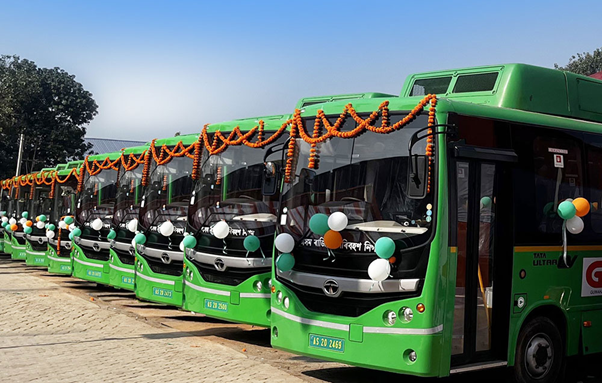 Fig 1: Electric buses in Assam. Pic Tata Motors
Buses In India: The Current Scenario
According to a CEEW study, buses in India ferry approximately 16% per cent of the country’s workforce, with nearly 390 million daily commuters. “In 2014, buses accounted for nearly 10 per cent of the total diesel consumption in the country, contributing significantly to India’s oil imports,” the study pointed out.
The study highlights that cities should have a minimum of 600 buses per million residents (or 60 per lakh), as per the government's Service Level Benchmarks (SLBs). Achieving this is crucial to increase public transport usage and subsequently decrease the reliance on private vehicles, which currently account for nearly 95% of petrol and 13% of the total imported diesel consumption.
“Most mega-cities in India, excluding Bengaluru, have around 200-400 buses per million (20–40 buses per lakh), highlighting a significant gap nationwide. Thus, there is an urgent need to expand bus-based public transport while reducing buses’ overall reliance on fossil fuels,” said the study titled India's E-bus Initiatives – Job Creation, Adoption Challenges, and Policy Pathways.
It estimates that a mere 9,700 electric buses (e-buses) have been registered in the last decade, with the e-bus market growing at a compound annual growth rate (CAGR) of ~65 per cent owing to sales driven by e-bus programmes and government incentives.
The study finds that buses will continue to serve “nearly one-fourth of the Indian population (457 million or 45.7 crore passengers) daily in 2047 in the Business As Usual (BAU) case. CEEW’s Transportation Fuel Forecasting Model (TFFM) forecasts that 3.34 million (33.4 lakh) buses will be on-road by 2047 in the BAU scenario.”
Noting that the demand for 1 additional bus creates approximately 4-5 new jobs in the market, the study projects that the bus ecosystem will generate approximately 10.1 million (1.01 crore)
jobs by 2047, with 95 per cent of these jobs in operations and 5 per cent in manufacturing. “The bus sector is projected to generate approximately 9.6 million operational jobs and 0.51 million manufacturing jobs by 2047,” it said.
Going by the current scenario, e-buses will account for 42 per cent of annual sales by 2047. However, there are certain challenges which stand in the way of scaling up the benefits gained due to this electrification, something which must be overcome immediately.
The study noted that light passenger vehicle category buses form about 30 per cent of the buses registered on the Vahan portal, necessitating the availability of cheaper and cleaner variants of these buses. Bus sales data for 2023–2024 show that school and college buses account for about one-third of the market, remaining the largest use case but “lower daily utilisation of school buses makes e-buses financially unviable for such operations. Hence, more affordable e-bus variants tailored for educational use are needed.”
It also calls for leveraging the consolidated bus market to nudge standardisation and interoperability, noting that the Indian market remains fairly consolidated, “with the top five legacy companies accounting for 91.3 per cent of registrations across diesel, CNG, and electric buses.” This makes it essential to “create standards for sharing battery management data and interoperability of chargers.”
There are many innovative practises which states around the country have already adopted that has the potential to scale up the e-bus market considerably, namely battery swapping as an alternative to fixed charging, operations management to address battery degradation, e-depot planning to reduce dead kilometres, gender inclusion in driving jobs, rental models of operation and retrofitting of these vehicles, it added.
 Fig 2: E buses stationed in Phaphamau. Pic: Anil Kumar Maurya/HT (HT_PRINT)
Addressing The Barriers to Strengthen The E-Bus Segment
The study notes that lack of data from OEMs regarding charge cycle utilisation increases fleet operators’ uncertainty. “Thus, policymakers must create the required regulatory frameworks, such as battery aadhar/ battery passport, to enable battery data sharing among operators. Being a publicly owned asset, the state transport undertaking- (STU) / city transport undertaking- (CTU)5 -run e-buses can be the perfect pilot case for implementing such systems before a complete roll-out is put in place,” it said.
It argued that apart from creating a robust battery insurance ecosystem, this will also improve the secondary market value of e-buses. It also suggested the government to support and fast-track the adoption of proven technologies like battery swapping and retrofitted e-buses.
It also flagged the inadequate charging infrastructure for e-buses that it said further limited demand. “Effective operations, combined with strategic investment in charging infrastructure, can help overcome range limitations, as highlighted in Surat, at the city level, and Uttar Pradesh, at the state level. However, it is critical to mandate charging interoperability among bus OEMs to optimise investments, enhance utilisation, and make operations seamless,” it added.
About the Author


