
EVs have no tailpipe emissions which makes them ideal for India’s polluted cities. Converting ICE vehicles into electric can help bring down pollution levels and promote clean mobility
The Delhi government was in the news for stating that it would consider taking the steps to lower the cost of retrofitting ICE vehicles with EV kits. That one statement says two things: that the cost of retrofitted EVs are high, and that the process will need government support.
Benefits of Retrofitted EVs in India
Electric vehicles have hit around 6% of the automotive market in terms of new vehicle sales. The roadblocks remain the same: not enough chargers, higher upfront costs and general buyer scepticism about the technology, especially when it comes to after-sales service. Yet ICE vehicles of all classes can be retrofitted with electric propulsion kits. This would have two benefits:
- Cost-effectiveness:The cost of retrofitting an ICE car starts at around Rs. 3 lakhs and can go up to over 10 lakhs. The amounts can be daunting to most consumers as the price points are the same as buying a used car in relatively good condition — depending on the brand. For ICE scooters and motorcycles, the cost starts at approximately Rs. 55,000. For cars the cost is much higher for two reasons: the battery and the labour.
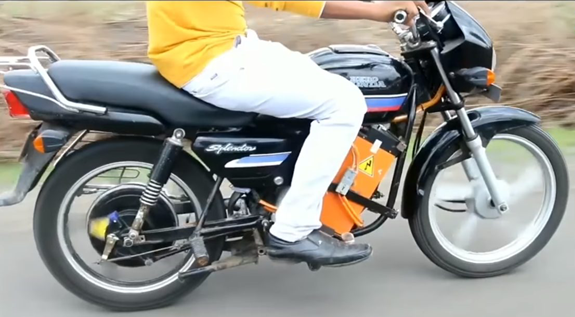 Fig. 1: An ICE motorcycle retrofitted with an electric conversion kit | Image: Cartoq
It’s well known that EV batteries generally account for ~50% of the vehicle cost. It’s the most expensive component and there are concerns around its fire safety as well, which drives up the cost for quality packs. Also cars need much bigger battery packs.
Meanwhile the kit itself has to be tailored to each brand and model of vehicle. The same conversion kit cannot be used for a Maruti Suzuki Swift and a Honda City. The size of the battery pack must be calibrated to meet the vehicle's weight and desired acceleration. And the motors, cables and harnesses must be fitted to the vehicle properly, which calls for labour-intensive hours.
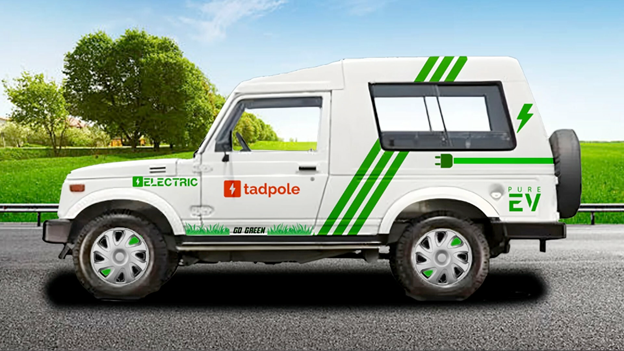 Fig. 2: A Maruti Gypsy converted to electric for the Indian Army | Image: HT Auto
The driving range and use case are important factors as well. Vehicles intended to be used within the city alone may opt for a driving range of anywhere between 100 - 200 km. Inter-city runs may require much higher battery capacities as India does not yet have reliable access to EV chargers on the highways. Battery management systems that regulate the temperature of the battery pack are another essential component as keeping the pack is necessary for safe operations in India’s stop and start traffic and high ambient temperatures.
Yet, once the expense on conversion is dealt with, the running cost is much lower. Statistics indicate that e2Ws’ running costs can be up to 90% lower that of their petrol counterparts. The per unit cost of electricity will be cheaper than the per litre price of petrol, and EVs also generally make more efficient use of the on-board power. So the cost savings start to add up immediately. Depending on how much the vehicle is driven, the kit’s payback period could be as low as two-three years.
- Zero on-road pollution: EVs have no tailpipe emissions, which makes them ideal for India’s polluted cities. The country had 39 of the world’s 50 most polluted cities in March 2023 and it has been a chronic issue. The government has taken several steps, one of which is the accelerated phase out of vehicles in Delhi that no longer meet at least the BS-IV emissions norms, and more cities will eventually follow suit. Converting ICE vehicles to electric future-proofs them to any such vehicle bans, and the only expense will be to upgrade the battery pack, if and when required.
EV retrofitting companies in India
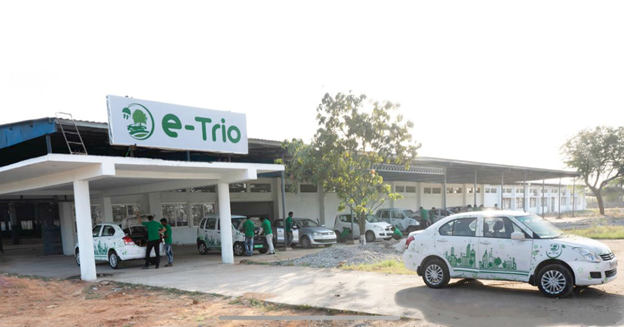 Fig. 3: Cars being retrofitted with electric kits at E-Trio in Hyderabad | Image: E-Trio
The process itself is simple and the retrofitted vehicle must be registered with the concerned RTO as an electric vehicle to be insured and operated. There are several EV retrofitting companies in India at the moment that retrofit cars, small carrier trucks, motorcycles and even buses. The most popular of them are:
- Folks Motor
- E-Trio
- Sun Mobility
- Bharat Mobi
- Starya
- Loop Moto
- RetroEV.in
- Precision Camshafts Limited (PCL)
However, as with any other service provider, it’s important to request for quality conversion kits and go through the process only with a certified retrofitting agency. This is a requirement to be able to re-register the vehicle and goes a long way in ensuring that safety and workmanship have not been compromised.

