
New government initiatives, technological advancements, incentives at the sub-national level and active private sector involvement helped collectively fast track the country’s green transition this year
Till a few years back, the concept of an electric vehicle seemed to be something from the future and owning them in India was like a distant dream. But in the last few years, the EV ecosystem has burgeoned to significant proportions, registering eye-catching growth in various segments. The interest in this sector has grown manifold with hundreds of start-ups and established firms fostering innovation, offering tailored-made solutions and boosting the ‘much needed’ infrastructural support to further push EV adoption.
In this backdrop, new government initiatives coupled with policy continuity, state-level incentives backed by private sector innovations and the rising appetite among consumers to opt for cleaner mobility options spurred India’s clean transportation landscape to new heights in 2024. The substantial growth registered in electric vehicle sales in 2024 marked a significant milestone in adoption of these clean vehicles, playing a pivotal role in India’s journey towards sustainable development and its commitment to achieve net-zero by 2070.
Despite several challenges, 2024 witnessed several transformative advancements in the EV sector in India, which also went on to achieve several breakthroughs and achievements. As sales of electric two wheelers and bikes surged, India also surpassed China to become the world’s largest e-three wheeler market, backed by regulatory boosts and evolving business models.
Going by the positive trends, the Indian EV market is expected to grow in the range of 35-40% CAGR till 2027, even as sales volumes are projected to reach 3-4 million units by 2025 and 10 million by 2030. However, the journey ahead remains far from smooth with several challenges dotting the way, including gaps in infrastructure, high cost of EVs, evolving a robust circular economy and the ever changing dynamics of geopolitical factors.
India’s Electric Vehicle Growth Story in 2024
According to the Clean Mobility Shift’s EV Dashboard, around 13,65,491 units were sold in India as of November this year, registering an EV penetration of 5.66% across various vehicle segments. Electric two wheelers and three wheelers continued to dominate the sales, selling 6,98,511 units and 5,92,401 units respectively till November this year. In the e-four-wheeler segment, 65,660 units were sold across India while 3,146 e-buses were included in various fleets.
In the e-two wheeler and four wheeler category, Maharashtra led from the front, selling 1,25,985 units and 9,819 units respectively this year till November while Uttar Pradesh topped the e-three wheeler segment, registering sales of around 2,28,088 units. Delhi led the e-bus category, registering over 800 buses in the city.
The CMS EV dashboard, which draws on data, in real time, from the Indian Government owned Vahan dashboard and presents it in a simplified and user-friendly manner that enables quick analysis and comparisons of vehicle sales at various levels of granularity, also predicts scenarios in coming years under three scenarios. Under the low adoption scenario, India is projected to sell around 21 lakh EV units in 2025 while in the medium adoption scenario, it is predicted to reach around 23 lakh e-vehicles next year.
Under the high adoption scenario, India’s EV sales are likely to reach nearly 24 lakh units. India’s significant adoption numbers reached in 2024 shows how various key measures undertaken both by the central government and at sub-national levels, coupled with the active participation of the private sector has fast-tracked this transition. Let us now take a look at some of the key initiatives and developments that helped shape up this trend this year.
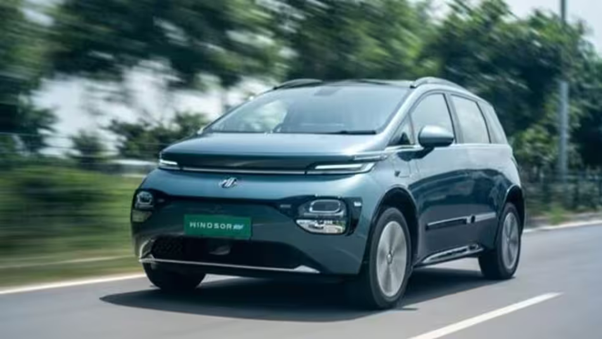 Fig 1: An electric car. Pic credit: MG Motors
Shaping Up India’s Future: PM E-Drive Scheme
This 2024 initiative not only aims to streamline the buying process of EVs for the consumers, but also paves way for the transformation of other sectors into electric, including integrating EVs in the health sector by deploying e-ambulances, electrification of Heavy Duty Vehicles (HDVs), which are among the significant contributors to air pollution, providing subsidies to various categories of vehicles, building robust charging infrastructure and skilling people in this sector among others. The PM Electric Drive Revolution in Innovative Vehicle Enhancement (PM E-DRIVE), which has an outlay of Rs 10,900 crore for two years, introduces targeted approaches to facilitate this transition. The scheme aims to provide subsidies worth Rs. 3,679 crore to incentivize e-2Ws, e-3Ws, e-ambulances, e-trucks and other emerging EVs and boost greener transport solutions in India. According to a government document, the scheme aims to support 24.79 lakh e-2Ws, 3.16 lakh e-3Ws, and 14,028 e-buses.
It also provides a significant sum for the procurement of 14,028 e-buses by STUs/public transport agencies. The demand aggregation will be done in the nine cities with more than 40 lakh population – Delhi, Mumbai, Kolkata, Chennai, Ahmedabad, Surat, Bangalore, Pune and Hyderabad. In consultation with states, the government also plans to support Intercity and Interstate e-buses.
These measures come following the government’s earlier approval of a scheme that envisages a deployment of over 10,000 electric buses – along with charging and associated infrastructure – in nearly 170 cities. Named ‘PM-eBus Sewa', the government had estimated its cost to be over Rs 57,000 crore. The government eventually aims to introduce 50,000 electric buses nationwide to curb harmful emissions in the transport sector.
The PM E-Drive scheme has an outlay of Rs 500 crore plans to incentivise e-trucks, especially those who procure a scrapping certificate from MoRTH approved vehicles scrapping centres (RVSF). The scheme also envisages the introduction of e-vouchers for EV buyers. One of the challenges in achieving higher adoption rates in India is the range anxiety among consumers. However, the PM-E Drive scheme also tries to address this issue by promoting in a big way the installation of electric vehicle public charging stations (EVPCS).
These EVPCS are planned to be installed in cities with high EV penetration and also on selected highways. Elaborating on the roadmap, the government had earlier said it proposes to install 22,100 fast chargers for e-4 Ws, 1800 fast chargers for e-buses and 48,400 fast chargers for e-2W/3Ws, with an outlay of Rs 2,000 crore.
The government also plans to modernise the testing agencies under the Ministry of Heavy Industries to deal with new and emerging technologies. “The upgradation of testing agencies with an outlay of Rs.780 crore under the aegis of MHI has been approved,” the government document had earlier said.
FAME Scheme
The PM-Drive scheme announced by the government came on the back of the crucial Faster Adoption and Manufacture of Electric Vehicles (FAME) scheme. The scheme’s first phase (with a budget of Rs 895 crore) was in effect from 2015 to 2019, while the second phase (with a budget of Rs 11,500 crore) was from 2019 to March, 2024. Through this, the government provided substantial subsidies to both the OEMs and end-users to make EVs a more affordable solution, and the preferred choice for mobility.
The government later announced the Electric Mobility Promotion Scheme (EMPS) in March 2024 with an outlay of Rs 500 crore for four months. This scheme too is aimed to provide support to the two and three-wheeler segment to fast track the transition. Earlier this year, the government also proposed an allocation of Rs 3,500 crore for the PLI Scheme for Automobiles and Auto Components for 2024-25. This figure is a significant increase, given that in 2023-24, the budget estimate was Rs 604 crore while the Revised Estimates turned up to be Rs 483.77 crore.
Enabling Green Transition: Eye On Critical Minerals To Become Self Sufficient
Critical minerals are crucial for electric vehicles and sustainable energy storage solutions and have been an important topic for policy makers owing to their rising demand on the back of transformation to clean technologies, supply chain challenges and the ever-changing geopolitical landscape. Like all other countries keen to enable the transition, India too has been approaching the challenge of securing its supply chains head-on.
Right at the beginning of the year, India made its focus clear on securing these rare minerals by announcing the setting up of a Critical Mineral Mission for domestic production, recycling of critical minerals, and overseas acquisition of critical mineral assets. During her budget speech, Finance Minister Nirmala Sitharaman said the CMM’s “mandate will include technology development, skilled workforce, extended producer responsibility framework, and a suitable financing mechanism.”
Noting that these minerals were critical for sectors like nuclear energy, renewable energy, space, defence, telecommunications, and high-tech electronics, the government also proposed to fully exempt customs duties on 25 critical minerals and reduce BCD on two of them, thus aiming to provide a major fillip to the processing and refining of such minerals and help secure their availability for these strategic and important sectors.
Critical minerals like Lithium along with 49 others are used extensively in making the cathodes for most commercial-grade EV batteries. India has been consistently upping its game to gain access to these minerals and thwart its dependence on China. India became the only developing country in the coveted Mineral Security Partnership (MSP) – a US-led alliance of 14 developed economies aimed at ensuring uninterrupted supply of critical minerals and rare earth essential for sustained economic growth.
In 2024, India also signed a pact with the International Energy Agency (IEA) on cooperation on critical minerals. Apart from providing access to reliable data, this Memorandum of Understanding (MoU) with the IEA will allow India to get valuable policy recommendations in the critical mineral sector, thereby enhancing its decision-making capabilities and ensuring strategic resource management.
At the same time, it will also help India “streamline its policies, regulations and investment strategies” to align them with global standards. The signing of this pact is one of the many crucial measures taken by India to secure its critical mineral supply chain and end its dependence on other countries for its imports.
Earlier this year, the government also announced that 24 critical and strategic mineral blocks have been sold in four rounds of auction. Of the 48 blocks put to e-auction, 24 have been successfully auctioned, including four mining lease (ML) and 20 composite license (CL) blocks, it had said.
Realising The Crucial Importance of Building A Robust Charging Infrastructure
A new report suggests that India’s increasing demand for public charging infrastructure for powering EVs will require a capex of Rs 16,000 crore to achieve 30% electrification by 2030. Yet another report estimates that by 2030, India may have around 50 million EVs on its roads, requiring approximately 1.32 million charging stations. It says to meet this demand, the country will need to install about 400,000 chargers annually.
The government this year has already made it clear that electric vehicle public charging stations (EVPCS) are planned to be installed in cities with high EV penetration and also on selected highways. Elaborating on the roadmap, the government had earlier said it proposes to install 22,100 fast chargers for e-4 Ws, 1800 fast chargers for e-buses and 48,400 fast chargers for e-2W/3Ws, with an outlay of Rs 2,000 crore.
In its effort to continuously work towards building a robust network of charging stations with interoperability, India this year also issued guidelines and standards for EV Charging Infrastructure. titled "Guidelines for Installation and Operation of Electric Vehicle Charging Infrastructure-2024", that outline standards and protocols to create a connected and interoperable EV charging infrastructure network and facilitate electricity connections for EV charging stations.
These revised guidelines for installation and operation of EV charging stations envisage a new revenue-sharing model between government and private players and will apply to a wide range of EV charging locations. These include privately-owned parking spaces and semi-restricted areas such as office buildings, educational institutions, hospitals, and group housing societies. Other spaces including petrol pumps, metro stations, shopping malls, municipal parking lots among others are also covered under the guidelines.
These guidelines also propose that government or public entities provide land at subsidised rates to private operators. In return, the land-owning agency will receive a share of the revenue, calculated based on the electricity consumed at the charging station, for a 10-year period.
 Fig 2: An electric car at a charging station. Pic credit: Beam Global
Scheme To Promote Manufacturing Electric Cars in India
During 2024, the government also notified the “Scheme for Promotion of Manufacturing of Electric Passenger Cars in India (SPMEPCI) to promote the manufacturing of electric cars in India. According to reports, this requires applicants to invest a minimum of Rs 4,150 crore and to achieve a minimum DVA of 25% at the end of the third year and DVA of 50% at the end of the fifth year.
This initiative aims to attract global EV manufacturers and establish India as a key manufacturing hub for electric vehicles. Reports suggest that the first stakeholder consultation for this new scheme took place on April 18 this year with major Original Equipment Manufacturers (OEMs) in attendance. The scheme is part of India’s broader strategy to accelerate EV adoption and manufacturing.
Focus On Rooftop Solarisation To Power Electric Vehicles
The government also announced this year that it will “further encourage” the Prime Minister Surya Ghar Muft Bijli Scheme that aims to install rooftop solar plants for 1 crore households, providing free electricity up to 300 units per month. The initiative announced during the Interim Budget earlier this year has already received a good response with more than 1.28 crore registrations and 14 lakh applications already.
The scheme, which has been allocated Rs 6,250 crore, is expected to reduce reliance on non-renewable energy sources and promote renewable energy adoption. Noting that energy transition is critical in the fight against climate change, the government had also proposed to expand the list of exempted capital goods for use in the manufacture of solar cells and panels in the country.
Installing rooftop solar panels has its own share of benefits. While people can avail lower per-unit cost of solar electricity, it is also easy to set up in remote areas lacking grid connectivity. Furthermore, many state governments also provide subsidies and incentives for installation of solar panels at homes. According to reports, 40-45% EV users in Rajasthan, Gujarat, and Kerala have deployed solar rooftops to charge vehicles.
Recognising the Need for Skilling for Creation of Talent Pool
The budget also announced a new centrally sponsored scheme for Skilling under Prime Minister’s Package for 20 lakh youth over a 5-year period. It also announced the revision of a Model Skill Loan Scheme to facilitate loans up to 7.5 lakh. The Finance Minister also said that financial support for loans up to Rs 10 lakh for higher education in domestic institutions to be provided to youth who have not been eligible for any benefit under government schemes and policies.
At the same time, the Budget also spoke about upgrading 1,000 Industrial Training Institutes in hubs and spoke arrangements. To overcome the key barriers faced by women in the workforce, the Budget also announced a total allocation of more than Rs 3 lakh crore for schemes benefitting women and girls.
Other Developments
The Ministry of Road Transport and Highways also recently issued a new notification – “the Central Motor Vehicles (Twelfth Amendment) Rules, 2024” that introduces new safety standards for Electric Power Train Construction Equipment Vehicles. Effective from January 1, 2025, the rules make it necessary for vehicles to comply with AIS-174 standards until corresponding BIS specifications are notified. This is aimed at enhancing the safety standards for electric construction equipment vehicles, promoting safer operations in the construction industry.
About the Author


