This technology represents an exciting alternative to lithium-ion batteries, especially in terms of cost effectiveness, sustainability, and raw material availability
The world is fast transitioning towards electric vehicles and renewable energy, given the rise in emissions and increase in the number of catastrophic climate change events. At the crux of this transformation is the need for affordable and sustainable energy storage solutions, which at present, is being driven by lithium-ion battery technology.
However, given the current tense geopolitical dynamics, concentration of critical mineral reserves in certain geographies, trade barriers being put up by several countries and supply chain challenges, sodium-ion battery technology may well pip their lithium-ion counterparts and squeeze itself into the global battery market, thus revolutionising the energy storage segment owing to their potential to offer a more cost-effective and environmental-friendly alternative.
What Makes Sodium-ion Battery Technology More Viable
Let us first understand why alternative technologies like sodium-ion batteries hold the potential to replace lithium batteries which currently dominate the market. The International Energy Agency (IEA) predicts that the global demand for lithium will rise 40-fold by 2040 — along with a 20-25 time growth in demand for graphite, cobalt and nickel.
The “lithium triangle” of Chile, Argentina and the salt flats of Bolivia holds 56% of all known lithium deposits, while 7.9% falls within China. Cobalt is another highly sought-after metal that’s used in EV batteries, and 70% of it is mined by the Democratic Republic of Congo. EV batteries also depend on a combination of several rare earth metals, such as Ruthenium, Chromium and Iridium.
However, China at the moment accounts for around 70% of the world’s rare earth minerals supplies, while North Korea is reported to have $10 trillion worth of minerals and two thirds of the world’s rare earths. Yet, due to its political isolation, it may be difficult to bring the deposits to the global supply chain. Given this scenario, it does not come as a surprise that scientists are looking at ways to bring down the battery’s most expensive and least readily available ingredient.
Inroads have already been made in this segment, with scientists coming out with options to reduce the need of some other ingredients like cobalt and nickel and companies foraying into a battery chemistry which uses sodium to help reduce the costs of energy storage solutions both in electric vehicles (EV) and the renewable energy sector. While sodium-ion batteries are still in the early stages of development, they represent an exciting alternative to lithium-ion batteries, especially in terms of cost effectiveness, sustainability, and raw material availability.
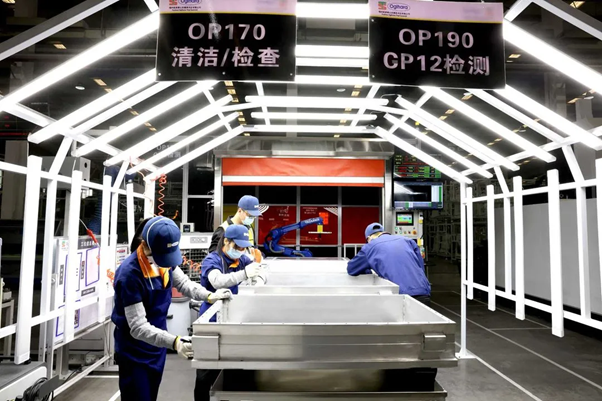 Fig 1: Workers at a battery manufacturing facility in China. Photo credit: CFOTO / Future Publishing via Getty Images
Pros and Cons of Sodium-Ion Batteries
The sodium-ion battery (NIB or SIB) is a form of rechargeable battery similar to the lithium-ion battery, except it uses sodium ions (Na+) as charge carriers instead of lithium ions (Li+). According to experts, the nature of cathode material is the main difference between sodium and lithium-ion batteries, and since the preparation cost of the cathode from raw materials is the same for both types of battery technologies, the main cost reduction for sodium-ion batteries comes from raw material availability.
Sodium is 500 times more readily available than lithium, can also be extracted from seawater and is environmentally friendly. Sodium can also be transported at zero volt that makes it safer and its battery uses aluminium which is cheaper than copper.
Sodium-ion batteries also have a higher operating temperature range, thus having the potential to be used in more extreme environments without the risk of thermal runaways, apart from having higher charging capacity than the lithium-ion batteries. One of the primary benefits of sodium-ion batteries is their cost. Sodium is inexpensive and widely available, which means sodium-ion batteries can be produced at a much lower cost than their lithium-ion counterparts.
Despite the advantages, there are certain challenges before these batteries can be widely adopted and treated as an alternative to their lithium counterparts. The technology to make these sodium-ion batteries is still at a very nascent stage and is being developed and unlike lithium, there is a lack of well-established supply chains for materials used in them. Having lesser density, sodium-ion based batteries have limitations of flexibility as they cannot be turned into various shapes like prismatic and cylindrical. They are also not as dense as li-ion batteries and have less storage capacity.
Existing sodium-ion batteries have a cycle life of 5,000 times, significantly lower than the cycle life of commercial lithium iron phosphate batteries, which is 8,000-10,000 times. While progress is being made to improve the performance and durability of sodium-ion batteries, they are still not yet at the same level of efficiency and reliability as lithium-ion technology.
Market Outlook of Sodium-Ion Batteries
Shedding some light on the global Sodium-ion Battery segment, market research firm SkyQuest Technology Group says its market size was valued at USD 450.00 Million in 2022, and is poised to grow from USD 547.20 Million in 2023 to USD 2615.86 Million by 2031, growing at a CAGR of 21.60% in the forecast period (2024-2031).
With China, Europe and North America expected to scale up research and capacity in this segment, the sodium-ion battery market is poised for continued growth driven by technological advancements, expanding global market access, and increasing global industry needs. India too has been making strides toward enhancing its presence in the global energy storage market and the government has outlined ambitious plans to boost its electric vehicle market and reduce reliance on imported batteries.
According to reports, Reliance New Energy recently completed the acquisition of the remaining stake in Faradion, a UK-based sodium-ion battery technology company, making it a wholly-owned subsidiary of Reliance Industries. The acquisition is part of Reliance's plan to utilize the technology of the global giant in its upcoming energy storage giga-factory in Jamnagar.
About the Author


