Strong advocacy along with knowledge and power from the EV drivers, combined with professional methodologies, led to bottom up-strategies that shaped the robust EV landscape in Norway
You might have read about the EV uptake in Norway, a country where the majority of new car buyers chose an EV, and thought: typical Scandinavians, it’s probably because they are very environmentally conscious and concerned about climate change. While this is likely true for many, it is far from the case for everyone who buys a new car in Norway. In fact, polls show that Norwegians are less concerned about climate change than people in neighboring countries.
Still, in 2024, 88% of new car buyers purchased an electric vehicle, and we achieved this by using the carrot and not the stick! Norway hasn’t prohibited fossil fuel cars. Instead, with a policy package of good and effective incentives, we have managed to shift consumers’ mindset from familiar ICE technology to electric vehicles of the future. But how?
“It’s The Economy”
Purchasing a new car is the second biggest financial decision for Norwegian families, first being buying a house. Therefore, the choice at the dealership is primarily about what your wallet can handle. By leveraging the tax system, Norwegian politicians have made it more expensive to buy a fossil car. This, combined with purchase incentives for electric vehicles and lower fuel costs, has made EVs comparably cheaper than fossil fuel cars, leading the consumers to choose the most affordable option.
It should be noted that several factors have contributed positively to the EV uptake. For instance, this would not have been possible if car manufacturers hadn’t produced good and fully functional electric cars. However, when asking what makes Norwegian consumers voluntarily choose electric cars, the fact that an electric car competes on price with a fossil fuel cars are the main reasons.
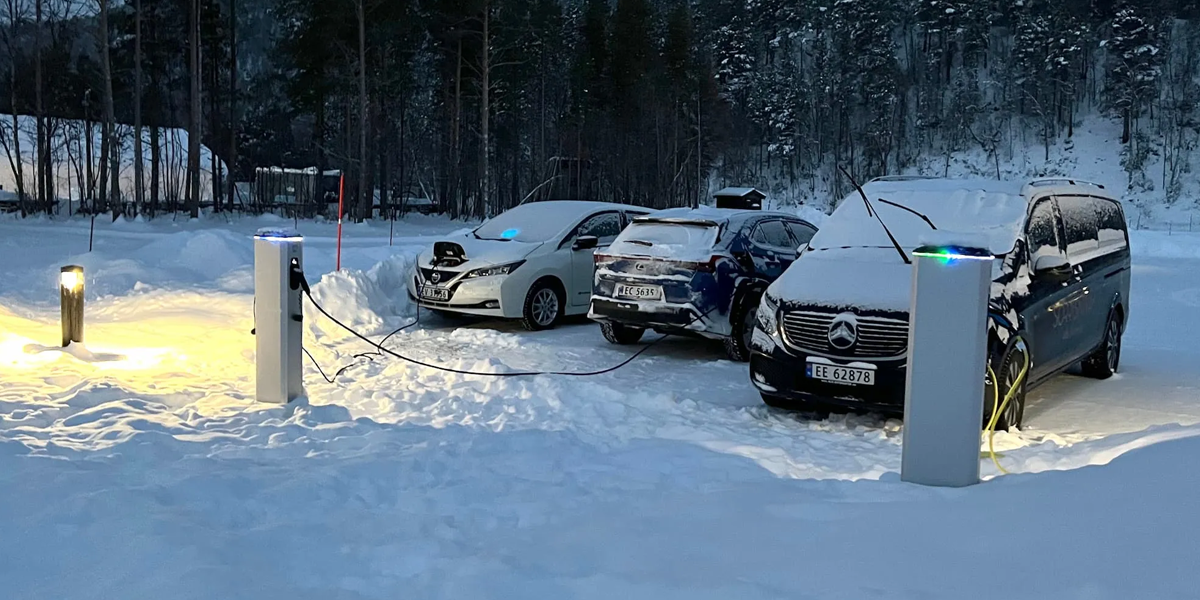
 Fig 1: A charging station in Norway. Tim Stevens/CNET
Busting The Myths
New and unknown technology is always surrounded by questions and uncertainty, making it easier for myths to flourish. As EV development gained momentum in Norway, so did the myths surrounding it. Common myths include EVs are a much bigger fire hazard than internal combustion engine vehicles; that EVs are worse for the environment than petrol and diesel cars, or that EVs don’t work during cold Norwegian winters. If these myths get a foothold in the general opinion or among policy makers, the effect can be devastating.
Therefore, debunking these myths have been an important task for the Norwegian EV Association. By using facts we participate in public debates, write articles and create informal videos on these topics. The fact that these myths have not taken hold in society has been very important for the EV-uptake.
Charging Ahead
Where and how do we charge? It’s the first question on every new EV driver’s lips. Making it as easy as possible to charge your EV is a vital part of getting the consumers on board. Most Norwegian EV drivers use home charging in their daily life, but for longer trips on weekends and holidays, they rely on fast charging. Today we have a sufficient network of public fast charging stations along the main roads.
But for consumers who wholeheartedly support the electrification of the vehicle fleet, you sometimes have to go the extra mile. For example, in 2020, the Norwegian parliament passed a law stating that people living in apartment complexes and housing associations cannot be denied charging, even if parking is on common ground. Some cities, like Oslo and Bergen added to this with investment support schemes for housing associations renovating their parking facilities to become charging ready.
In the early days of the EV-adoption, fast charging was a hassle. The fast chargers were hard to find and often out of order. To be able to pay, you had to have a million different apps on your phone. Making fast charging consumer friendly has been a focus in Norway over the last couple of years. We know that Norwegian EV drivers want easy access, transparent price information and the possibility to choose how to pay, including card payment, when using charging stations.
Therefore, in 2023, a legislation was enacted requiring charging operators to provide their chargers with card payment and transparent price information, making it easier to fast charge.
 Fig 2: A car at a charging station in Norway. Pic Credit: Plugshare
Getting A Driver’s Seat At The Table
As a representative from the EV consumer organization in Norway, it might be a little blunt to highlight the importance of having a consumer organization. It still needs to be mentioned. The Norwegian EV adventure is a result of policies. Different policies targeting various aspects of EV life for the most important piece of the puzzle – the people who are using the cars – the consumers.
Still, the policies were not only for the consumers. They were also made by the consumers. Consumer-centered EV advocacy helped people bridge the gaps in the debates that too often exclude citizens. With 120 000 EV drivers as members, our strong EV advocacy with knowledge and power from the EV drivers, combined with professional methodologies, led to bottom up-strategies that shaped a disruptive EV policy package/landscape in Norway.
Thomas Haug, The Norwegian EV Association
About the Author


