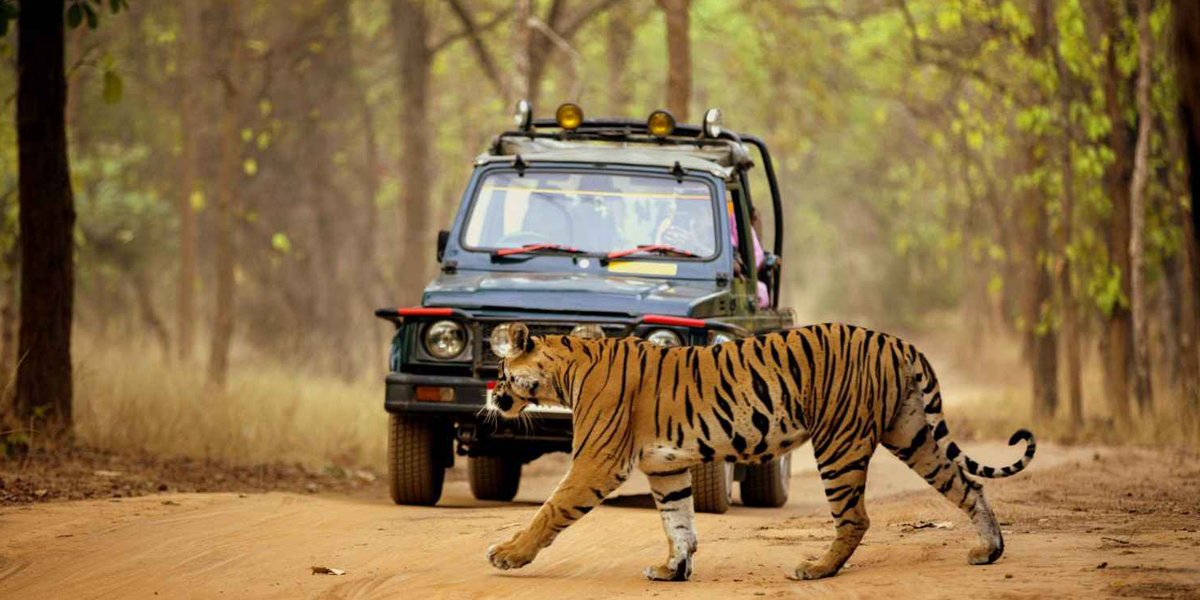
Transitioning safari vehicles to electric helps reduce noise and air pollution, does not disturb wildlife behavior and promotes sustainable tourism
One of the key strategies to achieve the ambitious goal of net-zero by 2070 in India is to pursue decarbonisation efforts across all sectors, including transportation which is one of the key contributors to air pollution. The sector is the third largest emitting sector of greenhouse gases. Transport also contributes to nearly a third of the particulate matter (PM) 2.5 pollution in Indian cities. The government has been an early mover and has been focussing on electrification of vehicles, mostly in the urban areas and cities.
However, a less discussed but critically important aspect is the prevalence of fossil-fuel run vehicles in protected forest areas and national parks, that house a variety of flora and fauna in a very delicate ecosystem. Most of the reserves and forests across India depend on vehicles run on these polluting fuels to undertake crucial activities like logistical operations, patrolling, tourism activities and movement of people who reside in villages falling inside these protected places.
These vehicles emit significant amounts of air and noise pollution, which disturbs wildlife behavior, breeding patterns, and habitat integrity. In this scenario, electrification of these fleets becomes imperative owing to their silent operations and zero tailpipe emissions that not only help improve the air quality and preserve the natural soundscape but ultimately align with India’s climate goals by promoting eco-tourism.
The Indian Ministry of Environment, Forests and Climate Change (MoEFCC) has been an early mover in this segment and has already asked top wildlife officials of all the states to use EV wildlife sanctuaries and tiger reserves. So let us understand why it is important to transition these vehicles into electric. If one just takes the example of the Corbett National Park in the North Indian state of Uttarakhand, approximately 200 vehicles, both government and private, are allowed to enter the protected area through four of its zones. Most of these vehicles run on these polluting fuels.
According to the National Wildlife Database Centre, India has around 573 wildlife sanctuaries that cover an area of 123,762.56 km2, which is 3.76% of the geographical area of the country. According to data till November 2023, another 218 sanctuaries are proposed in the Protected Area Network Report covering an area of 16,828 sq km. Given these large numbers, it makes sense to fast track the transition of these vehicles to electric.
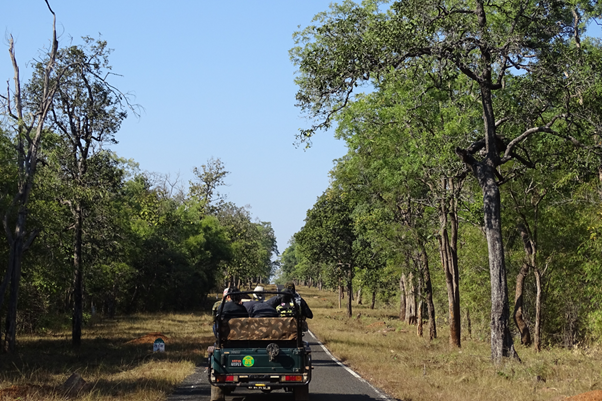 Fig 1: Wildlife Safari inside a protected area in India. Image credit: Tanvi Patel/ TBI
Benefits Of Using Electric Vehicles In Protected Areas
Many biodiversity rich areas across the world have switched to electric vehicles owing to their silent operations and zero tailpipe emissions. Experts feel that apart from not disturbing the environment and the wildlife, these vehicles ensure that there is reduced noise levels for wildlife watching, the game drivers or safaris become more attuned to the environment as silent drives highlight the sounds of the forest more prominently, giving tourists a true natural experience.
The vehicles, once electrified, also ensure improved performance and reliability. Ultimately the transformation ensures decarbonized travel that lessens the impact on the climate. Experts point out that across the world, standard vehicles are converted to electric. This is recycling on a grand scale, which means all the materials in an existing vehicle are re-used and only the standard motor is replaced with an electric motor, speed drive and batteries.
Electrifying these ICE vehicles also makes them light and efficient. According to another report, a vehicle fitted with a 55kWh battery has a range of between 150 km and 200 km off a single charge, depending on the terrain and how loaded it is. As the average safari is only 30-40 km, this is more than enough power and range.
A critical aspect of this transformation is the need for sourcing power from renewable sources like solar, to power the EVs. Relying on conventional grid electricity defeats the purpose of sustainable transportation in these protected areas to a large extent, and also undermines its environmental benefits. Solar-powered charging ensures that the entire operation is carbon-neutral, making the safari experience more sustainable. At the same time, it also helps reduce dependence on the infrastructure required to transport fuel.
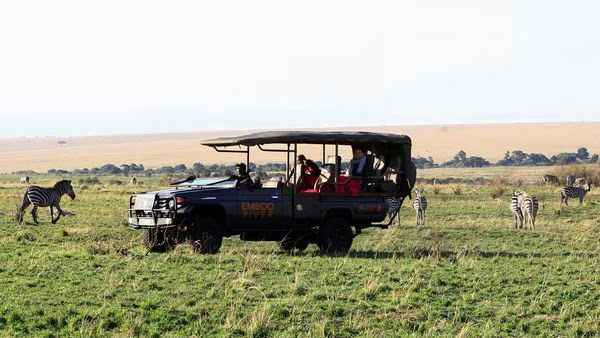 Fig 2: An electric-powered safari vehicle moves during a game drive at the Maasai Mara National Reserve in Narok country, Kenya. Pic Credit : Reuters
Electrifying Safari Vehicles: What IsHappening In India
Many protected areas and reserves in India have already initiated steps to transform their vehicles. One such initiative is underway at The Tadoba Andhari Tiger Reserve (TATR) in Maharashtra, where authorities have already piloted a project, converting an old forest department Gypsy into a Battery-Operated-Vehicle (BOV). According to officials, during the trial runs, they found that the charging time of the vehicle was 6-8 hours, which easily helped it to run two safaris.
In Odisha, the forest department has already approved the procurement of more than 100 e-motorcyles for patrolling and enforcement in various protected areas of the state that include Simlipal Tiger Reserve, Satkosia Tiger Reserve, Debrigarh Wildlife Sanctuary, Kuldhia wildlife sanctuary and Chandaka wildlife reserve. At the same time, Rajasthan too plans to introduce electric vehicles in reserves like Ranthambore, especially for pilgrims visiting Trinetra Ganeshji and Pandupole. The move is aimed at reducing emissions.
In the national capital Delhi, authorities plan to replace all existing vehicles that run on fossil fuels at the Asola Bhatti Wildlife Sanctuary, with EVs, following observations that pollution was causing stress to animals in the sanctuary.
About the Author


