
Given the consistent uptake of EVs in India, it is essential to have robust network of testing centres to ensure the vehicles comply with the laid down standards and consumer safety is addressed
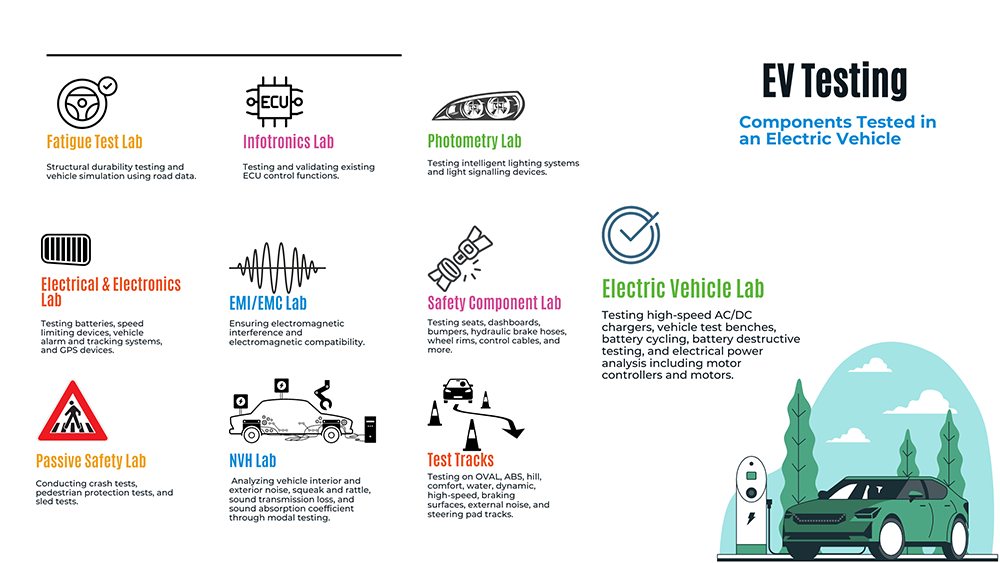
Electric vehicle (EV) sales in India reached 1.53 million in 2023 and are projected to grow at a CAGR of 35%, with annual sales expected to hit 27 million by 2032. EVs undergo rigorous testing to ensure compliance with set standards, smooth and efficient operation of each vehicle component, and the safety of users, equipment, and infrastructure. Additionally, testing evaluates the vehicle's interoperability and electromagnetic compatibility. In India, government agencies such as the International Centre for Automotive Technology (ICAT) in Manesar, the National Automotive Test Tracks (NATRAX) in Pithampur, Indore, the Automotive Research Association of India (ARAI) in Pune, the Global Automotive Research Centre (GARC) in Oragadam, Chennai, and the Central Institute of Road Transport (CIRT) in Pune conduct these tests. Some private agencies, including Automotive Test System (ATS) in Delhi/Bangalore, URS Products and Testing Private Limited in Noida, BE Analytic Solutions LLP in Bangalore, AVL India Pvt. Ltd. in Gurgaon, and TÜV Rheinland (India), assist manufacturers with product testing and reporting as well. However, only government testing agencies are authorized to provide homologation and certification.

About the Author


