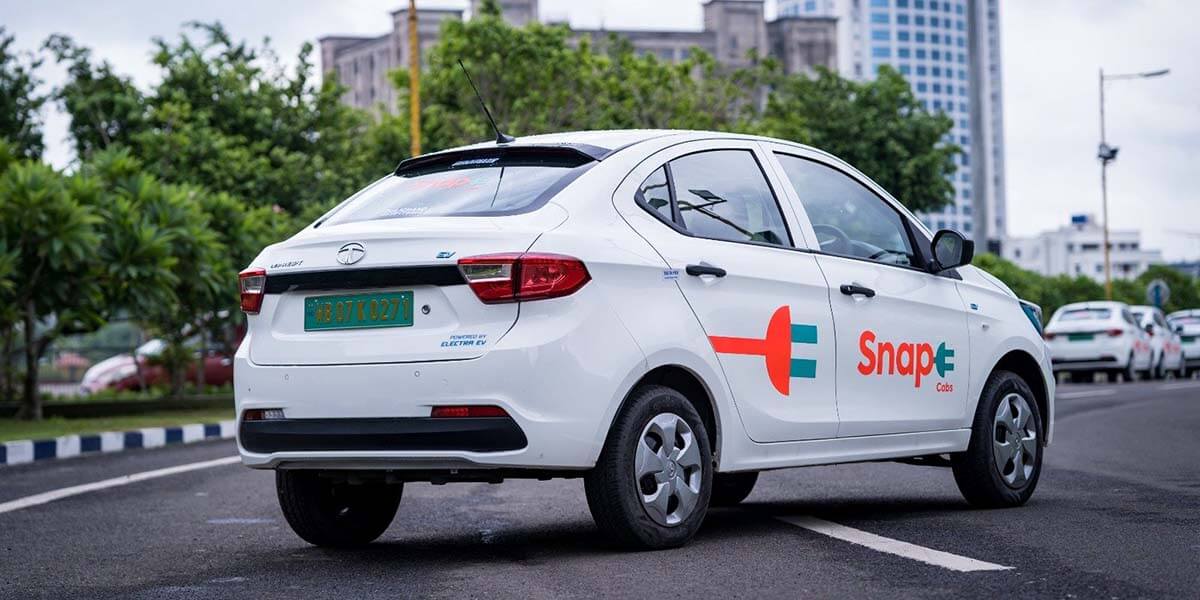
Fleet operators expect the market to provide immense opportunities since the overall segment has seen significant growth in terms of charging infrastructure and overall EV adoption
As we are about to wrap up 2023, it can certainly be considered a positive year for app-based cab aggregators looking to transition their fleets to 100% electric vehicles (EVs). Credit to greater government support, expanding charging infrastructure, and new EV models entering the market, there is tremendous potential for growth despite some persistent challenges. The upcoming year 2024 is expected to maintain the winning streak and be transformative in championing fully electric fleets.
A report once projected India’s electric vehicle market to grow from USD 3.21 billion in 2022 to USD 113.99 billion in 2029, growing at a CAGR of 66.52% during the 2022-2029 forecast period. Bain & Co. recently reported that electric vehicles (EVs) could account for more than 40% of India’s automotive market and generate over $100 billion in revenue by 2030.
It also highlights that EVs accounted for about 5% of total vehicle sales between October 2022 and September 2023, and could reach more than 40% penetration by 2030, driven by strong adoption (45%+) in both two-wheeler (2W) and three-wheeler (3W) categories.
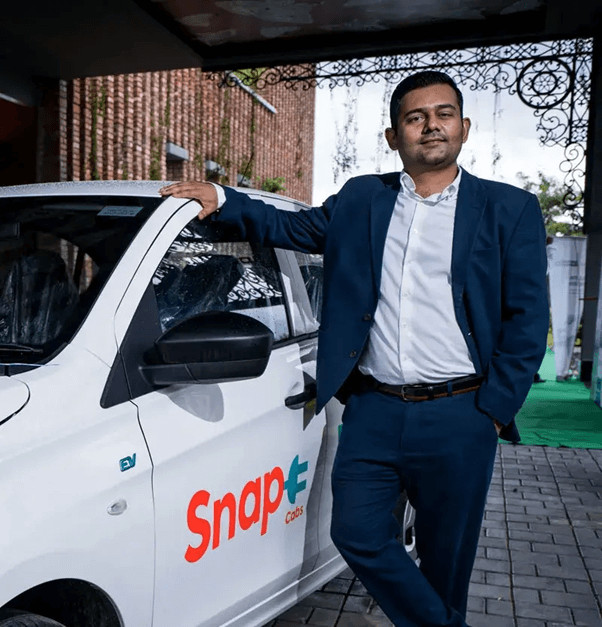 Fig 1: Mayank Bindal, Founder and CEO of Snap E Cabs
EV landscape in 2024
The projections mentioned are enough to grab headlines but there are some significant factors on which these numbers hugely rely. Many fleet operators are expecting the market to provide immense opportunities since the overall segment has seen significant growth in terms of charging infrastructure and overall adoption of EVs. Following are a few takers from last year and what we can expect from 2024:
Government initiatives for a greater push to EVs
The central government is expected to continue FAME 2 subsidies, making EVs more affordable for cab fleet owners looking to electrify. Additional state-level subsidies for EV registration, road taxes, etc. also promise to defray costs and incentivise this transition. At COP26, the Indian government has for the first time pledged for Net Zero target by 2070. Eager to curb emissions and meet net zero carbon targets, governments are actively promoting public transportation electrification through policies and programs.
Furthermore, the recent import duty reductions for EVs should increase customer choice and introduce more advanced yet competitively priced EV models to the Indian market this year.
Priority to charging infrastructure is pivotal
Increased investment and collaboration between OEMs like Tata, charging point operators (CPOs) like Jio BP and Adani, and startups like Chargezone and Statiq have vastly expanded India’s EV charging ecosystem. As a result, range anxiety issues are beginning to subside for cab operators as 2024 promises to deliver accessible and reliable public charging options. Consequently, electrified cab fleets will be able to maximise operational uptime. Continued infrastructure development remains imperative for the EV cab market to grow further.
Expect new EV models catering to commercial fleet
Where previous choices were limited, 2024 is likely to see more EV models introduced to cater specifically to commercial fleet needs. Mainstream automakers will expand affordable EV offerings.
Specialised manufacturers also intend to bring to market new form factors like three-wheelers designed for high-utilisation cab fleets. Greater choice allows aggregators to deploy vehicles best suited to their operational requirements.
Advances in battery tech bringing costs down
New battery chemistries, cell designs and recycling ecosystems will likely help drive battery pack costs below USD 100/kWh thresholds by 2024. Combined with expected improvements in charging times and precision range/charging monitoring, these advances will address critical pain points confronting the profitable operation of electric cab fleets. Technology enhancements by OEMs have to match aggregator requirements for maximised fleet utilization.
Challenges in full-scale EV adoption
Some persistent challenges continue to constrain our electrification ambitions. EV costs remain 60-80% higher than petrol/diesel vehicles - straining ROI viability. Progress on this front is linked to battery prices falling as local Li-ion manufacturing scales up. We also have limited EV choices today that meet the durability and range demands of ride-hailing services. More tailored OEM offerings promise to increase competition and operator economics. On the technology side, predicting real-world range precisely, maximising charging speed and improving battery life cycles remains a work in progress.
Software capabilities also need upgrading to help large fleets optimize battery health and asset utilization through advanced telematics. Overcoming these limitations by collaborating with OEMs and infrastructure players remains imperative before EVs can decisively transform last-mile mobility at scale in India. But the ecosystem is headed firmly in the right direction.
Will 2024 be a defining year on the road ahead?
2023’s progress makes us optimistic about a transformative 2024 for EV cab fleets. We eagerly anticipate announcements in the upcoming budget that could provide an additional push. Transitioning to EVs has always been an act of faith in India’s EV ecosystem potential. As critical pieces now seem to be falling in place, we remain hopeful that 2024 will bear out that faith to drive sustainable mobility solutions for India.
Mayank Bindal, Founder and CEO of Snap E Cabs

