A strategic shift is underway as countries accelerate electric mobility and electrification to break their historic reliance on volatile conventional fuel markets
Geopolitical instability is rising. The raging crisis in the Strait of Hormuz and fractured trade routes worldwide have made global supply chains deeply vulnerable. For oil importing nations, this volatility is an urgent economic and national security challenge, exposing how quickly dependencies can be weaponised or disrupted by regional conflicts.
In response, a strategic shift is underway as countries accelerate electric mobility and electrification to break their historic reliance on volatile conventional fuel markets and secure sovereign energy independent pathways. A recent study by Ember also highlighted this. It found that countries with electric car fleets are meaningfully reducing their dependence on oil imports and “growing sales are increasing this impact.”
“While some countries are benefitting from long-standing strategies to enable EV uptake, others are passing new policies that will in time reduce oil import vulnerability and attract new investment in the EV supply chain,” it said, adding that 49 out of 56 countries tracked by Ember recorded a record share of battery electric vehicle (BEV) sales so far in 2026.
“India, Chile, Australia and New Zealand have seen a rapid acceleration following the closure of the Strait of Hormuz,” it said. In the six months from March to August this year, China saved an estimated $14 billion, with EU countries saving $3.1 billion, it said, adding that “.Fifteen countries, including Brazil and India, overtook the US for BEV sales share in 2026.”
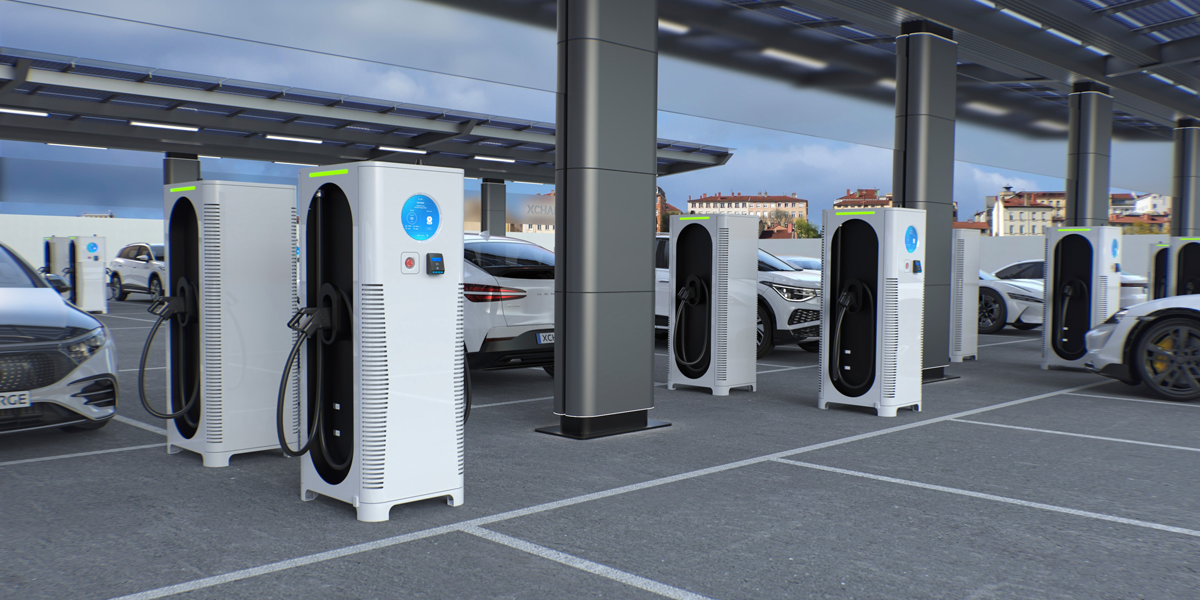
 Fig 1: Electric cars at a charging station. Pic credit: ABB E-mobility
The study highlights a growing reality – oil-dependent nations looking to mitigate macroeconomic vulnerability to energy supply shocks are increasingly realising that accelerating transport electrification is a critical economic and geopolitical imperative. By transitioning towards electric mobility, countries can permanently decouple their transportation sectors from highly volatile, dollar-denominated global crude markets, fundamentally stabilizing their balance of payments and reducing fiscal deficits.
The Ember study found that long-time leaders in BEV uptake like Norway and Denmark are being joined by new pioneers such as Viet Nam and Uruguay, as more and more countries implement successful policies to support the transition to electric vehicles. “Countries with major car manufacturing sectors such as Brazil, India and Japan are all now seeing BEV sales increase considerably,” it said.
“Falling technology costs, high fuel prices and policy direction are helping fully electric options gain a growing share of new car sales. Globally, BEV sales are up by 11% year-on-year for the first eight months of 2026 despite policy changes slowing EV uptake in the US and China, the two biggest markets in absolute terms. In contrast, sales of plug-in hybrid electric vehicles (PHEVs) have fallen by 12% and sales of internal combustion engine (ICE) vehicles are down by 6%,” the study said.
“As a result, BEVs have climbed to 18% of new car sales globally for the first eight months of this year, up from 16% in the same period in 2025. In the same period, the global PHEV sales share has fallen from 8% of new car sales to 7%. At a global level, mid-year sales share figures for electric vehicles are lower than the full-year values, since China, which has a high EV share and accounts for a large proportion of global EV sales, typically sees a surge in new car registrations towards the end of the year,” it added.
When it comes to sales, the study found that strong growth was registered in economies outside the US and China. “Excluding the US and China, global BEV sales have grown by an estimated 45% in January-August 2026, compared to the same period the year before. Of the 56 countries in Ember’s monthly EV sales tracker, 49 have seen a record battery electric vehicle (BEV) sales share so far in 2026,” it said.
On the manufacturing side, it found that several nations with rising EV sales are simultaneously developing new manufacturing capacity and growing their domestic electric vehicle industries. In Asia, domestic manufacturers are becoming major players in Viet Nam and India. “VinFast already produced Viet Nam’s most popular car in 2025 and has expanded its production operations overseas, opening new factories in India and Indonesia last year. Meanwhile, in the first half of 2026, domestic OEMs Tata and Mahindra made up over 60% of India’s EV sales,” it said.
About the Author


