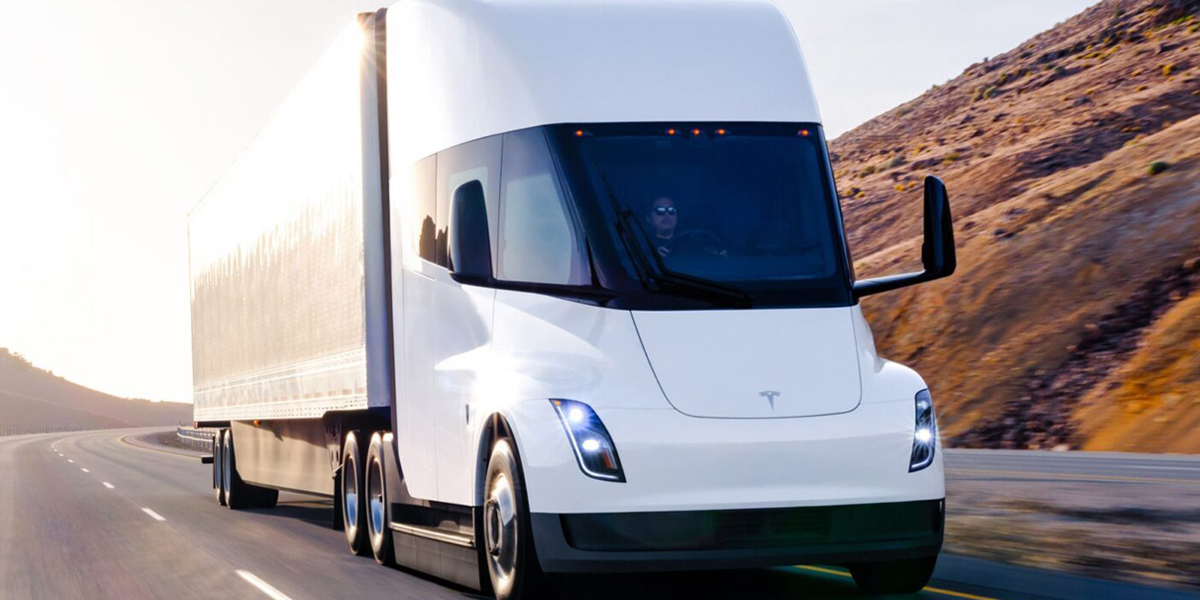
Zero-emission truck sales were close to 38,000 units globally in the first half of 2024 and are set to be just over 1.5% of total sales this year
The number of trucks, which carry the bulk of goods annually in a rapidly expanding freight transport sector, are poised to grow substantially in India. These trucks that mostly run on diesel, contribute heavily to Greenhouse Gas Emissions (GHG), making it crucial for their transition to sustainable alternatives like Zero Emission Vehicles. Many governments across the world, including India, have taken serious note of this challenge, and have already moved ahead to develop a roadmap for this transition.
The growth of medium and heavy trucks with zero tailpipe emissions have been substantial globally, but the “market is still in the early stages, with adoption varying between countries and vehicle use cases”, according to a report produced by BloombergNEF commissioned by the Dutch Ministry of Infrastructure and Water Management in partnership with Smart Freight Centre.
 Fig 1: United Parcel Service's (UPS) newly launched electric delivery truck is seen in Compton, California, U.S., September 13, 2023. REUTERS/Lisa Baertlein
Why Is Transitioning to Zero Emission Trucks Crucial
The report said that global road transport emissions reached 6.3 gigatons of CO2 (GtCO2) in 2023, surging far ahead of their previous high in 2019. In that, 1.3 billion passenger cars worldwide emitted the bulk of that CO2 last year. But the good news is that the growth of electric vehicles in the passenger car segment have started to impact these emissions. “EV sales this year will reach 16.6 million, accounting for just under 20% of new car sales and about 4% of the global car fleet according to recent BNEF analysis,” it said.
Despite being just under a quarter the size of passenger cars, CO2 emissions from commercial vehicles are estimated to overtake passenger cars as the largest emitting sector in road transport by 2040, it added. “More than 250 million vans and trucks were on the road at the end of 2023, and accounted for just over 40% of CO2 emissions from road transport,” it pointed out.
The report also flagged the slow rate of adoption of low- and zero-emission technologies, asserting that by 2050, the commercial vehicle fleet will grow by more than a third. “While efficiency improvements and electrification can offset some of that growth, without further progress such vehicles would emit almost 2.2GtCO2, only slightly less than in 2023.” it said.
With emissions from commercial vehicles projected to become the largest contributor to road transport’s CO2 footprint, surpassing passenger cars in the coming years, there is a growing opportunity for creative financing and business models to help this market scale up. Let us take a closer look at the report, which maps the growth of zero emission commercial vehicles, and analyse how the transition is playing out in global markets and challenges associated with it.
Sale of Zero Emission Trucks Worldwide
The report said that zero-emission truck sales were close to 38,000 units globally in the first half of 2024 and are set to be just over 1.5% of total sales in 2024. More than 80% of the global sales volume was in China. “In Europe, sales are concentrated in a handful of countries, while the US market shows only limited market growth,” it pointed out.
As far as battery-electric trucks were concerned, they accounted for more than 90% of zero-emission medium and heavy truck sales in 1H 2024 while fuel-cell trucks were mostly sold in China, driven by support provided to the market from subsidies and availability of hydrogen fuel as a by-product from industrial operations.
Another technology which is playing a critical role is battery swapping, which can also serve as a key alternative in pushing forward the transition of these trucks. “Prices for commercial vehicle batteries in China are the lowest globally at $100 per kilowatt-hour, but prices elsewhere have been declining faster. BNEF expects battery packs for trucks to cost as little as $88/kWh by 2030,” it added.
In 2023, global medium- and heavy-duty truck sales had grown nearly 20% and exceeded 5 million vehicles, surpassing their previous highs in 2021. “Fleet replacements and solid levels of economic activity supported demand for goods transport and other activities in several countries,” it said. Globally, the largest truck markets were China and the US, accounting for 17-22% of total 2023 and 1H 2024 sales while India and the combined European market were at about 7-8% of global sales each.
“The global truck fleet, including medium- and heavy-duty trucks and excluding delivery vans and buses, exceeded 83 million vehicles in 2023, growing just under 3% from the previous year. The US is home to most medium- and heavy-duty trucks, at about 18% of the global fleet, followed by China, Europe and India,” it added.
As far as low- and zero-emission trucks are concerned, its market is growing globally. In 1H 2024 it was more than 16 times larger than in the same period of 2021. The report said China remains the largest market for battery and hydrogen trucks, accounting for more than eight out of 10 such vehicles sold globally in 1H 2024. Sales of zero-emission trucks in the country have grown continuously year-on-year since 2021.
“Sales in Europe picked up in 2022 and 2023 from a low base to about 8,000 e-trucks. The US market for zero-emission trucks is small, with about 1,000 units sold in 1H 2024. The market lacks supply of suitable models, and a few startup manufacturers have failed to scale-up production. In other countries, electric trucks remain a niche market, with just a few dozen units sold in Japan, India, Canada and Australia,” it added.
 Fig 2: A Volvo VNR Electric charges at the high-powered chargers available to fleets at TEC Equipment, Fontana. Courtesy of Volvo Trucks
Transitioning to Zero Emission Trucks: Way Forward
The report argues that electric trucks are fast becoming economically competitive to their diesel equivalents, starting with shorter routes. “Even before 2030, heavy-duty long-haul battery trucks can also reach total cost of ownership parity. Fuel-cell truck costs may also drop by that time, but the decline trajectory is far less certain,” it pointed out. Although many companies have set ambitious targets for zero-emission truck sales by 2030 and beyond, progress “varies and remains limited for some large truckmakers”.
While zero-emission vehicle economics improve, capital cost and refuelling challenges remain, giving rise to new business models and financing structures to tackle such hurdles.
“These include partnerships between fleet owners and operators to co-develop refuelling stations, raising financing supported by fleet utilisation agreements, and extending the revenue potential of vehicle batteries by reusing them in stationary energy storage applications. Fleet owners and investors that grab the early opportunities help create the necessary scale for themselves and the market to sustain further growth,” it said..
Zero Emission Trucks: The India Story
The report pointed out that cleaner commercial vehicles have started to get “some” attention in India, with the electric van market growing on the back of a new model introduced by Tata, while a new heavier-vehicle manufacturer, Tresa Motors, recently received an order for 1,000 heavy-duty electric trucks from logistics company JFK Transporters, it said.
“Such examples of early adoption demonstrate the importance of suitable model availability in the nascent zero-emission commercial vehicle market,” it said.
India has already announced a unique High Level Ambition Group (HLAG) that will work with the government towards framing a comprehensive policy towards zero freight emission in the country. Prominent OEMs have also come together under the Zero Emission Vehicles Emerging Markets Initiative (ZEV-EMI) and the government's E- FAST (Electric Freight Accelerator for Sustainable Transport) programme to advance the electrification of trucks in India.
According to the report, ‘Transforming Trucking in India: Pathways to Zero-Emission Truck Deployment’ by Niti Aayog, heavy and medium-duty trucks currently handle 70 per cent of the domestic demand. With a booming road freight industry, the truck population is projected to soar from 4 million in 2022 to an estimated 17 million by 2050.
About the Author


