
Implementing LEZs in Indian cities requires a multi-sectoral, locally tailored approach, with emphasis on public support through community engagement and targeted vehicle restrictions
Like many countries, India too faces the air pollution crisis, that not only peaks during the winters but silently remains present all through the year, aggravating health issues and economic costs. The transport sector is one of the key contributors to air pollution and is the third largest emitting sector of greenhouse gases. Many believe that the solution lies in having an in-depth understanding of the complex issue, that is shaped by governance capacity, demographic pressure, socio-economic disparity, behavioural norms, and entrenched economic systems.
According to a report published by WRI India, road transport contributes 90% to the total carbon emissions from the transport sector in India while transport also contributes to nearly a third of the particulate matter (PM) 2.5 pollution in Indian cities. Realising this challenge, India has announced ambitious net-zero targets and transitioning to cleaner modes of transport, including Electric Vehicles. Consistent policy support and incentives have helped fast track this transition, as India is witnessing a rising appetite for these cleaner vehicles.
Cities or urban areas are hotspots for air pollution, making it imperative to come out with policies and initiatives which target them specifically. One such measure to reduce pollution from these hotspots is designating Low Emission Zones (LEZ) that restrict the movement of high-polluting vehicles or impose an emission fee for their entry, according to the report. Apart from that, the report maintains that globally, more stringent categories, such as ultra-low emission zones (ULEZs) and zero emission zones (ZEZs) have been adopted that have helped in reducing emissions.
“Supporting measures in LEZs play a crucial role in amplifying emission reduction efforts, delivering multiple benefits across air quality, climate, and urban mobility. By promoting non-NMT and public transport modes, LEZs reduce dependency on private vehicles, thereby decreasing vehicular emissions and congestion. These measures improve air quality directly, mitigating health risks associated with exposure to pollution, particularly for vulnerable groups like women, children, the elderly, and those belonging to economically weaker sections,” said the report which came out after a roundtable on “Implementing Low Emission Zones for Cleaner Air in India. Let us look at some of the key recommendations advocated by the report to make the LEZ a reality.
 Fig 1: An anti-smog gun spraying water to fight the air pollution and dust at Kartavya Path, New Delhi, on March 31. | Photo Credit: Shiv Kumar Pushpakar
Implementing Low Emission Zones: The Way Forward
- Policy alignment: Growing cities and the rising number of vehicles pose a challenge to bring down air pollution in urban areas, necessitating transport planning along with environmental strategies. Citing the example of Delhi, the report said the city’s “advanced measures in enforcing cleaner technology and phasing out outdated vehicles can serve as a model to expand LEZ frameworks nationwide, supported by existing strategies such as the national and city climate action plans (CAPs) and GRAPs.”
- Solutions Catering to Local Context: Each city in India has its own local problems and needs, making it difficult to come out with a uniform solution nationally. Therefore, policies and its implementations should be aligned to the city. “There is a need for sector-specific LEZ strategies which should be customized for each region,” it said. At the same time, addressing other key sources of air pollution, that include construction and road dust, industrial emissions, and diesel generators, is also essential. “To enhance the effectiveness of LEZs, these sectors also need focused interventions,” it said, adding that dust control measures, reduction of industrial emissions and diesel generator usage and hand holding these industries to transition to cleaner fuels is the need of the hour.
“Expanding the scope of LEZs to cover broader airsheds over time, and targeting emissions from multiple sectors ensures a comprehensive, contextualized approach that enhances the overall impact of LEZ implementation,” the WRI report said.
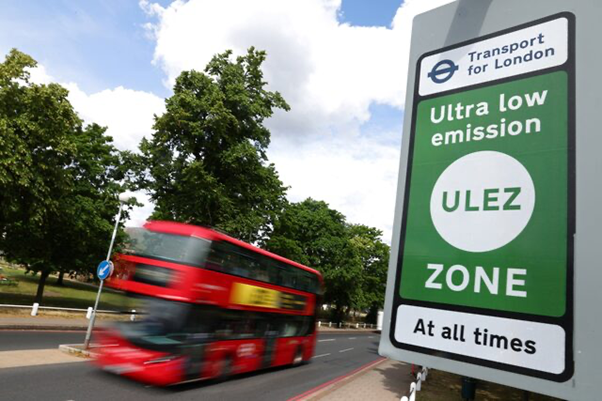 Fig 2: Signage indicates the boundary of London's Ultra Low Emissions Zone (ULEZ) zone along the North Circular Road ahead of proposed upcoming expansion, in London, Britain, June 26, 2023. REUTERS/Toby Melville/File Photo
- Use of dependable data: It pointed out that accurate, real-time data collection allows cities to monitor emission levels, identify pollution hotspots, and track the effectiveness of LEZ measures over time. “Comprehensive data systems such as automatic number plate recognition (ANPR) cameras and remote sensing technologies are crucial for ensuring compliance and providing detailed emissions reports,” it said.“Data on the most polluting vehicles, including their characteristics and purposes, can help set clear emission reduction targets, while post-implementation monitoring allows for assessing the effectiveness of LEZ measures. Additionally, transparent data on emissions reductions, health impacts, and economic benefits of LEZs is also critical for communicating their value to both policymakers and citizens, encouraging continued support and engagement,” the report said.
- Stress on building cleaner fleets: India has already fast tracked its transition to cleaner modes of transport, especially electric vehicles. Vehicles with zero tailpipe emissions have been known to improve air quality significantly. During the discussions, the report said, examples like the pedestrian-only streets and e-bike sharing systems, were also mentioned as ways to bring down emissions. “The importance of retrofitting existing vehicles and transitioning to cleaner fleets, as a critical ancillary policy for effective LEZ implementation,” was also advocated by the report.
- Promoting mass transit systems: “Expanding metro corridors and introducing bus rapid transit systems (BRTS) in cities like Pimpri Chinchwad and Surat were cited as key steps toward improving urban air quality and creating a sustainable urban mobility ecosystem. These investments can address the growing demand for efficient public transportation while making substantial progress toward their air quality goals,” the report said.
“Iimplementing low-emission zones in Indian cities requires a multi-sectoral, locally tailored approach,” it said, adding that public support through community engagement, detailed emissions inventories, and targeted vehicle restrictions (such as high-polluting vehicle charges) is vital for the successful implementation of LEZs.
About the Author


