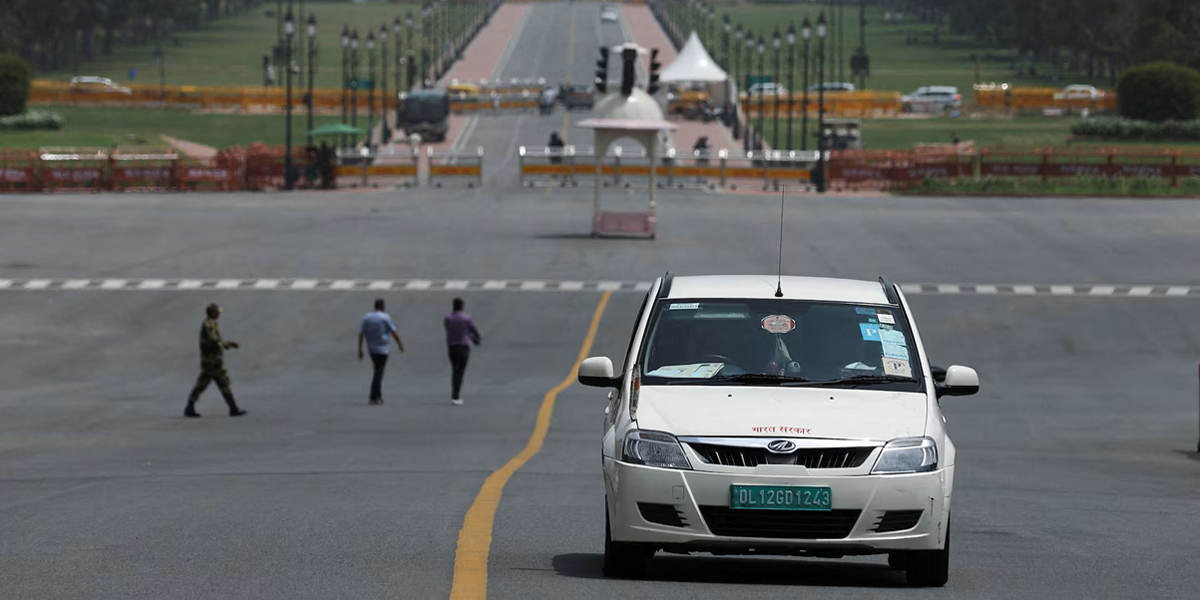
The new policy links incentives to scrapping of high-emission legacy vehicles, making it one of the more consequential features
Seven in 10 goods-carrying three-wheelers sold in Delhi last year were electric. In the motor cab segment, nearly one in five new registrations carried no tailpipe emissions at all. These are not projections; they are 2025 sales figures. Delhi’s first EV policy worked, in the segments where conditions aligned. The second one has to do something harder: make what happened organically in one corner of the market happen structurally across all of it.
The city is not starting from scratch. EV penetration has grown from under 3% in 2020 to nearly 14% in 2025, a shift driven largely by high-usage commercial segments whose daily mileage makes the economic case for electric vehicles easier to justify. That momentum gives the current policy a stronger base to build on.
The Shift From Enabling To Structuring
The new policy signals a clear shift in approach. The earlier framework was largely focused on enabling adoption through incentives. This one pairs those incentives with firmer expectations. From January 2027, only electric three-wheelers will be permitted for new registrations, followed by a similar transition for two-wheelers from April 2028.
Fleet operators face tighter restrictions on adding new petrol and diesel vehicles, while government fleets and new public buses are to be fully electric going forward. These measures place high-utilisation vehicles at the centre of the transition, and the timelines leave little room for delay. The continued emphasis on incentives for two-wheelers and three-wheelers reinforces that this is where the policy is most serious.
The gradual tapering of purchase subsidies reflects a broader assumption: that the market is maturing and can, over time, sustain itself without heavy fiscal support. This is aligned with central frameworks like the PM E-DRIVE Scheme. It is a reasonable direction, but one that depends on real progress in vehicle costs, supply chains, and charging infrastructure happening in step.
One of the more consequential features of the policy is its focus on fleet turnover. By linking incentives to the scrapping of high-emission legacy vehicles, it goes beyond adding new electric vehicles to the road. It actively tries to remove the older, more polluting ones. In a city where legacy vehicles contribute disproportionately to emissions, this linkage with India’s Vehicle Scrappage Policy is well-placed.
The policy also rethinks how implementation is approached. Charging infrastructure is no longer treated as a secondary concern. Assigning a central role to Delhi Transco Limited reflects an important recognition: electrification is as much a power sector challenge as a transport one. Clearer responsibilities across departments, a more structured monitoring framework, and a push toward digital processes suggest a genuine attempt to move from facilitation to accountability.
There are some thoughtful inclusions worth noting. The phased electrification of school buses connects mobility with public health in a way few state policies have attempted. The decision to extend partial fiscal support to strong hybrids, however, sits somewhat uneasily alongside a policy whose overall direction is clearly toward zero-emission vehicles. It is not a fatal contradiction, but it is a question of focus.
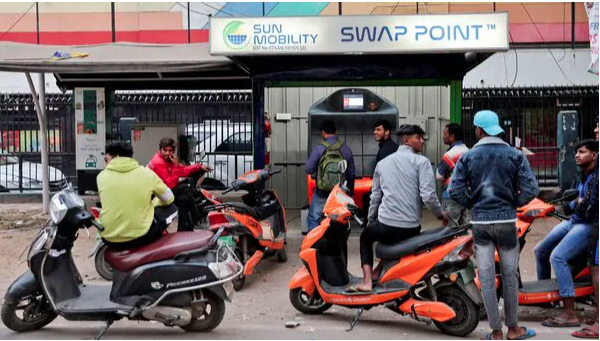 Fig 1: A battery swapping station. Pic credit: Reuters (representational)
The Financing Piece That Needs Attention
Then there is financing, and this is where the policy has a visible gap. The earlier framework included interest subvention, a direct tool to lower the cost of borrowing for smaller commercial players. That provision does not appear in Policy 2.0. For an e-rickshaw owner or a first-time cab operator, the sticker price of an electric vehicle is only part of the problem. Commercial vehicle loans at prevailing market rates, which can run between 18 and 24 per cent annually, can quietly eat through the operating cost savings that make going electric worthwhile.
As mandatory electrification timelines draw closer for two-wheelers and three-wheelers, the risk is real: the transition ends up being accessible mainly to those who already have access to formal credit, while the most cost-sensitive operators get left behind. These are, notably, the very people the policy most needs to reach.
Reinstating interest subvention, creating linkages with priority sector lending, or building partnerships with public sector banks could close this gap without placing significant pressure on public finances. It is a fixable problem, and an important one.
From Policy To Road: The Implementation Test
Infrastructure readiness is the other area that will determine whether ambition translates into outcomes. Expanding charging networks, strengthening grid capacity, and ensuring service reliability are not background conditions; they are central to whether the timelines hold. The same applies to the less visible parts of the ecosystem: trained mechanics, battery servicing, and safety protocols will matter more as the fleet grows.
The direction of Delhi’s EV Policy 2.0 is clear. It moves from encouraging electric mobility to structuring it. Whether it delivers will depend less on intent, and more on execution.
Shravan Engineer is a Project Manager at EPIC India, where he works at the intersection of transport, policy, and clean mobility. His views are personal.
About the Author


