
India’s battery swapping for electric trucks could revolutionise the market but the battery form factor must be standardised for interchangeable use across models and manufacturers
The Indian government will soon announce norms for battery swapping in e-buses that will aim to standardise the batteries’ size, weight and capacity. The news does not mention electric trucks, but the vehicles should be covered under a round of updates.
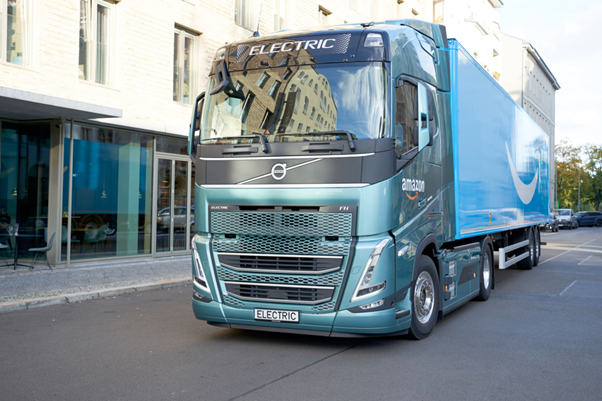 Fig. 1: A heavy-duty, 44 ton electric truck developed by Volvo | Image: Volvo
This is an essential step in the right direction as heavy-duty trucks account for a third of India’s road transport emissions. Converting the fleet to electric, whether through retrofitting or electric replacements, should lower the sector’s emissions by 2.8-3.8 gigatonnes of CO2 (cumulatively) by 2050. Additionally, being able to swap out the trucks’ depleted batteries for fully charged ones in as little as 5-10 minutes will lower their operational downtimes and free up the vehicle to carry additional payload.
 Fig. 2: India’s diesel trucks are a major source of pollution and CO2 emissions | Image: India Today
At the moment India has around 4 million trucks that ferry most of its road freight. Converting these trucks to electric powertrains is technically possible, even though the cost of the conversion may be high. For instance, in Australia, Janus Electric has developed a system through which a 600 kWh battery can be swapped on a previously diesel-powered truck in just around 2 minutes, but retrofitting the truck costs nearly AUD 85,000 (~INR 4.7 million) Yet this would lower the truck’s operating costs to the extent that over its lifetime, it works out to be cheaper than being run on diesel. India’s diesel fleet owners will need policy support and possibly, financial assistance to make the shift.
Battery swapping for electric trucks
China leads the world in electric truck sales, with 36,000 sold in 2022 alone. The country is also leading the market in moving to battery swapping; 49.5% of its electric trucks sold in 2022 were swap-capable. ICCT reported that the country’s swapping stations for electric trucks use mechanised arms to swap the batteries in 3-6 minutes and these are for trucks that are mostly used on short-haul routes (less than 100 km one-way). The batteries they use are mostly rated at 141 kWh or 282kWh.
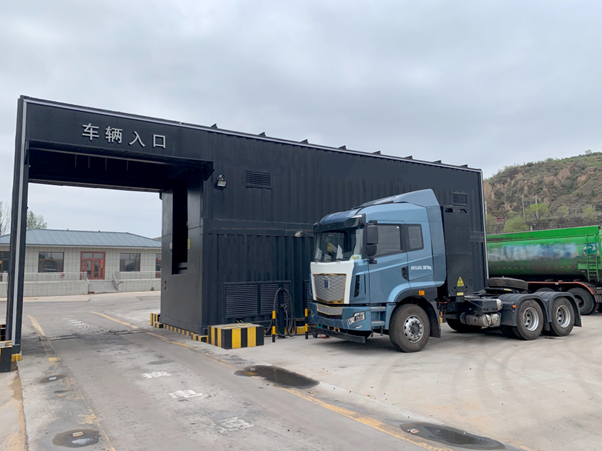 Fig. 3: A battery swapping station for electric trucks in China | Image: ICCT
The swapping stations typically store seven batteries and each battery takes about 40 minutes to recharge from a state-of-charge of 20-30% when connected to a fast charger. The seven batteries have been chosen based on tests that simulated the optimal number of batteries required at a swapping station, considering how many trucks it would receive, the time it takes for the swap and the time it takes to recharge a depleted battery.
CATL, the battery manufacturing giant from China, has introduced its own line of swapping stations for heavy duty trucks. The stations are designed for CATL’s lithium ferro phosphate (LFP), 171 kWH battery packs and the swapping system, called Qiji Energy, offers a cloud platform that connects the station operators, truck drivers and the fleet owners. The connectivity lets the stations be pre-booked for swaps or for the fleet operators to plan trucking routes based on station availability.
 Fig. 4: Ample’s swapping station for last-mile delivery electric trucks | Image: TechCrunch
Meanwhile in the US, a startup called Ample is working with Japan’s Mitubishi Fuso to introduce battery swappable last-mile delivery trucks. Ample claims that these vehicles account for 25-30% of urban emissions globally and the startup has also designed a new type of swapping station where the trucks can drive through one and not have to back out of it. In Germany, the eHaul project is trialling trucks up to 40 tonnes for battery swapping over three years, and these are long-haul trucks that run for more than 300 km a day.
India must prioritise battery form factor
An essential component of successful battery swapping will be the battery making contact with the vehicle’s powertrain to drive the motors. When using robotic arms or any other mechanism that minimises the downtime, the battery’s contact points must line up and connect with the contact points on the truck’s powertrain for the power to flow out. This implies that the battery’s form factor will be a key design factor, especially if batteries from different manufacturers are to be used across different truck models.
 Fig. 5: An automated battery swapping mechanism for passenger cars in China | Image: CGTN
The advantage heavy duty vehicles like trucks and buses have over passenger cars in this matter is that the HDVs tend to have far fewer manufacturers and models to begin with. This makes it easier to achieve standardised form factors, battery sizes and shapes and their interchangeability is also theoretically easier to establish. Thus the battery’s form factor must be an important standardisation parameter.
Overall the introduction of battery swapping to the country’s ecosystem will be a huge step forward, and not just for passenger vehicles. It’s even necessary when considering the fact that to achieve greater driving range and progressively shorter recharging times, batteries and charging points will have to keep growing in size and output capacity (respectively). This will drive up the HDVs’s cost and weight while eating into their payload capacity. Battery swapping is therefore a much-needed component of e-mobility and a wisely planned network of such stations could enable many HDV fleet owners to go electric.

