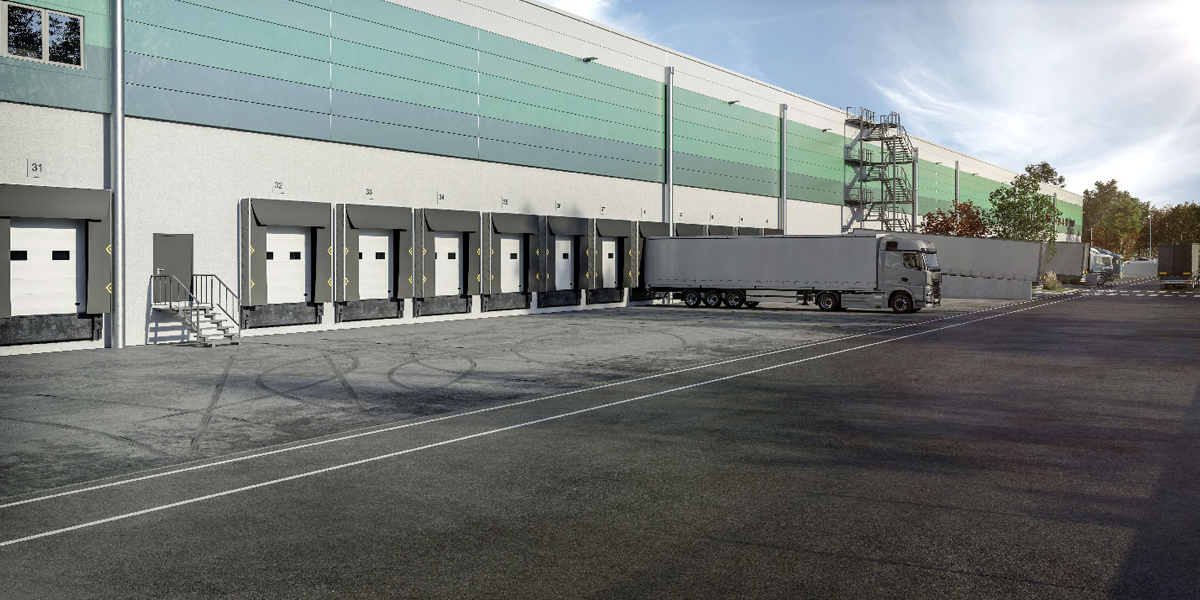
These hubs can facilitate the split between urban-interurban freight transport, thus mitigating several negative externalities associated with logistics within cities
Over 68% of the world’s population is expected to live in cities by 2050, where ever growing movement of goods and services through various modes of transportation has already thrown up certain challenges – emission being one of the biggest. The transport sector accounts for one-quarter of all energy related greenhouse gas (GHG) emissions, with freight transportation making up to 8% of global GHG emissions and scaling up to 11% if warehouses and ports are included.
Around 70% of India’s 4.6 billion tonnes of goods is moved annually by the rapidly growing freight transport industry, that comprises mostly diesel trucks, which despite representing just 3% of the total vehicle fleet, are responsible for 53% of PM emissions. Given this scenario, it makes perfect sense to move towards sustainable urban logistics and create multiple hubs that can provide transhipment space by splitting urban and interurban traffic, ensuring that fewer vehicles move inside the cities.
According to a report by the International Transport Forum, urban logistics includes deliveries, distribution, returns, collections and servicing, apart from having activities like transport of raw materials, distribution of products from business-to-business (B2B) among others. It not only involves delivery of goods bought through e-commerce but encompasses all kinds of non-passenger freight trips by trucks, vans, cargo bikes and other modes of transport. It also includes distribution and return of goods by various stakeholders, the collection of waste, and other services.
The report divides this into two categories of flows:
- Producer-related flows: “These flows encompass industrial and terminal transport, interregional and global freight movements, often in unit loads such as containers or full truckloads and operate on a large scale,” the report said.
- Consumer-related flows. This relates to movement within the city and includes transportation of materials and goods from distribution centres to residential areas. “Urban freight flows, much like other freight movements, exhibit imbalances, especially in consumer-related flows that typically follow a one-way trajectory, often leading to empty backhauls,” it added.
 Fig 1: Once a power-loom hub catering to over a third of the country’s cloth demand, Bhiwandi reinvented itself as one of the largest logistics hubs in the country in the 1990s. Pic: Deepak Joshi
These scenarios make it crucial for establishing Urban Logistics Hubs (ULH) which are located strategically and serve as centres for consolidation, distribution and management of freight, including reverse logistics, according to the report.
“These hubs are spaces in which crucial logistical functions are carried out in the last leg of the supply chain. Examples of these functions include (de)consolidating shipments, storage (including cold storage), sorting goods, and facilitating the shift from larger to smaller vehicles, including low- and zero-emission vehicles, for distribution to close-by areas. They also facilitate reverse logistics and waste collection,” it said.
The report acknowledges that the logistics hubs may not be the most “economically or socially beneficial use of urban real estate” but argues that their absence can help increase the number of polluting vehicles. This apart, the hubs also provide some value added services like having electric vehicle charging stations inside them, places where workers can rest, commercial spaces among others.
The study also argues that there is no need for these hubs to be permanent and instead “microhubs” can be created that be deployed at ease and when necessary “moved or reconverted”. While the private sector is driving the maximum developments in the logistics sector currently and should continue to lead in construction, operation and management of these hubs, the public sector should focus on governance.
“The rapid and continuing changes in the sector pose challenges for public authorities in understanding and regulating the sector effectively. Policy makers should focus on ensuring that the development of urban logistics hubs, and better linkages between hubs and other parts of the logistics chain, improve the sustainability of the sector, while also offering economic efficiency gains,” the report added.
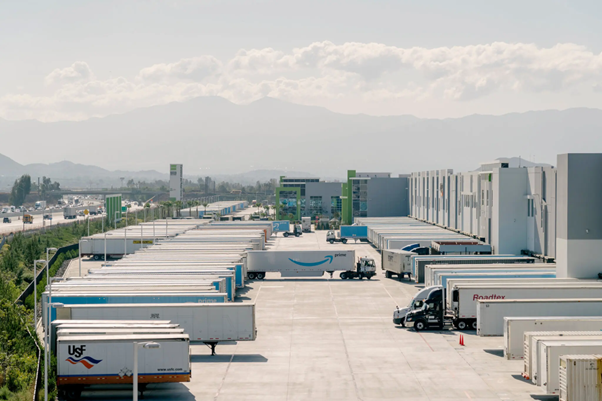 Fig 2: An Amazon centre in Eastvale, Calif. As online shopping has soared, more giant warehouses have sprung up nationwide. Credit Philip Cheung for The New York Times
Establishing Urban Logistics Hubs: The Way Forward
- Knowledge dissemination about logistics across governments: Observing that establishing sustainable logistics requires government expertise, the report advocates the creation of freight teams to guide the sector while asking authorities to bring the topic at the forefront of public debates and political mandate. It also asks policy makers to develop guidelines for logistics hub development.
- Integration of logistics in urban Planning: The report argues that urban logistics is both a traffic and a spatial issue, making it crucial for them to be coordinated. “Horizontal and vertical alignment of planning policies and governing frameworks will be essential to tackling the complexity of logistics….There should be long-term planning for urban logistics, including the potential for multimodal and vertical development…Authorities need adaptive policies that balance or mix operational requirements of logistics facilities with community interests,” it said.
- Encouraging dialogue between stakeholders: The report stresses the need for conducting innovative collaborations between municipalities, industry players, academia, non-profits and civil society. “Collaboration is also crucial to harmonising regulations across cities and regions to help the logistics sector navigate regulatory complexities,” it adds.
- Incentivise development of mixed-use urban logistics: It advocates establishment of mixed-use buildings that provide office, commercial, recreational space along with logistics facilities apart from having some value for the locality in which they are located.
About the Author


