
Continuation of FAME scheme, reduction of GST on li-ion batteries and focus on renewable and alternative fuels to propel transition towards clean mobility among key expectations
The government’s favourable policies on clean mobility have shown very positive results. The electric vehicles industry in particular posted unprecedented success in 2023 and EV sales figures crossed the million mark for the second year in a row. 2023 saw nearly 1.4 million EVs being sold across the country, compared to 1.02 million in 2022.
As the clamour grows to switch to cleaner mobility solutions and India looks to further increase its EV penetration in 2024, the e-mobility industry is expecting major announcements in the upcoming Union Budget.
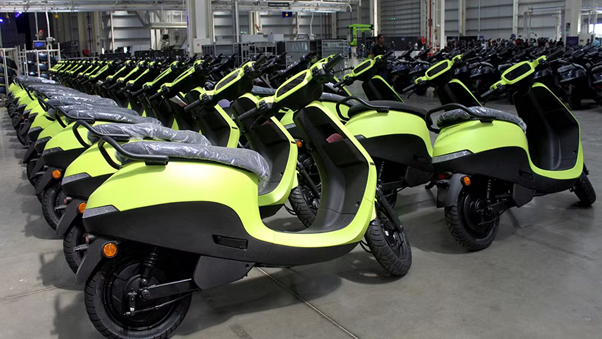 Fig 1: Ola Electric's S1 Air e-scooters are pictured inside its manufacturing facility in Pochampalli in the southern state of Tamil Nadu.Credit: Reuters Photo
Continuation of FAME subsidy
The government had come out with the Faster Adoption and Manufacturing of (Hybrid &) Electric Vehicles in India (FAME-India) Scheme II that aimed to generate demand by way of supporting 7000 e-Buses, 5 lakh e-3 Wheelers, 55000 e-4 Wheeler Passenger Cars (including Strong Hybrid) and 10 lakh e-2 Wheelers.
Through FAME II, the Ministry of Heavy Industries (MHI) has provided Rs 5,228 crore in subsidies for approximately 1.15 million EVs sold till December 1, 2023. “It is expected that the government will continue this for the next few years in response to decarbonising the environment and achieving the targets of net zero goals,” says Mayank Bindal, Founder and CEO, Snap E Cabs.
Others like Nikhil Bhatia, co-founder and Chief Strategy Officer – HOP Electric Mobility, believe that the EV industry is poised for transformative reforms. “Advocating for a streamlined Production-Linked Incentive (PLI) scheme, stakeholders seek clarity in provisions to encourage investment and growth. The call extends to widening the scope of the FAME II scheme, fostering innovation in diverse EV segments,” he said.
Recently in its 2023 year-end review, the MHI said the proposal for the enhancement of the outlay of the FAME II scheme from Rs 10,000 crore to Rs 11,500 crore has been examined by the Department of Expenditure (DoE) and approved considering its objectives.
“The continuation of the FAME scheme for the next 5 years, extending beyond its current schedule till March, is essential. This extension is vital for maintaining upfront price parity for EVs compared to Internal Combustion Engine vehicles, ensuring sustained EV adoption momentum and protecting investments in the sector,” believes Akshit Bansal, CEO and Founder, Statiq, an EV charging solution provider.
He asserted that FAME III will be crucial to bridge the price gap, sustaining interest in EVs, and contributing to pollution reduction and fuel security. “These concerted efforts will not only advance the EV industry but also make substantial contributions to creating a cleaner and more sustainable automotive future in India,” he said.
Many industry players believe that the benefits of the FAME scheme should also cover the e-three-wheelers segment. “As integral contributors to urban mobility, three-wheeler EVs deserve equitable support on the path to zero emissions. This step will not only incentivize their adoption but also recognize and reward their role in advancing the nation’s environmental goals,” said Mitull Batraa, Co-founder of e-rickshaw manufacturer Udaan E Vehicles.
The EV industry is also advocating the introduction of crucial measures to sustain and enhance the sector’s growth. “With the imminent expiration of the FAME II subsidy programme in March 2024, there is a collective call from stakeholders to extend it, ensuring the ongoing efforts to enhance the affordability and accessibility of electric vehicles for consumers. Extending the programme would not only solidify support for the EV industry but also align with the government’s ambitious target of achieving 30% electric vehicles on Indian roads by 2030,” said Chakravarthi C. Managing Director of EV start-up Quantum Energy Ltd.
Hero Electric CEO Sohinder Gill hoped that the upcoming budget will delicately balance the escalating demand for transportation in India, the imperative to curtail pollution, and the aspiration for self-sufficiency while embracing global outreach.
Reduction of GST on Li-ion batteries
Built up EVs are subject to a 5% Goods and Services Tax (GST) but lithium-ion batteries as well as charging stations are charged 18% GST. The EV industry, which has been seeking a reduction of the GST on Li-ion batteries to 5 %, expects that the government in its upcoming Budget will provide them this relief.
Bindal adds that the reduction of GST on li-ion batteries will help in reducing the overall cost of acquiring EV's. “Since batteries are a major cost component in EV's, the move to reduce the cost of batteries will make the product more lucrative for buyers,” he says.
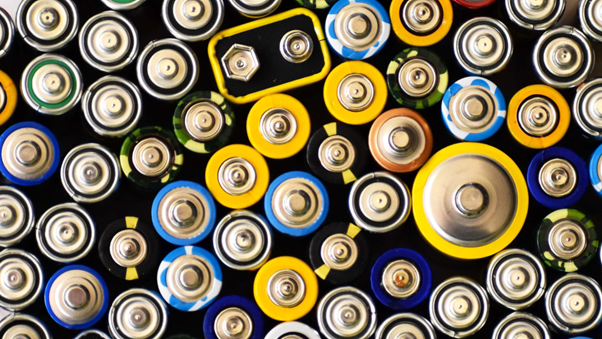 Fig 2: Lithium-ion batteries. Photo by Vardan Papikyan, Unsplash
Innovative EV start-up Raptee Energy co-founder Dinesh Arjun stressed that it is imperative for the government to foster a supportive ecosystem.
“To stimulate investment opportunities, there should be encouragement for potential investors, coupled with essential reductions in GST rates for electric vehicles and charging stations. Additionally, easing the burden on the industry can be achieved through a decrease in import duties on electronic components. The industry is particularly hopeful for a significant GST reduction, aiming to bring it down from 18% to 5% specifically for lithium-ion battery packs and cells, given their pivotal role in the EV sector,” says Arjun.
Many in the industry believe that incentivizing in-bound technology transfer and manufacturing capabilities is crucial to position India as a global EV technology hub. “Anticipating the central role of lithium-ion batteries, we urge GST reform for increased cost-competitiveness. Charging infrastructure development, especially through public-private partnerships, is deemed pivotal for accelerated EV adoption. The forthcoming budget is anticipated to lay the foundation for a sustainable, technology-driven future in Indian mobility, aligning with global EV trends," added Bhatia.
Others hoped that the upcoming budget unveils a comprеhеnsivе policy framеwork for EVs, addrеssing licеnsing, safеty standards, and insurancе norms tailorеd for еlеctric vеhiclеs. They opined that in order to fostеr cost rеduction, a focus on localising battеry manufacturing is crucial, with incеntivеs for battеry manufacturing units and a robust supply chain for EV componеnts.
“Thе rеduction in customs duty on EV parts in thе prеvious budgеt spurrеd local manufacturing, and similar amendments arе expected in thе 2024 budgеt. Calls for a uniform 5% GST on all EV sparе parts, alignеd with thе 5% GST on vеhiclеs, rеsonatе within thе industry, as we aim for a morе еquitablе tax structurе,” said Hari Kiran, Co-Founder and COO, eBikeGo, an electric mobility solution provider.
The industry remains hopeful for a significant reduction in the GST on lithium- ion battery packs. “Such a revision would substantially alleviate manufacturing costs, enabling manufacturers to offer EVs at more competitive prices, further encouraging consumer adoption,” said Chakravarthi C.
EV Financing
While India’s EV market has witnessed exponential growth in recent years, barriers to wide scale adoption still remain, biggest among them being access to low-cost finance. Manideep Katepalli, Co–Founder, BikeWo – a two-wheeler company, says the relatively higher initial cost of EVs often deterrs consumers.
“However, the promise of life tax subsidies for electric vehicles and the availability of accessible EV financing options hold immense potential to mitigate this challenge.
The integration of EV infrastructure into Priority Sector Lending (PSL) is poised to bolster credit flow into the sector by mandating financial institutions to provide support, thus promising a significant boon,” he asserted.
According to a report by NITI Aayog and Rocky Mountain Institute (RMI), India’s weighted-average EV sales penetration has the potential to be about 70% by 2030. To achieve this, over the next decade, India would need a cumulative capital cost of INR 19.7 lakh crore (USD 266 billion) across vehicles, supply equipment and batteries. The estimated size of the annual EV finance market will be INR 3.7 lakh crore (USD 50 billion) in 2030, the report said.
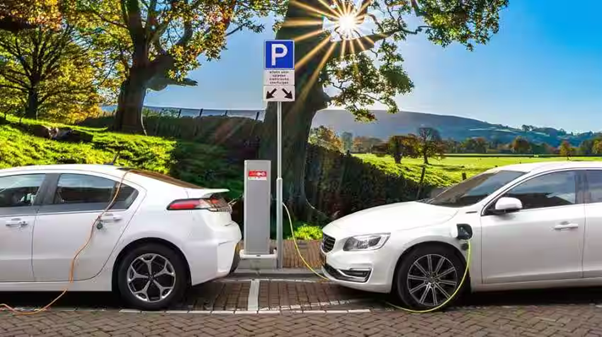 Fig 3: Source Pixabay
Katepalli says a supportive regulatory framework coupled with financial incentives aimed at fostering research and development within the EV sector stands as indispensable pillars. “These measures not only drive innovation but also attract investments, creating an environment conducive to widespread EV
adoption,” he said.
India is looking to achieve EV sales penetration of 30% of private cars, 70% of commercial cars, 40% of buses and 80% of two and three-wheelers by 2030. In absolute numbers, this amounts to having 8 crore electric vehicles on road by 2030.
“We look forward to EV financing getting priority sector lending status as the government's ambitious target of 30% penetration to be achieved by 2023,” said Bindal.
Battery Charging
Mitull Batraa from Udaan E Vehicles pointed out that research and development efforts focused on advanced battery technologies and domestic component manufacturing are paramount. “This strategic investment will position India as a global leader in the electric vehicle sector, emphasising our commitment to innovation and sustainability,” he stressed.
EV industry stakeholders are also seeking a standardised policy for the battery swapping market. “The current fragmentation and varied battery types across different players have led to compatibility challenges and safety concerns, including incidents of fires at swapping stations due to inferior batteries. A standardised policy specifying the type of battery pack, cell, dimensions, and connectors is expected to enhance safety and streamline charging infrastructure, fostering a more reliable and secure environment for EV users,” maintains Chakravarthi C.
 Fig 4: A rider places a battery into a battery-swapping station. Credit REUTERS/Annabelle Chih
Others like Bhatia believe that promotion of universal battery charging and swapping infrastructure aims to simplify the user experience and standardise EV charging.
In the budget, anticipate strategic reforms in customs and tax structures to catalyse domestic innovation, making it more favourable for homegrown "Made-in-India" green technology, said Sandiip Bhammer, Founder and Co Managing Partner, Green Frontier Capital, adding that “this will likely be coupled with increased funding for R&D, particularly in breakthrough areas like battery technology and energy storage solutions,” he said.
Stress on Alternative Fuels and Renewable Energy for Clean Mobility
Apart from incentivising the EV industry, the government has also come out with various other initiatives like the Biofuel policy and the National Green Hydrogen Policy, which aims to develop a production capacity of at least 5 MMT per annum bringing in investments of about Rs 8 trillion.
The government has also focussed on expanding the e-mobility infrastructure by accelerating the establishment of charging infrastructure for EVs.
 Fig 5: Pic credit Getty
Gill advocated that the government should emphasise on advancing cleaner and more efficient mobility solutions, expediting ongoing initiatives such as electric mobility, and directing resources towards future energy needs sourced within our country. “Key focal points should include hydrogen and alternative fuels, coupled with initiatives like direct and indirect incentives for sustainable mobility, as well as disincentives for dirty fuel vehicles,” he said.
He stressed on the need to introduce a robust plan supported with adequate funding for research and development in the creation of futuristic ideas for sustainable energy sources that can be harnessed using our mines, minerals, and the God-gifted sunshine. “Integrating these proposals into the budget could significantly transform the landscape of both urban and rural transportation in India.",” Gill said.
Others hoped that the upcoming budget on February 1, which will be a vote on account owing to the general elections later this year, will also include policies that support green initiatives and renewable energy.
VG Anil, CEO of ARENQ that manufactures UPS, solar, and EV batteries, hoped that the government presents a budget that looks forward to the future that encourages research and development, improves electric mobility infrastructure, and makes it easier for people to use sustainable power solutions. “We want the budget to promote innovation, reduce our reliance on traditional energy sources, and help the country become more environmentally friendly and resilient,” Anil said.
Many others in this sector expect the budget to have a visionary approach towards renewable energy adoption which they feel is not just an environmental imperative but also an economic opportunity that can power our nation forward.
Sameer Aggarwal, CEO and Founder - Revfin Services, a leading digital lending platform committed to transforming sustainable mobility, opined that as the electric vehicle revolution gains momentum, integrating renewable energy into the national grid becomes paramount.
“A strategic allocation in the budget for renewable energy will not only power homes but also fuel the burgeoning electric vehicle segment. By creating an ecosystem where clean energy sources power our transportation, we pave the way for a sustainable and resilient future,” he said.
Similar reactions were echoed by other key players who expect the government to put the spotlight on renewable energy, with a strong push in solar and wind capacity.
“But the real game-changer could be green hydrogen initiatives. We're expecting a surge in support and investment here, from funding for cutting-edge research and development to subsidies aimed at laying the groundwork for a robust green hydrogen economy. Watch for policies nurturing hydrogen fuel cell technology, poised to revolutionise sectors from transportation to industry,” said Bhammer.
Ease of Doing Business
Arjun said a concerted effort in the budget towards enhancing the ease of doing business and facilitating the entry of local players into the market is crucial. “Addressing aspects like component localization and ensuring easy access to necessary components will empower Indian companies, both large and small, to develop competitive products at competitive prices, further solidifying the sector's growth potential,” he said.
Wrapping it up, Bindal pointed out that over the past 5 years the government has focused a lot on building strong infrastructure and is expected to continue improving and make efficient investments in energy, especially green energy and sustainable energy.
About the Author


