
India aims to deploy 50,000–60,000 e-buses that will require an estimated Rs 643 billion in debt financing
One of the key sectors which contributes heavily to emissions is the transport sector, with diesel-operated buses and trucks emitting toxic fumes that further deteriorate air quality and impact health. The Indian government has taken crucial steps to decarbonise its entire bus fleet, aiming to transition them to clean mobility solutions like electric.
To fast track the transformation of these Internal Combustion Engine (ICE) vehicles, the government came out with the Faster Adoption and Manufacturing of Electric (and Hybrid) Vehicles in India (FAME) scheme which helped provide financial support to Public Transport Agencies (PTAs) that operate these buses, which helped deployment of nearly 8,000 e-buses across the country. India also announced the PM-E-Bus Seva initiative, aimed at incentivizing public transport electrification.
The government also recently announced the PM Electric Drive Revolution in Innovative Vehicle Enhancement (PM E-DRIVE), which allocated a sum of Rs. 4,391 crore for procurement of 14,028 e-buses by STUs/public transport agencies. The demand aggregation will be done in the nine cities with more than 40 lakh population. In consultation with states, the government also plans to support Intercity and Interstate e-buses.
While allocating buses to cities or states, first preference will be given to those vehicles, that are procured after scrapping old STU buses, through authorised scrapping centres (RVSFs) following the Ministry of Road, Transport and Highways’ (MoRTH) Vehicle Scrapping Scheme guidelines, according to the scheme.
According to a working paper published by WRI India, the country is at an early stage of an unprecedented bus fleet transition, aiming to deploy 50,000–60,000 e-buses in the future, which will require an estimated US$7.75 billion (INR 643 billion) in debt financing.
“Unlike earlier models, where buses were usually procured and operated by public transport agencies (PTAs), new e-buses will be deployed through public-private partnership models, where private operators receive gross-cost contracts from PTAs to run e-buses. Given the high capital requirements, effective e-bus financing is critical for scaling up India’s e-bus programme,” the paper said.
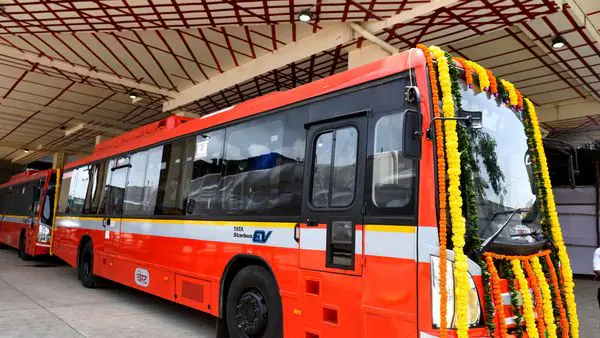 Fig 1: Of the buses tendered by BEST, 1,400 will be 12-meter AC electric buses, 400 will be 9-meter AC electric buses and the remaining 100 will be mini-AC electric buses.(Satish Bate/HT PHOTO)
Public sector fleets, managed by PTAs, currently operate 0.15 million buses across states and union territories, of which 8,200 are electric buses. The e-buses which India intends to scale up in the future will be procured under a gross-cost contract (GCC) model, where PTAs compensate private operators on a per-kilometre basis, the paper said.
“Private operators are expected to procure and operate the buses, marking a shift from the conventional operating models in which PTAs procure and operate most buses themselves. Although e-buses have lower operating costs, their up-front capital requirement is significantly higher, 200–300 percent more than diesel buses,” it said.
India faces “unique” challenges and stands at a “critical juncture” where it needs to fast track the transformation and procurement process of e-buses to bring down its air pollution and also meet its net-zero climate targets. “The current bus fleet size and the significant number of overaged buses (about 0.6 million buses are expected to be 15 years old by 2030) necessitate urgent fleet expansion to meet the rising demand,” the paper asserted.
Electric Bus Projects: Challenges In Raising Finances
After detailed consultations, the working paper identified key challenges that are being faced to raise finances for projects that aim to electrify buses. Let's take a look at some of them:
- Reliance on Commercial Banks for Debts: These projects depend a lot on commercial banks for their debt financing. “However, the high collateral demanded by financiers limits private operators’ ability to scale up deployment in line with the demand for electrification,” the WRI India working paper said.Noting that debt for e-buses is mostly secured against corporate guarantees and assets beyond the project, the requirement of high collateral “limits operators’ ability to secure additional debt for new projects”.
- Short Repayment Tenures: It argues that financial stress is created owing to short repayment tenures that led to negative cash flows coupled with delayed payments from PTAs, thus creating the need of private operators for higher working capital.
“E-bus projects typically have long concessions of up to 12 years, whereas financing is offered for tenures extending up to 7 years. Mismatches between loan tenures and concession tenures result in negative cash flows and a greater reliance on working capital. Moreover, payment delays by PTAs have a cascading effect, impacting the operators’ capacity to service debt and maintain sufficient working capital,” the paper added.
Concession Terms: According to the concession terms offered to operators, PTAs are responsible for payments but the payment delays and defaults are shouldered by operators, limiting debt financing based on project revenues and necessitating guarantees from operators.
“The public sector must safeguard payments or project revenues in e-bus projects to lower the lenders’ requirement of debt collaterals, unblocking capital for the private sector. Such mechanisms can play a pivotal role in unlocking private investments in the e-bus sector,” it added.
About the Author


