
Although India has been making efforts by pushing electric vehicles and building dedicated corridors to decarbonise the logistics sector and bring down the freight cost, it needs to step up its efforts.
It is impossible to escape a discussion on the role of the logistics sector when talking about decarbonisation. Primarily involving freight transport (road, rail and waterways), warehousing, materials handling, and related information technology, this sector plays a key role in a country’s economic development. Because of this, developing countries – such as India – focus hugely on logistics plans, policies, and strategies in a bid to cut freight cost. However, there is a high environmental price to pay for logistics-powered development, particularly in the emissions of air pollutants and greenhouse gases (GHGs).
Globally, logistics contributes around 11% of energy-related CO2 emissions; roughly 90% of logistics emissions come from freight movement; and most of the remainder comes from warehousing and terminals. Freight movement accounts for around 40% of total CO2 emissions from transport globally, according to a new report contracted by the World Bank.
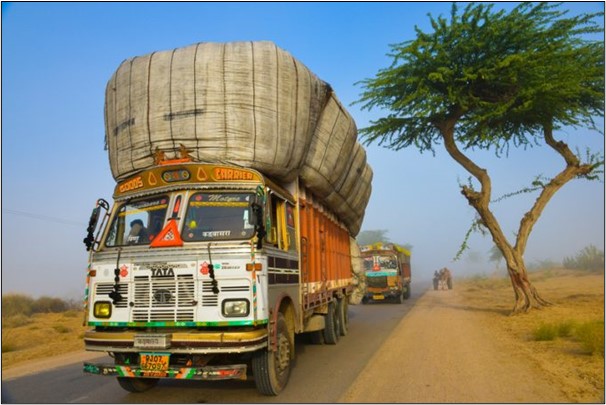 Fig1. Overloading of vehicles not only decreases fuel and carbon efficiency but also results in long-term wear and tear of the road infrastructure. Image via Dreamstime.
In India, road transport, currently the mainstay of freight movement in the country, accounts for 12% of energy-related CO2 emissions, according to an IEA report. It is also a key contributor to urban air pollution. As the demand for private mobility and transport of goods rises, energy use and CO2 emissions from road transport could double by 2050.
While India has been making efforts by launching inland waterways, pushing for electric vehicles and building dedicated corridors – to decarbonise freight movement as well as bring down the freight cost to become globally competitive, it needs to step up. Switching to electric vehicles (heavy goods trucks) is just one part of the steps on how India can decarbonise the logistics sector and still grow rapidly. Several other measures need to be taken. And they should be taken up urgently.
Five Decarbonization Levers for Developing Countries
The World Bank report explores how the logistics decarbonisation approaches in the West can help developing countries like India. It proposes five main sets of carbon-reducing measures — called the decarbonisation “levers”.
These “five levers” are:
- Activity: This relates to the demand for freight transport. Most developing countries are at a stage in their economic development where managing growth in freight demand could come with significant costs to GDP. And this is the reason why governments appear reluctant to act towards decarbonisation. Improvement in infrastructure has allowed companies to build central warehouses. While central warehouses help these firms reduce manpower and energy costs for maintaining inventory, these savings are offset by the transport emissions during delivery of goods to a wider region.
One way of addressing this issue is land-use planning. Governments could consider making rail access a condition for the award of planning permission for a freight facility and aiding the development of localised networks of break-bulk facilities.
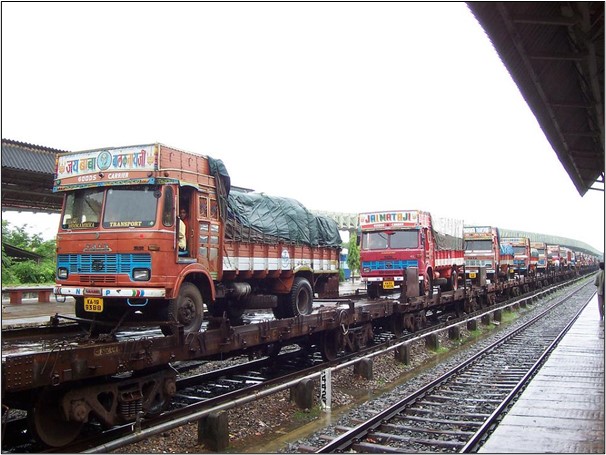 Fig 2. There is a need to boost rail freight traffic as compared to roadways. Image via India Railways
 - Modal Split: Modal split refers to how the transport of goods is distributed among different modes such as truck, rail, and inland waterway. Intermodal services and upgraded infrastructure for freight transport can lower carbon emissions while increasing market opportunities.However, freight traffic has moved away from rail and waterway networks with low connectivity towards road networks that are better connected to production and warehousing facilities. This needs to be looked into and rectified to ensure that the waterways and the railways are adequately used for freight transport. This calls for more investment in the two and investing in making them more dependable.
- Vehicle Utilisation: Also described as loading, vehicle utilisation relates to the weight or volume of goods carried per vehicle. Optimising vehicle utilisation reduces the amount of traffic required to move a quantity of freight. This applies to all transport modes; however, truck loading has received the most attention because roads are the dominant mode of domestic transport and the ones with the highest carbon intensity. Most published data relates to trucks that run empty and there is limited data on the partial loading of laden vehicles in terms of weight, floor area, and cube utilisation.
Reductions in empty running and the underloading of laden vehicles can substantially lessen the carbon intensity of road freight operations. The aim is to maximise loading within legal limits and curb the overloading of vehicles, a practice that not only decreases fuel and carbon efficiency but also results in a wider carbon penalty due to the long-term wear and tear of the road infrastructure. The optimal use of vehicle capacity can lead to cost and carbon savings and should be prioritised for both business and environmental reasons.
- Vehicle Energy Efficiency: It is typically defined as the litres of fuel consumed per 100 km travelled. It can be increased through various technical, operational, and behavioural methods. Over the last decade, governments around the world have given fuel efficiency initiatives regulatory impetus by tightening fuel economy standards for new trucks.In 2021, the IEA estimates, 75% of new truck sales were in countries with certain fuel economy standards for trucks. The owners of existing/second-hand vehicles are retrofitting them with a range of fuel- and CO2-saving devices. They are also deploying behavioural measures and operational changes such as the rescheduling of deliveries to off-peak periods for energy efficiency.
- Carbon Content Of Energy: This final logistics decarbonising lever is the only lever that can potentially lower CO2 emissions from domestic freight down to zero over the next few decades. The easiest option for the decarbonisation of road freight vehicles in the next 10-15 years could be increasing the blending of diesel with sustainable biodiesel.
In the longer term, the complete decarbonisation of long-haul trucking will be achieved by electrification. This can be done using batteries, hydrogen fuel cells, highway electrification, and various combinations of these technologies.

