
Government subsidised bus fares in 10 cities set a powerful example for making public transport accessible for women
For many women in Indian cities, a bus ticket is more than a ride — it’s a lifeline and a gateway to greater economic opportunity, education, healthcare, and independence. Women constitute 22% of all work commuters and 84% of all these women rely on public transport to get to work or run household errands. This shows that as India builds its urban transport networks, it should focus on the needs and safety of its primary users - women.
A new multi-state study titled “Beyond Free Rides” reveals how government schemes for subsidised bus fares are reshaping urban transport for women across India. Drawing on insights from 10 cities and over 2,500 survey respondents, the study paints a compelling picture of how a seemingly simple policy can create outsized impact on equity and economic opportunity.
The report studies full fare subsidy schemes in Delhi, Bangalore, Hubli-Dharwad; partial fare (50%) subsidy schemes in Mumbai, Pune, Nagpur; and no subsidies in Kolkata, Kochi, Durgapur and Thiruvananthapuram. It reveals that buses are women’s main mode of transport. Even in cities with no bus subsidy, 78% of women use buses to move around. In cities offering partial subsidy, women earning under Rs 25,000 per month also prefer buses, highlighting that even smaller fare cuts matter.
 Figure 1 - Women in Bangalore wait in line for the buses to depart
Full Fare Subsidies help women save half their monthly transport expenses!
In cities like Delhi, Bangalore, and Hubballi, where 100% bus fare subsidies are in place, the impact is clear - women save 32%–53% on monthly transport costs with Delhi leading the way at 53.5% average savings. This money is redirected to childcare, education, health and better nutrition. In well-run cities like Bangalore, employment access jumped five fold for women thanks to free bus rides. For the very first time, many women have begun to consider jobs far from their homes.
Partial Subsidies Help — But have limited impact
In cities like Mumbai, Pune, and Nagpur, where only 50% subsidies apply (mainly on long routes), the benefits are more limited. Monthly savings range from Rs 409 – Rs 538 which is between 30 - 50% of monthly transport expenses. Employment gains are also minimal, with just 3% women reporting better access to work due to subsidized transport, compared to 23% in Bangalore where bus rides are free. The scheme still does not include many daily, intra-city trips which is reducing its transformative potential.
It’s Not Just Work: Free Buses Enable Care, Leisure, and Health
In cities with full fare subsidies, the study found that women now travel up to 11 - 20 kms comfortably, tending to caregiving duties or helping their families, which was once considered a financial barrier given the cost of long distance travel. Women are able to reach places such as religious sites, parks, and community centres, far more easily, which in turn is helping raise women’s standard of living.
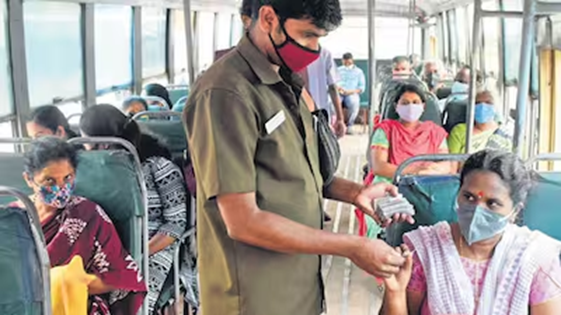 Figure 2 - Women report traveling longer distances to tend to family matters in cities with full or partial free bus rides.
But barriers remain - overcrowding, harassment and limited last mile connectivity
While these schemes have done well, free buses alone are not sufficient to popularise public transport and make them safe for women.
- Without last mile connectivity, even in cities with free bus rides, women continue to spend over Rs 1,500 per month on autos and cycle rickshaws for end to end mobility.
- Free rides have encouraged more women to choose buses, but the infrastructure has not upgraded to manage this surge in demand. Buses are sometimes running on double capacity, leading to over-crowding and becoming a physical safety risk. Urban areas need more buses per person to ensure safe and comfortable rides.
- Safety concerns persist, which is a larger challenge in urban areas. Only 42-46% of women feel safe to take the bus in fully subsidized cities. In partially subsidized cities, the number dips even further, to 35%. Across all cities, more than 50% of the women report feeling unsafe on the buses.
So, how can states maximise the impact of subsidy schemes for bus rides?
- Align subsidy with fiscal bandwidth: Younger women between 18-25 yrs show highest response to full subsidies, whereas women earning between rs 10,000 - 25,000 per month showed stronger uptake in the case of partial subsidies. This insight can be used to tailor subsidy levels within the scheme.
- Address operational issues: Increasing bus fleets to accommodate demand surge through free tickets, training frontline staff on subsidy implementation, gender sensitisation and including safety infrastructure like CCTV cameras will reduce issues of over-crowding and safety.
Why public transport matters
Prioritizing public transport over individual travel is the best way to improve urban mobility in India. Right now, road transport makes up nearly 90% of all transport emissions, with private vehicles being the fastest-growing source. Expanding reliable, affordable public transport can reduce emissions, congestion, and oil dependence—issues that affect many Indian cities today. Research shows that shifting from personal vehicles to buses and trains could cut urban road transport emissions by up to 50% by 2050. This change would lead to healthier air and less crowded streets in cities.
About the Author


