
India can learn from global experiences and unlock key policy initiatives to ensure substantial growth in the EV sector
India’s electric vehicle ecosystem has been growing from strength to strength, with consumer interest and adoption witnessing a consistent upward curve. Recently India overtook China to become the biggest market of electric three-wheelers globally, recording a sales figure of over 5,80,000 in 2023, according to the IEA’s latest report.
The government has not left any stones unturned in terms of boosting EV uptake, hand holding the domestic manufactures, suppliers and battery production firms and driving the shift through supply and demand side incentives. The EV sector not only helps India achieve its net zero ambition and energy transition goals but is also a crucial enabler for driving economic growth and job creation. While a lot of progress has been achieved, there is still a long way to go – the journey riddled with its own set of challenges.
India can learn from global global experiences and unlock key policy initiatives to ensure substantial future growth in the EV sector in line with the goal of ‘Vikasit Bharat 2047’. Let us look at some key themes and areas within the EV value chain which have scope of crucial government interventions.
Production-Linked Incentives
The Ministry of Heavy Industries under the Government of India has two PLI schemes that incentivise the production of EVs - PLI for Advanced Chemistry Cells (ACC) and PLI for Automobiles and Auto Components (AAC). These schemes provide subsidies to EV, advanced EV battery and EV component manufacturers, based on their production capacities.
According to a study conducted by the Koan Advisory Group and the The Asia Group, the current PLI designs place businesses with a capacity to scale at an advantage over startups. The study recommends the expansion of the scheme’s reach by creating an additional segment with lower eligibility thresholds to include smaller companies and innovative startups.
It also advocates the creation of a segment under the schemes for small and innovative companies, with proportionate incentives suited to their annual revenue, apart from making provisions to include new players in the EV components manufacturing and charging space. This is currently not covered in any scheme.
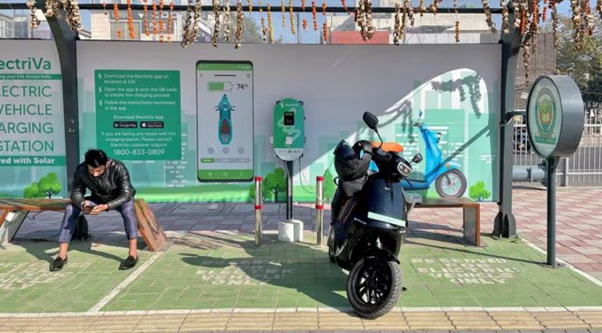 Fig 1: A man checks his mobile phone as he waits while recharging his Ola electric scooter at an electric vehicle charging station in New Delhi, India, February 12, 2022. REUTERS/Aditi Shah/File Photo
FAME Subsidy
The Government of India launched the Faster Adoption and Manufacturing of (Hybrid &) Electric Vehicles (FAME) scheme in 2015 to boost the uptake of electric and hybrid vehicles. The first phase (with a budget of Rs 895 crore) operated from 2015 to 2019, while the second phase (with a budget of Rs 11,500 crore) was from 2019 to March, 2024. The Electric Mobility Promotion Scheme (EMPS) with a budgetary allocation of Rs 500 crore was thereafter introduced by the government.
The EV industry, still at a nascent stage, requires the critical support provided by the scheme and it is essential that FAME III continues covering the segments already supported by FAME II. “A critical way to ensure that is by refining FAME III based on learnings from earlier iterations of the scheme which can advance the growth of the EV ecosystem, specifically in the E2W and E3W segments,” the study said.
It suggests that the government may provide an incentive in the FAME scheme to consumers as a direct benefit transfer, causing fewer fluctuations in the cash flow and liquidity of EV companies, particularly India’s innovative startups, and thus enhancing their ability to invest more aggressively in R&D and expansion.
The government also created a standard operating procedure (SoP) to assess DVA requirements under the PLI AAC. “A similar exercise could be conducted for the FAME scheme by consulting all relevant stakeholders. In addition, the SoP could also include a taxonomy of components which could be domestically manufactured based on the availability of components and raw materials,” it added.
Demand Side Incentive Harmonisation
Various states provide different subsidies and they vary substantially. While diversity in policies can encourage competitive federalism, greater harmonisation has the ability to provide certainty to businesses and consumers.
“MHI could consider issuing guidelines and frameworks to states to standardise incentives directly linked to the cost to consumers for an EV, to the extent possible. This includes purchase subsidy, registration tax, road tax, interest subvention and scrappage incentive,” it said. The government can guide states in determining a central agency to oversee and support the standardisation of the selected subsidy parameters, it added.
 Fig 2: An EV charging station in India. Photo | Sathya keerthi
EV Charging Technology: Spurring Innovations
There are around 12,146 charging stations and 63,000 charging points for EVs in India that include both slow and fast chargers. They are split into three levels based on their power rating – Level 1 AC (slow charging), Level 2 AC (fast charging) and Level 3 (DC charging). There are also seven major charging connectors in the global market including Type-1, Type-2, GB/T, CHAdeMO, CCS-1, CCS-2 and NACS.
India has adopted the Bharat AC-001 standard specified by the Bureau of Indian Standards (BIS), based on the Type-1 connector for Level 1 AC charging and Type 2 connector for Level 2 charging. For regular DC Charging, it has adopted Bharat DC-001 which is based on the Chinese GB/T standard, while CHAdeMO and CCS-2 connectors serve high-voltage DC applications.
However, as of now, India does not enforce any standardised charging technology for EVs. “While the new BIS-approved standards unify AC and DC charging through a combined standard, all EV manufacturers may not prefer standardisation and interoperability in charging. This is because OEMs may pursue innovation in charging technology to gain a competitive edge in the industry and enhance the performance of their own product,” it said.
The study suggests introduction of guidelines for standardised and inter-operable chargers, but also leaving some space for variability. In addition to that, the standardisation could be reviewed in two to three years to ensure the desired beneficial impact and minimal detrimental impact.
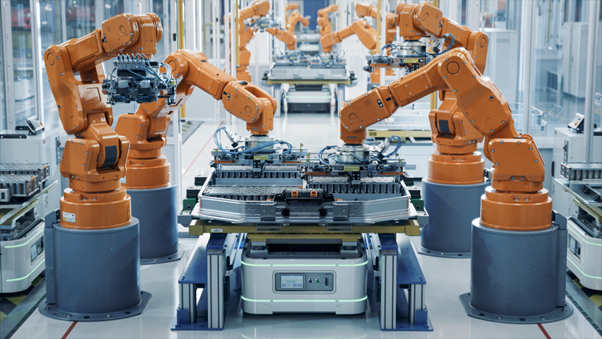 Fig 3: A new recycling process could lead to more sustainable lithium-ion batteries needed for transport. Credit: Shutterstock
Scrapping Policy: The Road Ahead
Despite having different product architectures, India’s national vehicle scrapping policy does not distinguish between ICE vehicles and EVs. The Ministry of Road Transport and Highways
(MoRTH) introduced the Voluntary Vehicle Fleet Modernisation Programme (VVMP) in 2021, to help phasing out end-of-life vehicles (ELVs), regardless of what fuel they use.
To enable nationwide ELV management, the policy encourages state governments to expand the network of ATSs and Registered Vehicle Scrapping Facilities (RVSFs) by promoting private investments. There is no specific directive on vehicle scrappage for EVs. However, India’s Extended Producers Responsibility (EPR) regulations define various aspects of ELV management which includes EVs.
“An EV-inclusive state-of-the-art vehicle scrapping policy will benefit India. The county has an opportunity to be an early mover in defining an innovative EV scrapping policy globally, focused on e-waste management and battery recycling. As EVs in the country age, automotive e-waste management will be an important policy issue.
Moreover, mineral recovery from battery recycling can meet a share of the demand for lithium, cobalt, nickel and manganese – minerals critical to aid India’s battery cell manufacturing capabilities,” it said.
The study recommends promotion of private investments in the upgradation of vehicle testing and scrapping facilities by remodelling VVMP towards recycling of EV batteries, focussing on two main aspects – putting in place guidelines for the mitigation of safety risks in lithium-ion batteries and recovery of high-value rare earth metals like lithium, nickel, cobalt and manganese from batteries.
Goods and Services Tax: Policy Interventions
To increase the adoption of EVs, India reduced the GST imposed on fuel cell vehicles from 28 percent to 12 percent. In 2018, the GST rate on lithium-ion batteries was also brought down from 28 percent to 18 percent. The study asserts that rationalisation of GST across the EV ecosystem would bring two main benefits – “attract global value chains, by avoiding inverted tariff and GST structures, and facilitate more rapid growth of charging as a service across the country.”
It suggests holding discussions to reduce GST rates for lithium-ion batteries utilised in EVs by drawing precedence from other industries like the Ministry of Petroleum and Natural Gas, which slashed GST rates on ethanol used for blending with petrol. It also recommendedGST rationalisation across the EV ecosystem, including components for manufacturing as well as services such as charging.
Priority Sector Lending for EV Consumers
The Reserve Bank of India (RBI) conceived priority sector lending (PSL) in 1972, to broaden financial inclusion for marginalised communities by increasing credit flow to priority sectors. In 2022, the NITI Aayog in its report titled Banking on Electric Vehicles in India outlined the importance of priority sector recognition for retail lending in the electric vehicles domain.
The recommendations of the study include identification of segments in the EV landscape which can be prioritised followed policy suggestions for other government stakeholders to consider that may include placing lending limits for individuals and fleets to purchase EVs.
It also suggests development of training programs to “equip bankers with the knowledge and skills to assess EV loan applications accurately while considering factors specific to the technology.”
About the Author


