
The first of the two-part series takes a look at some of the distinctive tests that are crucial to ensure the safety of EVs
Regardless of the powertrain, every vehicle that is launched in India (or any regulated market) must be type-approved. Obtaining a type approval certificate can be an arduous task for the Original Equipment Manufacturer (OEM) as modern vehicles may have to go through more than 500 tests to prove their compliance with the applicable standards.
 Figure 1: Fire resistance of EV batteries is one of the most important tests for safety certification | Source: https://www.guchen-connector.com/
Electric vehicles are a fast-growing segment in the country, accounting for 6.42% of all the new vehicles sold. However, India’s warmer ambient temperatures, humidity and its higher traffic densities present the vehicles with unique operational challenges. They must therefore be tested rigorously, and their safety checks are especially important in light of the spate of EV fires that India witnessed in 2022 and the growing importance of digital data transfers.
While many of the tests are common with ICE vehicles, the following three tests are (so far) unique for EVs (and to an extent, hybrid vehicles):
A. Cybersecurity testing
EVs in India are increasingly being offered with over-the-air software updates, similar to what Tesla does in the US. In general as well, connectivity to wireless networks for seamless payments and the uploading of performance metrics to the OEMs will become commonplace as EVs look to provide the best possible ownership experience. This also opens up the possibility of cyber attacks and the stealing of sensitive data.
Governed by UN Regulation No. 100 (UNR 100), EVs are thus subjected to the following tests:
- Encryption and authentication: Engineers test the resistance to vulnerabilities and brute force penetration by subjecting the vehicles’ data encryption, authentication and transmission systems to a number of simulated attacks. Two of the most common approaches are:
- Fuzzing: This feeds invalid, unexpected or false data into the system to test its responses and identify potential vulnerabilities.
- Network segmentation
This divides the EV networks into a number of segments to simulate and isolate and contain a cyberattack to a manageable section.
B. Mechanical testing of batteries
EV batteries and battery assemblies are sensitive equipment that operate under high voltages and must be protected from physical stresses – such as heavy impact forces during a crash, or the dropping of the battery pack during replacement or servicing. The common tests for this vulnerability are:
Battery impact testing
This is further divided into
- Charpy impact testing: Where a notched bar impacts the battery and the energy absorbed by it when it fractures is measured
- Dynamic impact test: To simulate a vehicle accident and assess the battery's safety performance when the body is deformed
- Battery separator puncture testing:
Battery separators are thin, microporous membranes placed between a battery's anode and cathode to prevent short circuits and maintain the battery's safety. They are made of polymers and must be strong enough to withstand the tensile forces that are experienced during assembly and the forces exerted by the dendrites that are formed during a cell’s operation.
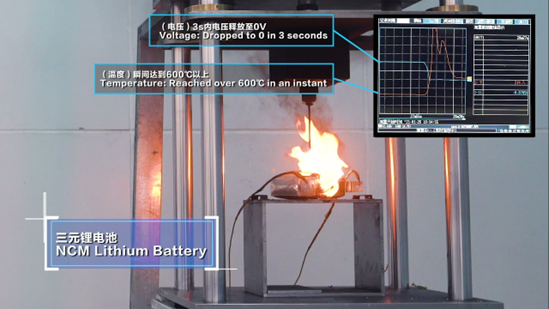 Figure 2: Penetration testing by BYD for its Blade line of battery packs | Source: BYD Global
The separators are tested with a pneumatic puncture test fixture that drives a 3.2 mm diameter probe into the clamped specimen. Passing the test is essential as a compromised separator would leak the electrolytes and cause uncontrolled chemical reactions – which may even result in fire.
- Stack compression testing: This evaluates the compressive strength of a battery's materials by applying opposing forces, until it collapses. The test is important to simulate real-world pressure forces that the batteries will be expected to withstand and the test is performed in a stacking rig at least 3m high.
C. Thermal testing
This is a very important test that is performed to understand how heat propagates to the adjacent cells, and how much heat the cell can withstand before it breaks into an (uncontrolled) fire – also called a thermal runaway.
The test is performed by heating or mechanically impacting a single cell to induce a thermal runaway event. The voltage and internal and external temperatures at which the runaway occurs is noted, as well as the ambient temperature at the test rig. The aim is to determine how well the OEM’s theoretical models of the cell’s thermal behaviour align with real-world conditions.
EV testing is a highly sophisticated field that requires state-of-the-art test rigs and trained engineers. Part 2 will focus on the testing of hybrid vehicles and ADAS and the kinds of test equipment necessary for their testing.

