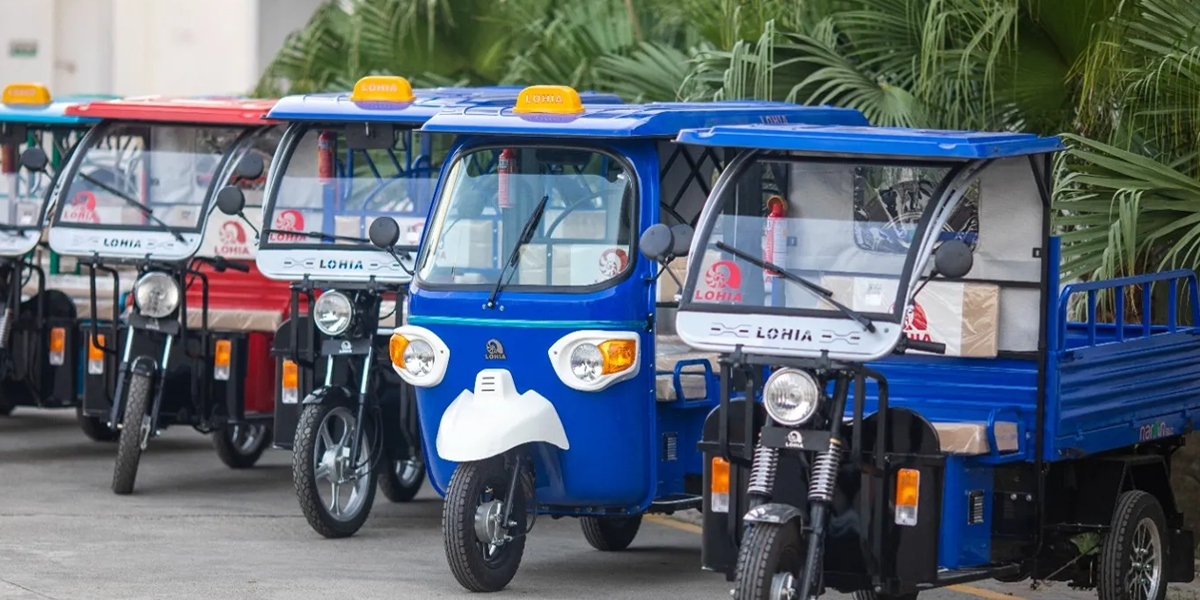
The next phase of E-3W growth could shift from employment creation to fleet replacement, driven increasingly by the operating-cost advantage of electric over petrol, diesel and CNG.
E-rickshaws: An employment opportunity for the unskilled
Data from the India E-Mobility Dashboard reveals a sharp contrast in Electric Three Wheeler (E-3W) adoption across Indian states. Emerging and developing states like Uttar Pradesh and Bihar show significantly higher E-3W sales and penetration mostly in low-speed E-3Ws i.e., e-rickshaws. In contrast, wealthier states like Karnataka, Tamil Nadu and Kerala, have higher EV penetration among high-speed E-3Ws i.e., e-autorickshaws.
E-rickshaws are an easy entry point for unskilled youth
It's ultimately an employment story. E-rickshaws face far fewer licensing hurdles than autorickshaws, making them an easy entry point for unskilled youth in states like Uttar Pradesh (See our dashboard diaries on UP).
 Figure 1 : E-3W sales composition of select ‘poor’ and ‘rich’ states
Note:
Shared LowSpeed: e-rickshaws (E-3Ws with maximum speed of 25kmph)
Shared: e-autorickshaws (Electric Vehicle counterparts for petrol/diesel/CNG autorickshaws)
How policies of the past shape the future
Past government decisions, in the form of policies and regulations, significantly impact the path forward. Karnataka, Tamil Nadu and Kerala, for example, did not experience the same proliferation of low-speed e-rickshaws seen in Uttar Pradesh and Bihar. In these markets, the three-wheeler ecosystem evolved around regulated autorickshaws, creating a very different starting point for electrification.
“There’s an important distinction : EV adoption is path-dependent.”
The higher-value end of the E-3W market is accelerating fast
High-speed e-3W penetration has jumped from just over 4% to 42% in a few years, while low-speed e-rickshaw sales have flattened at roughly 0.5 million sales a year, a sign of saturation in early-adopter states.
“India's first E-3W wave was about putting electric vehicles on the road. The second may be about replacing existing ICE 3Ws with electric ones.”
 Figure 2 : Sales of low-speed e-rickshaw over time
 Figure 3: Penetration of shared (highspeed e-autorickshaws) over time
From employment buffer to fleet transition
India's E-3W story is therefore not one transition, but two
In many emerging markets, the adoption of e-rickshaws has acted as a means of a livelihood opportunity, while simultaneously improving the first and last mile connectivity in these regions. In more regulated markets, electrification is taking a different route: replacing an established autorickshaw fleet with a lower-running-cost alternative.
Hence, the first wave of 3W electrification is likely to saturate, not because of lack of better models or product innovation, but rather the influence of other employment opportunities accessible in these growing markets. While, the second-wave is only beginning to scale. The centre of gravity of India's electric three-wheeler market could shift from employment creation to fleet replacement.
That makes the next phase of E-3W adoption particularly important. And factors such as cost-competitive models, accessible financing and technological innovation, will play a significant role on how quickly we transition to cleaner mobility among 3Ws.
Akhilesh Magal is the Founder and Director of Climate Dot; Hamna M is Policy analyst, E-mobility, Climate Dot (Views are personal)
About the Author


