
It focuses on ensuring stability, policy continuity, and strategic self-reliance at a time when the global landscape is increasingly becoming volatile and fractured
The Budget 2026, announced by Finance Minister Nirmala Sitharaman on February 1, signals a shift from a policy approach driven by short-term headlines to one centered on a consistent, long-term national strategy. This budget is defined by its focus on ensuring stability, continuity, and strategic self-reliance at a time when the global landscape is increasingly being characterized by uneven growth and rising geopolitical tensions that is already significantly affecting markets, supply chains and the global momentum on transitioning towards sustainable solutions.
The core focus area underscored by the Union Budget was to ensure long-term economic durability amidst volatile global supply chains. Recognizing the impact of trade disruptions, inward looking policies of various governments, the budget laid the foundation for strengthening its domestic foundations. The focus is on de-risking external dependencies, building internal capabilities, and
insulating strategic sectors, especially those critical for industrial competitiveness and the energytransition.
Not surprisingly, given the global scenario, critical minerals assumed a strategic priority. Acknowledging the risks of concentrated global supply chains and India's current import dependence, particularly from China, the budget emphasized creating a secure, diversified, and resilient critical minerals ecosystem, a strategy that extends beyond immediate procurement to institution-building.
Keeping this in mind, the Union Budget announced the ambitious critical mineral corridors in key states and exempted basic customs duty on the import of capital goods required for processing of critical minerals.
The budget also avoids large announcements for the electric mobility sector. Instead, it adopts a more nurturing, 'handholding' strategy’. It indicates strong support for domestic manufacturing, infrastructure-driven demand, and the expansion of electric mobility, evident through its focus on initiatives like PLI schemes and public capital expenditure, which are directed at EV supply chains, rare earth magnets, and battery production. These measures reflect an understanding that the EV ecosystem now requires depth and durability.
In essence, Budget 2026 positions India in preparation for a more uncertain and fragmented global order and prepares the country for the next phase of electric mobility growth. Industry experts have also welcomed the budget announcements, stressing that the emphasis on advanced manufacturing, electronics and battery production, rare earth corridors and MSME empowerment strengthens India’s journey towards becoming a competitive global manufacturing hub under the vision of Atmanirbhar Bharat.
Key Highlights of India’s Budget 2026
During her budget speech, Union Finance Minister Nirmala Sitharaman acknowledged that the country is facing an external environment in which trade and multilateralism are imperilled and access to resources and supply chains are disrupted. “New technologies are transforming production systems while sharply increasing demands on water, energy and critical minerals,” she told the Parliament.
She announced that the government will launch the India Semiconductor Mission (ISM) 2.0 to produce equipment and materials, design full stack Indian IP, and fortify supply chains with focus on industry led research and training centres for developing technology and skilled workforce. She also said the Electronics Components Manufacturing Scheme outlay is also proposed to be increased to Rs 40,000 crore.
Sitharaman said that ‘Dedicated Rare Earth Corridors’ will be established “to support the mineral-rich states of Odisha, Kerala, Andhra Pradesh and Tamil Nadu to promote mining, processing, research and manufacturing.”
This budget announcement came in the backdrop of a scheme approved by the Union Cabinet in 2025 to boost the domestic manufacturing of sintered Rare Earth Permanent Magnets (REPM). This is a crucial component for EV traction motors and various other automotive uses.
With a total financial outlay of Rs 7,280 crore, the REPM scheme aims to build 6,000 metric tonnes per annum (MTPA) of integrated manufacturing capacity. This capacity will encompass the entire value chain, from rare earth oxides to the production of finished magnets.
Sitharaman also announced the extension of the basic customs duty exemption given to capital goods used for manufacturing Lithium-Ion Cells for batteries. At the same time, the government also proposed to exempt the basic customs duty on import of sodium antimonate for use in manufacture of solar glass while also exempting the basic customs duty to the import of capital goods required for processing of critical minerals.
The Finance Minister said that the proposals for Customs and Central Excise aim to “further simplify the tariff structure, support domestic manufacturing, promote export competitiveness, and correct inversion in duty.” In the energy sector, the basic customs duty exemption given to capital goods used for manufacturing Lithium-Ion Cells for batteries will be extended and the basic customs duty on import of sodium antimonate for use in manufacture of solar glass will be exempted,” she added.
Keeping its focus on the demand side, the government earmarked Rs 1,500 crore for the Prime Minister Electric Drive Revolution in Innovative Vehicle Enhancement (PM E-DRIVE) scheme. This compares with a revised estimate of Rs 1,300 crore for FY26.
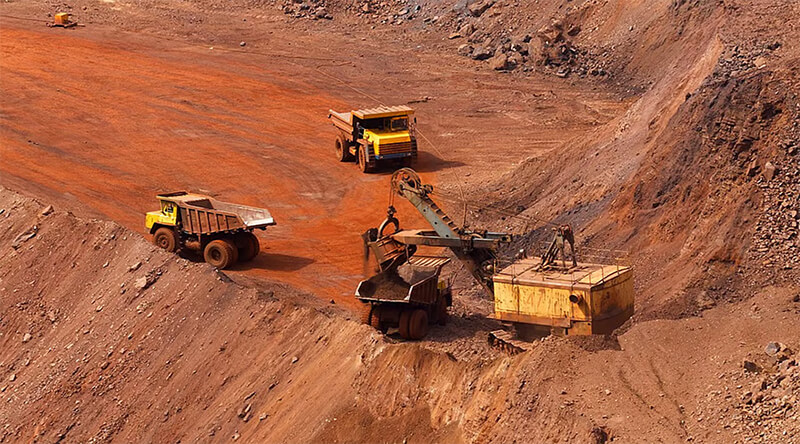 Fig 1: A critical mineral mine. Pic Credit: istock
How Does the Automobile and Electric Vehicle Industry View The Budget
Welcoming the budget, Gwanggu Lee, MD and CEO of Kia India Private Limited said that it sets out a “clear and forward-looking path” for sustained economic growth, with a strong focus on manufacturing, infrastructure and fiscal discipline. He maintained that continued investments in roads, railways, freight corridors and regional connectivity, along with the development of new economic regions and high-speed corridors, will open-up fresh opportunities and support balanced growth across the country.
“The emphasis on advanced manufacturing, electronics and battery production, rare earth corridors and MSME empowerment strengthens India’s journey towards becoming a competitive global manufacturing hub under the vision of Atmanirbhar Bharat,” he said, adding that together, these measures “reinforce consumer confidence and accelerate the transition towards technology-led and sustainable mobility.”
Others believed that the proposal to raise public capex strengthens the foundation of long-term growth. Shailesh Chandra, MD and CEO, Tata Motors Passenger Vehicles Ltd. pointed out that the Union Budget 2026 is an “inclusive and growth‑oriented” roadmap designed to accelerate sustainable economic expansion with fiscal prudence by scaling up manufacturing across strategic sectors, renewing focus on the services economy, and enhancing export competitiveness in a challenging global environment.
“The proposal to raise public capex to ₹12.2 lakh crore strengthens the foundation for long‑term growth and the focus on enhancing competitiveness, long‑term resilience and broad‑based development align strongly with the nation’s evolving priorities,” Chandra said. He added that targeted initiatives for data centres, semiconductors, rare earths and electronic components will reduce critical import dependencies and position India as a global high‑tech manufacturing hub. “The higher Auto PLI allocation for FY27, customs duty exemptions on capital goods for lithium‑ion cell manufacturing, and increased outlay under the PM e‑Drive scheme reflect the government’s continued commitment to catalyzing the EV ecosystem. Overall, the Budget builds on the reform momentum of recent years, reinforcing India’s resilience and advancing the nation’s journey toward the Viksit Bharat vision,” he added.
Many experts maintained that the budget also spells out clearly India’s long term economic priorities and sends a strong “message of policy stability, which is essential for sustained manufacturing investments.”
Piyush Arora, Managing Director and CEO, Škoda Auto Volkswagen India Pvt Ltd said, “The continued emphasis on manufacturing competitiveness and trade facilitation, including progress on the India–EU FTA, strengthens India’s position in global supply chains and reinforces its role as a key automotive manufacturing and export base. The focus on SME growth and the revival of legacy industrial clusters will further enhance the resilience and depth of India’s industrial and supplier ecosystem."
Experts believe that the Union Budget’s continued emphasis on manufacturing depth, infrastructure expansion, critical mineral ecosystems and clean energy value chains sends a strong and progressive signal for India’s industrial future.
Harinder Singh, Managing Director and CEO, Yokohama India Pvt. Ltd. said that enhanced support for electronic components manufacturing, battery storage, lithium-ion cells and critical minerals creates long-term policy visibility for EV platform localisation, battery assembly and advanced power electronics manufacturing, thereby strengthening investment confidence across emerging mobility ecosystems.
"For the tyre industry and the broader automotive sector, sustained capital expenditure of ₹12.2 lakh crore, expansion of highways, freight corridors, ports and multimodal logistics networks will significantly improve supply chain resilience, logistics efficiency and last-mile connectivity. Improved infrastructure access across Tier-II and Tier-III markets further enhances market reach and demand potential,” Singh said.
He added that customs duty rationalisation and exemptions on select capital goods and advanced components help improve cost competitiveness by lowering initial capex and operational costs for high-technology manufacturing investments in India.
About the Author


