
Transitioning India to an energy-independent mobility sector through clean fuel vehicles can reduce crude oil consumption by 91% in 2047, saving US$1.923 billion
India’s vision for energy independence by 2047 is both ambitious and essential for sustainable development and will have its impact on different sectors, including transportation. This vision, accompanied by India’s aggressive goal to become a net-zero economy by 2070 by pushing renewables and clean mobility options marks a transformative shift towards the country’s aim to move away from its dependence on fossil fuels.
India has already prioritised the adoption of EVs and clean fuel technology to transition its transportation sector towards greener options. This has enabled India to move forward on a path where it can harness its renewable energy potential, streamline its energy consumption, and enhance energy security while fostering economic growth.
The Indian government has been supporting the clean transport sector by introducing subsidies and incentives to promote the growth of EVs. The vision was clear from the beginning that India’s transition to a clean mobility system will be critical to achieving energy independence, especially since 18 percent of the country’s current energy demand comes from this sector.
Due to the government’s enabling policies, the EV sector has made significant strides in India and electric vehicle adoption has grown over time. The progress made so far in the country has been predominantly led by the two-wheeler segment with sales contributions of 14–21 million units annually over the last six years between FY19 to FY24, while passenger vehicles have contributed 3–4 million units over the period.
According to reports, the other significant contributors are three-wheelers (3Ws), which added 0.3–0.7 million units annually in sales between FY19 and FY24. India also surpassed China recently to become the largest E-three wheeler market in the world. At the same time, commercial vehicles, including trucks, smaller vehicles, and buses, added around 0.6–1 million units in sales to the total auto market, which varied between 18–26 million units in annual sales during this period.
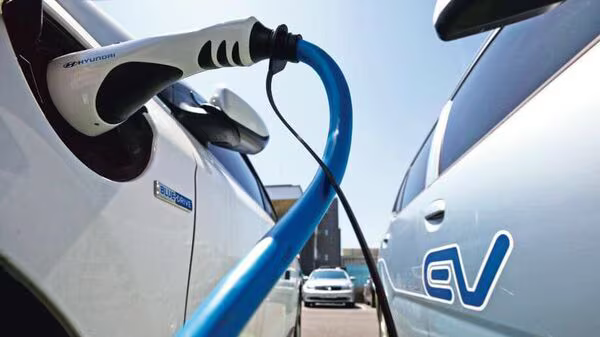 Fig 1: An electric car being charged at a charging station. Pic Credit: Bloomberg
Benefits of Transitioning to EVs To achieve Energy Independence in Mobility Sector
According to a study, transitioning India’s mobility sector via clean fuel technologies can reduce crude oil consumption in the sector by 91% in 2047, which cumulatively will save the country around Rs 160 lakh crore or US$1.923 billion. “This demonstrates a reduction
from Rs 263 lakh crore to Rs 103 lakh crore worth of crude oil imports between 2024 and 2047. India could also avoid nearly 14 gigatonnes of carbon dioxide emissions between 2024 and 2047,” the RMI study pointed out.
Last year saw 15 lakh EVs being registered in the country. The study pointed out that India would need to achieve 100% clean fuel vehicle sales adoption in all segments by 2043 to achieve energy independence – “in two- and three-wheeler segments by 2030; in four-wheelers and light goods vehicles by 2036; in buses by 2040; and in medium- and heavy-duty goods vehicles by 2043”.
To gain energy independence in the mobility sector, proactive policy to create a vehicle stock of 62.3 crore clean fuel vehicles on the road by 2047 will be needed, the study said, adding that by ensuring high adoption of electric vehicles, the country can reduce road transport’s energy demand by 57% and carbon emissions by 87% in 2047.
“The transition will require shifts in India’s policy and economic landscapes,” the study pointed out, adding that the period between 2024 and 2030 will be critical to
charting a strategy for the mobility sector to achieve the energy-independent vision by 2047. The period between 2024-30 can be an important period for India in its transformation journey, providing the critical window to take key policy decisions and actions, learn from the best practices globally and put in place plans for the long-term, it added.
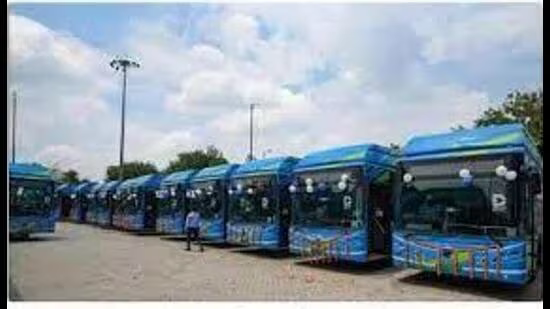 Fig 2: The state-level steering committee has decided to replace 100 diesel buses in Chandigarh with e-buses sanctioned by the Union housing and urban affairs ministry under PM e-Bus Sewa Scheme. (HT Photo)
Achieving Energy Independence In The Mobility Sector: Key Actions Needed
Although India has made the right start, a long road lies ahead in its journey towards gaining energy independence in the mobility sector. Although the country has been able to increase its uptake of EVs, a lot more is needed to ensure that these clean mobility options represent the dominant share of vehicles on the road, something that can be achieved through collaborations between various stakeholders and putting in place robust policies. Some of the key recommendations put forth by the study are given below.
- Supply Side Policies: The study recommends the use of supply-side policies to steer significant EV adoption through “implementation of zero-emissions vehicle (ZEV) sales mandate beginning in 2026, aligning Bharat Stage (BS) emissions standards with upcoming Euro 7 standards by 2028, and enforcing stricter fuel efficiency norms of 49.5 grams (g) CO2/km fleet- wide for four-wheelers to align with EU targets by 2032.”
- Demand Side Policies: The study suggests that the government should continue to provide purchase subsidies at the national level and also include trucks segments, which is one of the significant contributors to GreenHouse Gases. It also suggests the implementation of strategies that disincentivise high-emitting vehicles.
- Charging Infrastructure: The study stresses the need to come out with specific standards for charging and battery swapping infrastructure, as well as recommends setting up “national targets for infrastructure installations by 2030, and reduce charging costs through managed charging and time-of-day (ToD) rate implementation.”
- Grid Infrastructure: The study suggests that the government should Invest in the expansion of “clean electricity resources to 500 gigawatts (GW) of renewables by 2030, up to 85% clean grid by 2047, and upgrades to the distribution infrastructure to accommodate the rising demand for EVs.”
- Financing of Electric Vehicles: To mobilise additional finance in the EV landscape from the private sector, the study suggested leveraging “concessional debt and equity” as well as put in place de-risking measures.
- Circular Economy: Given the dependence on other countries for critical minerals, used in Lithium-ion batteries that power EVs, it is crucial to have a robust circular economy. The study suggests ramping up Li-ion battery collection, recycling, and manufacturing through enhanced extended producer responsibility (EPR) rules, incentives for investing in high recycling recovery rate infrastructure, among others.
- Manufacturing of Electric Vehicles: The study highlights that India can be positioned as a global manufacturing hub for EVs by putting in place enabling and robust policy measures. It also recommended the “establishment of incentive programmes to promote localisation and ramping-up of EV manufacturing.”
About the Author


