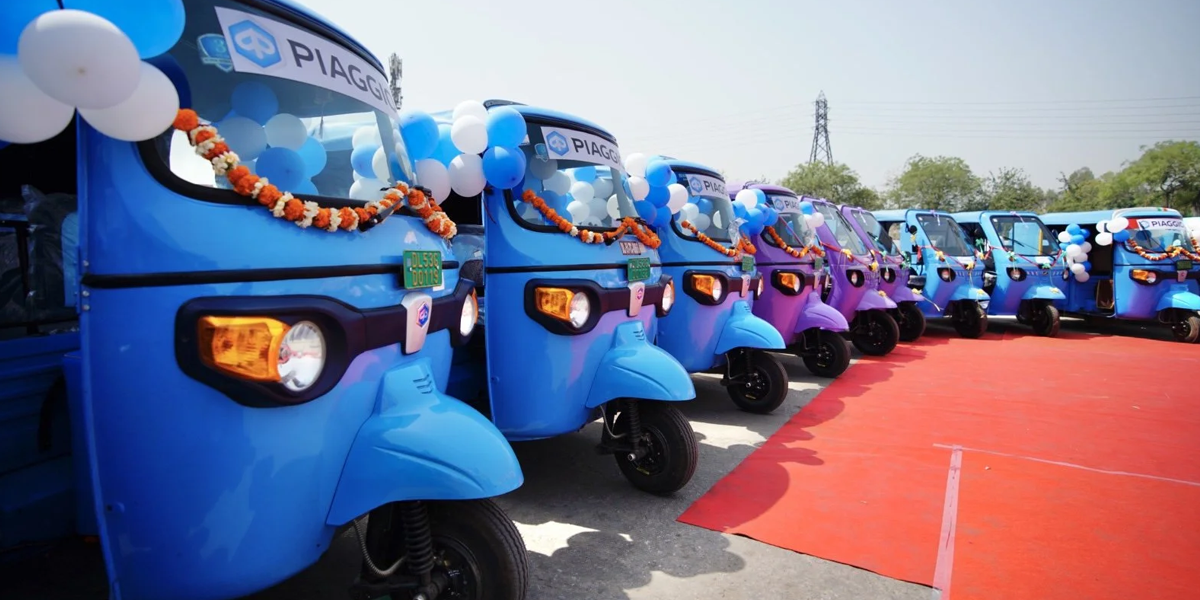
The initiative empowers women, helping them redefine public transport with clean, inclusive mobility while challenging traditional gender roles
Rita, a tech professional in her mid-30s, took charge when she applied for Delhi’s e-auto scheme. “I learned by failing ,” she said, recalling her early driving days. A minor collision taught her a valuable lesson, and today, her determination has transformed fear into a force of driving change, as she’s one of the few female e-auto drivers in Delhi.
To tackle urban pollution and challenge the long-held gender norms in public transport, the Delhi government launched an Electric Auto-Rickshaw (e-auto) initiative three years back. This initiative invited women to become owners of EV autos, having 33% reservation for females.
 Fig 1: Rita’s (Name changed) e - auto parked in Connaught Place, Delhi - Photo by Riddhi
Financing her lilac colored e-auto through a bank loan, Rita not only supports her family but also challenges longstanding stereotypes. She proudly drives her auto whenever she feels comfortable, takes care of her safety and insists that more women should drive e-autos, taking ownership of the city’s space - riding their own designated autos.
Taking inspiration from Sunita, the first female auto driver in Delhi, the city’s roads shine with a brigade of more such female EV owners. However, the women are not the only ones driving the purple autos. In a contrasting account, a man driving his wife’s e - auto signalled another reality. His wife, originally the e-auto owner, was too overwhelmed by societal expectations. “I tried to teach her, but she was too scared,” he confided, ultimately taking the wheel himself.
Embodying the spirit of empowerment and renewal, the launch of this initiative coincided with the time around International Women’s Day on March 8th, three years ago. This symbolic timing highlighted the Delhi government’s firm commitment to gender equality while promoting clean mobility.
 Fig 2: Rita’s (Name changed) e - auto riding on the roads of Delhi - Photo by Riddhi
Lilac Rides, Powerful Stories: The Women Defining Delhi’s Roads
This policy had set out an empowering agenda that aimed at replacing CNG-powered autos with cleaner electric alternatives and making the roads safer and more inclusive for women.
In the inaugural phase, the then Transport Minister Kailash Gahlot handed out Letters of Intent (LOI) for the city’s first batch of e-autos. Of these initial 20 vehicles, 10 were reserved exclusively for women drivers. The objectives were clear:
- Environmental Sustainability: Replace traditional CNG autos with electric vehicles to reduce pollution.
- Enhanced Connectivity: Improve last-mile transit options.
- Gender Inclusion: Empower women by ensuring that autos registered in their name are driven solely by them.
The policy introduced innovative elements such as a computerized lottery, a 33% quota for female applicants, and a streamlined single-window registration system. Yet, while the directives were clear on paper, the lived experiences of women in Delhi revealed a more complex reality in terms of the number of applications received. Of the 1406 e - auto permits that had been reserved for women under 33% reservation, only 743 applicants got enlisted. The portal initiated a second round of application to motivate the laggards, adding another 25 new applicants to the list. Nationally, women currently make up 11-15% of the EV workforce in India, in comparison to the envisaged goal of 50% by 2030-33.
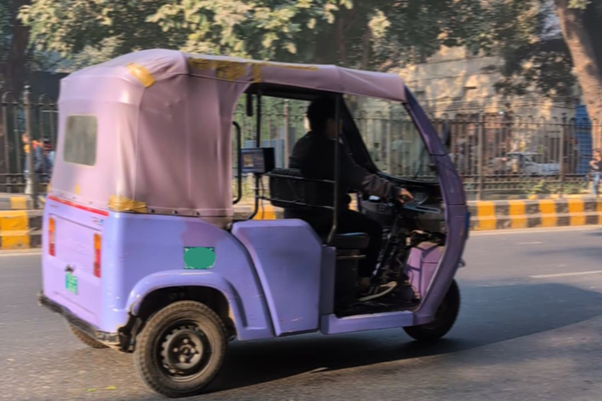 Fig 3: Rita’s (Name changed) e - auto riding on the roads of Delhi - Photo by Riddhi
According to the work of scholars like Caroline Moser, a city and its policies can commit to gender transformation when they align with the principles of “She RISES” framework:
- Responsive: Infrastructure must reflect residents’ real needs through bottom-up planning.
- Safe: Urban spaces and transit should offer freedom from harassment and fear.
- Equitable: Recognize diverse life situations by allocating resources where they’re most needed.
- Inclusive: Reconfigure systems to serve everyone, especially those sidelined by traditional planning.
In its essence, the initiative did align with the aforementioned framework of gender transformation, moving beyond mere empowerment and reshaping the very fabric of urban cities like Delhi. A city can be called sustainable only when it intertwines its regimes with the needs of all genders. As a result, the scheme addressed the safety needs of both, the female rider and the female driver. Besides being users of public transport, women also need to be employed in the transport sector itself. Women remain underrepresented in most transport-related industries, with only 17% of female employees on average across 46 countries.
Taking Notes from Narratives of the Road
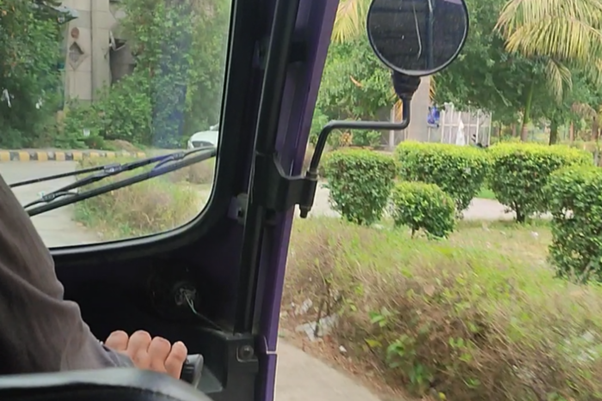 Fig 4: Inside view of Rita’s (Name changed) e - auto riding on the streets of Delhi - Photo by Riddhi
The male driver’s story highlights how deeply ingrained cultural norms can challenge well-intentioned policies. Despite the policy’s goal to empower women, traditional gender roles sometimes force families to adapt in ways that undermine that intent. His (Manish’s) experience calls for the need for stronger support to help women overcome these barriers.
Rita also narrates how she restricts herself to not drive after 4 p.m. and avoids extreme weather conditions, highlighting the need for improved infrastructure in terms of safety and the changing climate. When asked about cases where vehicles registered to women are driven by men, Rita was clear: “The policy must be respected. Only a woman should drive a vehicle registered in a woman’s name,” she said. Additionally, Rita looks forward to upgrading to an e - taxi in the future.
Three years on, the Women-Centric E-Auto initiative has produced both encouraging outcomes and sobering lessons. The shift to EVs has reduced pollution and created new economic opportunities, particularly for women who have embraced digital processes to secure permits. The presence of more women on the roads has begun to alter public perceptions, while the cases of male drivers stepping in reveal persistent cultural resistance. As highlighted by Rita’s cautious driving practices, more needs to be done in terms of training, community engagement, secure parking, safety and improved charging facilities.
According to the Vahan Dashboard, there are currently 2837 e - autos in Delhi. The future of the scheme essentially calls for a multifaceted approach. In the first place as highlighted by Rita herself, it is essential to implement monitoring protocols that ensure that only eligible women drive autos registered in their names, reinforcing the policy's intent. In tandem with enforcement, comprehensive capacity building is also needed to bring about the environment conducive to its success. Initiatives like mentorship networks that connect experienced women drivers with newcomers can help create a supportive community.
Presently, the scheme calls for significant investments in infrastructure, such as dedicated parking areas, secure charging stations, and well-lit transit stops that need to be developed to enhance the safety and convenience of the women drivers. Complementing these measures, a data-driven approach to systematically collect and analyze gender-disaggregated data on driver performance, safety incidents, and operational challenges is important for informed policy adjustments over time.
Delhi’s Women-Centric E-Auto initiative stands as both a symbol of progress and a reminder of the path that remains to be paved. By integrating clean technology with gender-sensitive policy design, the scheme has set Delhi on a path toward a more sustainable and inclusive future. Yet, as the personal stories of drivers like Rita and others reveal, true transformation requires persistent efforts.
This journey illustrates that change is not instantaneous. Every empowered ride and every policy adjustment brings Delhi one step closer to a public transport system that truly serves all its citizens. In blending the rigors of policy research with the humanity of lived experience, the initiative offers a roadmap for cities worldwide striving to create environments where clean mobility and gender equality can go hand in hand.
About the Author


