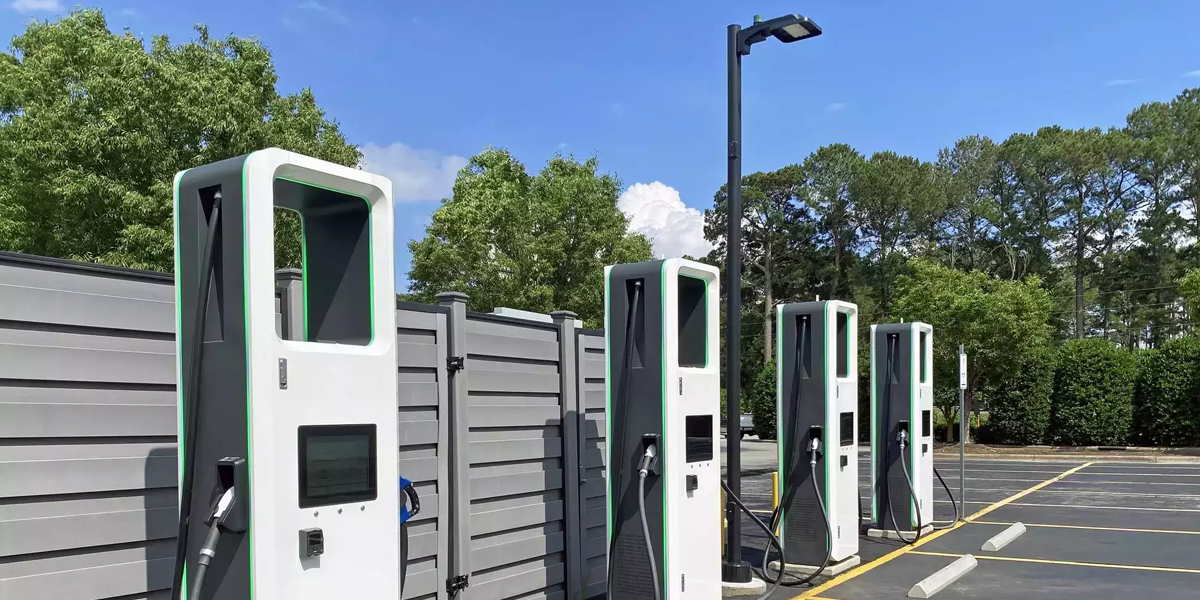
The city accounts for more than half of the state’s total vehicle registrations, making it ground zero for Telangana’s electric mobility revolution
India’s youngest state, Telangana, is turning heads - not just for its fast-paced growth, but for the smart, sustainable direction it’s heading towards. Built on a strong foundation of progressive policies across education, technology, infrastructure, and social well-being, the state boasts a $176 billion economy (as of prices in 2023-24), and ranks number one in per capita income. Hyderabad in particular has become a vibrant hotbed of tech innovation and start ups.
As prosperity rises, so does movement. Telangana’s roads are now home to 15.4 million vehicles, and the number in the past decade has kept climbing at a brisk 9% annual rate, nearly triple the national average. In 2023 alone, a million new vehicles hit the streets. Hyderabad accounts for more than half of the state’s total vehicle registrations, making it ground zero for Telangana’s mobility revolution.
 Infographic by Riddhi
A thriving E-Mobility ecosystem
Telangana isn’t just chasing growth—it's steering the momentum toward a cleaner, greener future. From the very beginning, it has placed equal importance on balancing economic growth and sustainability, and therefore, recognises the need to transform its transport sector to zero emission mobility. Towards this, the state has launched its Electric Vehicle and Energy Storage policies in 2020, which are further supported by establishing institutions that are dedicated to building sustainable and collaborative mobility solutions. The Telangana Mobility Valley (TMV) is a bold and forward looking initiative that positions the state as a hub for sustainable mobility manufacturing, research, skilling and policy development.
As a result, e-mobility is thriving. Telangana holds a 4.3% share of all EVs sold in the country. Urban areas accounted for 70.6% of all registered EVs in the first half of 2024, with Hyderabad leading EV sales.
Going forward, transitioning all commercial fleets to electric is a key focus for the state. A recent report by the Natural Resources Defense Council (NRDC), Administrative Staff College of India (ASCI), and Telangana Mobility Valley (TMV), has outlined a comprehensive fleet electrification roadmap for the Greater Hyderabad Municipal Corporation (GHMC), which is witnessing the fastest vehicular growth in the state. This region has an EV penetration growth of 8.05% in 2023-24, which is 3 percentage points higher than the state average, highlighting its potential as a strategic leader in driving transport electrification.
Why Commercial Fleet Electrification Can Lead The Way
Commercial vehicles, due to their higher daily usage compared to personal vehicles, are uniquely positioned to lead electrification efforts. Their extended operational hours make them ideal candidates, as EVs offer significantly lower operational costs compared to ICE vehicles. Out of 27 states with EV policies, seven focus on electrifying commercial fleets.
Crunching the costs: EVs versus ICE
An analysis of the Total Cost of Ownership for commercial two, three and four wheelers in the report shows that in all cases, fleet owners and driver partners will benefit in the long term from transitioning to EVs.
 EV scooty TCO for commercial use comes to Rs 1.73 per km, costing only ~53% of their petrol counterparts.
 EV three-wheelers with swappable batteries in the goods segment offer the most cost-effective solution, presenting the lowest TCO of Rs 4.55 per kilometer along with the lowest upfront purchase cost.
 Over a 4 and 10 year period, the difference in TCO for the four wheeler cab segment is minimal. Compared to CNG, the cheapest EV offers a slight advantage. With reinforcement of road and registration tax exemption, TCO of EVs is expected to improve by almost 5%.
That said, the transition to EVs isn’t without bumps. Here are some challenges that are slowing down EV adoption:
- Fleet aggregators don’t always own the vehicles, making it challenging to mandate 100 EV adoption
- For driver partners, the options of affordable EVs in all segments are limited, two-wheelers cost up to 40% more and four-wheelers up to 80% more compared to their ICE counterparts.
- High upfront cost and lack of financing solutions remains a barrier
- EVs have a limited second hand market, with EV batteries having a life of less than 5 yrs.
- Ecosystem challenges like higher EV charging cost at public charging stations, lack of charging infrastructure, limited battery swapping models, and high battery replacement cost all need to be addressed for better uptake of EVs.
Shifting Gears: A Roadmap To 100% Commercial Fleet Electrification
But there are ways to address these. A strategic shift toward supply-side policies and measures such as ZEV sales-based targets, emissions regulations, and performance- based standards can significantly enhance EV availability, affordability, and supporting infrastructure.
- Tax Waivers And Leasing To Lower Upfront Cost For EVs: The reports’ analysis shows that waiving lifetime road tax could cut the EV TCO by almost 6.8%, while the upfront cost could decrease by 12% to 16%. GST on EVs and batteries is set at 5%, with 2.5% allocated as SGST. A waiver of the State GST for commercial EVs and on EV battery replacements would significantly lower the upfront costs. For driver partners, a vehicle leasing business model with monthly or annual subscription can effectively lower upfront cost. Several startups, including Yulu, Hala Mobility, and eMatrixmile, offer various rental and leasing models in the two-wheeler segment, while players such as Alt Mobility and Euler provide options for three-wheeler goods vehicles.
- Restructuring the Scrappage Incentive: Telangana’s Registered Vehicle Scrapping Policy offers lucrative benefits, like waiving the outstanding green tax, outstanding payable penalty, and also concession on motor vehicle tac against certificate of deposit. But this could be used to incentivise EV sales by ensuring that these provisions can only be availed when an electric vehicle is purchased after scrapping an old ICE. Also, reducing the 15-year threshold for scrapping based on vehicle condition and emissions could fast-track the transition to EVs and help phase out older, more polluting vehicles.
- Expand Charging Infrastructure And Service Stations: Infrastructure is everything. The Greater Hyderabad Municipal Corporation region has 150 wards, and sufficient charging points would mean having at least 10 small EV charging stations in each ward, with 3 to 5 public charging stations. After assessing vehicle movement, public transit points, parking spaces, and grid availability, the region could set up mega-charging hubs that can accommodate 100-120 EVs at a time. It would also mean upgrading grid infrastructure strategically to support public charging stations.Another area that needs attention is EV service stations, which can be expanded by mandating vehicle manufacturers to set up a minimum number in proportion to EV sales, ensuring accessible and efficient after-sales support.
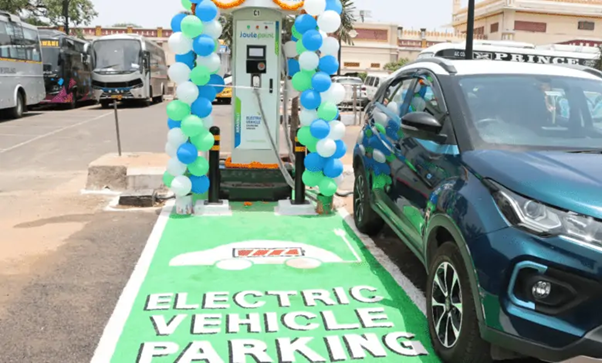 Fig 1: E-Vehicle charging facility set up at Hyderabad Railway Station. Pic Credit: Twitter
 - Supply Side Measures For EV Adoption: To address the challenge of having affordable EV models in the market, high up front cost, and long wait times for EV purchases, some supply side measures can also help, such as zero-emission vehicles (ZEV) mandates or sales targets—imposed on vehicle manufacturers to promote the sales and production of ZEVs. These can provide market certainty, leading to improvement in ZEV model availability and affordability, and resulting in the systematic development of supporting infrastructure in the state.
Hyderabad has already set the tone for what modern, sustainable urban development can look like. By focusing on fleet electrification—where the impact is highest and the ROI clearest—the city can become a national leader in clean transport. The road is long, sure. But it’s also electric.
About the Author


