
From buses to long-haul trucks, electrification is beginning to transform one of the world's most oil-dependent vehicle segments
The global transition to zero emission medium and heavy duty vehicles is moving from an experimental phase to a commercially significant market. These vehicles that include trucks, buses, and other heavy commercial vehicles, are particularly important to the decarbonisation of the road transport because they travel longer distances, carry heavier loads and consume substantially more fuel than passenger vehicles. Their electrification, therefore, offers an outsized opportunity to cut oil consumption, urban air pollution and transport-sector emissions.
The latest numbers also suggest that this transition is beginning to acquire real momentum with global electric truck sales increasing significantly in the last few years. Heavy duty road transport sits at the intersection of climate policy, energy security and industrial competitiveness. Trucks remain heavily dependent on diesel, exposing freight operators and economies to oil-price volatility and geopolitical disruptions in the fossil fuel supply chains - a case in point being the recent conflict in West Asia and the crisis arising out of the skirmishes in the Strait of Hormuz.
The economics of electrification, meanwhile, are improving as battery costs fall and utilisation rates make lower operating costs increasingly valuable. The recent surge is therefore particularly encouraging against the backdrop of persistent concerns over fossil fuel security. For India, the global momentum presents an opportunity. The country cannot achieve meaningful transport decarbonisation without tackling this segment. Long haul trucks alone account for a disproportionately large share of road transport emissions despite representing a small fraction of the vehicle fleet.
The priority now should be to move from isolated pilots to commercially viable operating models—particularly in predictable, high-mileage applications where the total cost of ownership can make the strongest case for electrification. A recent study ‘An overview of the global zero emission medium and heavy-duty vehicle market’ done by the International Council on Clean Transportation (ICCT) finds that this segment “grew considerably from 2020 to 2025, reaching over 520,000 units in 2025” globally.
“China accounted for about 88% of global sales, though its share has begun to decline as sales in other markets accelerate. Excluding China, global ZE-MHDV sales reached approximately 63,000 units in 2025, led by the United States, the European Union (EU), and India. The United States accounted for about 40% of non-China volumes, driven primarily by medium-duty electric trucks,” the new report said, noting that the composition of the sales also varied to a great extent.
“China’s 457,300 ZE-MHDV sales were dominated by heavy- and medium-duty trucks, with buses contributing just 11% of sales. In the United States, medium-duty trucks accounted for over 90% of ZE-MHDV sales, while buses and heavy-duty trucks each represented about 3–4%. Excluding both China and the United States, the ZE-MHDV market in India and Brazil remained predominantly driven by buses and coaches, which accounted for over half of sales across these regions, while sales of ZE medium- and heavy-duty trucks remained minimal,” it noted.
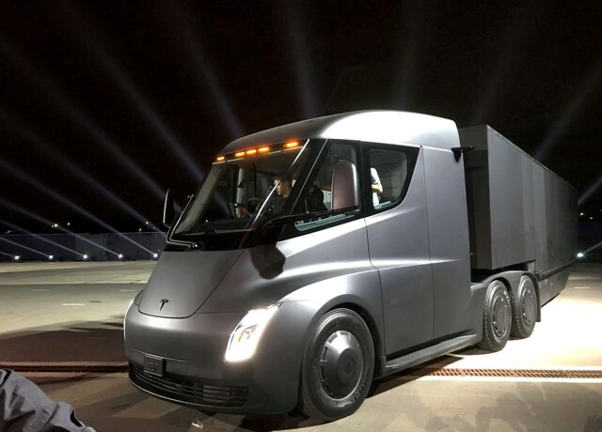 Fig 1: Tesla's new electric semi truck is unveiled during a presentation in Hawthorne, California, U.S., November 16, 2017. REUTERS/Alexandria Sage/File Photo
Zero Emission Medium and Heavy Duty Vehicles Around the World
Observing trends in Europe, the study noted that there was significant uptake in the new ZE-MHDV segment last year. “Over 23,700 new ZE-MHDVs were registered in Europe in 2025. Zero-emission trucks (above 3.5 tonnes) reached a sales share of 4.5% in 2025, up from 2.5% in 2024. Zero-emission buses and coaches also continued to gain market share, increasing from 18.5% in 2024 to 24.8% in 2025,” it said.
A particularly interesting trend was seen in the sales growth of the ZE medium duty truck and van segment in Europe. “The ZE sales share more than doubled from 10.4% in 2024 to 21.0% in 2025. The ZE bus and coach market, still largely driven by ZE city buses, also expanded significantly,” the study noted. The story remained hopeful in other markets like Brazil where sales of these vehicles increased over a period of time.
“ZE-MHDV sales in Brazil totaled 1,265 units in 2025, representing approximately 1.0% of all MHDV registrations and a cumulative 304% increase since 2021. By segment, buses and coaches led with 846 units (3.5% ZE share), followed by medium-duty trucks at 366 units (2.0% ZE share) and heavy-duty trucks at 53 units (0.06% ZE share),” the study noted, adding that as far as China was concerned, the ZE-MHDV market reached about 457,300 units, that represented over 25% of the total MHDV sales.
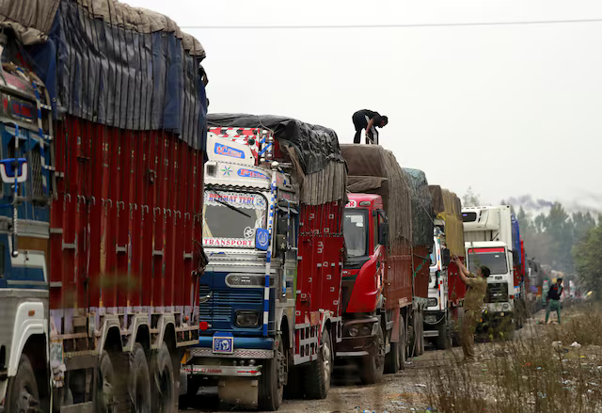 Fig 2: A driver covers a supply truck loaded with apples on a highway near Qazigund in south Kashmir's Anantnag district, October 17, 2019. Picture taken October 17, 2019. REUTERS/Danish Ismail/File Photo
The India Story
The market share of ZE-MHDVs in India reached 1.1% market share, according to the study, which added that around 5,788 units were sold in 2025. “Buses and coaches accounted for the vast majority (87%) of ZE sales (5,021 units, 4.4% ZE share within the segment), with heavy-duty trucks (239 units, 0.3% ZE share) and medium-duty trucks (528 units, 0.1% ZE share) making up the balance. Sales in 2025 increased 21% year-over-year, and the overall ZE-MHDV market grew from 1,254 units in 2021, a 362% cumulative increase,” the study noted.
In India, while the central government has introduced subsidies through the PM E-DRIVE scheme, at the sub-national level, governments have been providing purchase incentives and registration fee exemptions. But incentives alone will not be enough. India needs a coordinated strategy built around high-utilisation freight corridors, reliable charging and grid infrastructure, innovative financing, predictable demand through fleet aggregation and stronger residual-value and battery ecosystems.
About the Author


