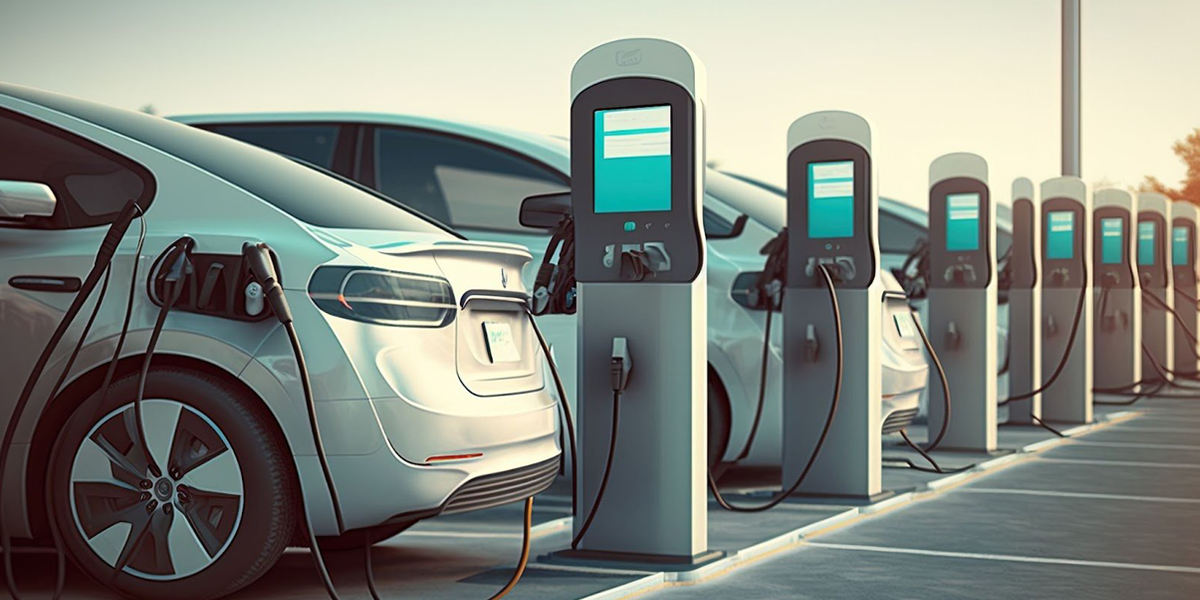
Charging infrastructure needs to be recognised as essential public infrastructure, akin to roads, electricity networks or metro systems that generate wider economic, environmental and energy security benefits
The approval of the Delhi Electric Vehicle (EV) Policy 2026 marks an important evolution in India's clean mobility journey. Unlike its predecessor, which largely focused on accelerating EV adoption through purchase incentives, the new policy attempts to build the ecosystem around electric mobility by expanding charging infrastructure, creating an EV Fund, introducing a single-window clearance mechanism, promoting battery swapping and strengthening institutional coordination.
This shift reflects a growing recognition that India's EV transition is no longer simply about selling more electric vehicles, it is about creating the infrastructure that will sustain their long-term adoption.
Yet, the policy also brings into sharp focus the next challenge confronting India's electric mobility ambitions. The question is no longer whether India has the technology to deploy charging infrastructure. It does have. The real challenge is whether India can finance the transition.
Over the past five years, India's EV ecosystem has matured considerably. Electric 2W and 3Ws have demonstrated strong consumer acceptance, battery costs have declined steadily, manufacturers have introduced an expanding range of products, and charging technologies have evolved rapidly. Technology is no longer the principal constraint. Instead, investment has emerged as the biggest bottleneck.
Recent estimates suggest that India will require nearly ₹12.5 lakh crore in investments to support its EV transition, yet only a fraction of this requirement has been mobilised. The shortfall is even more striking for charging infrastructure, where investment continues to lag far behind the pace of vehicle adoption.
The reason is simple: charging infrastructure remains a difficult business proposition.
Unlike conventional fuel stations, charging stations require substantial upfront investment while generating uncertain revenues during their initial years of operation. Low utilisation rates, fragmented deployment, evolving charging technologies, long payback periods, and uncertain demand make these assets difficult to finance.
Commercial lenders remain cautious because they perceive charging infrastructure as a relatively high-risk investment with no assured cash flows. The ultimate result is a case of classic market failure where everyone agrees charging infrastructure is essential, yet few are willing to finance it at the scale required.
The Delhi EV Policy addresses some of these concerns. The introduction of a single-window clearance mechanism, mandatory charging infrastructure at dealerships, expansion of public charging networks, and greater involvement of Delhi Transco Ltd. represent important institutional reforms. These measures reduce procedural delays and improve coordination across agencies. However, they primarily make it easier to deploy charging infrastructure; they do not necessarily make it easier to invest in it.
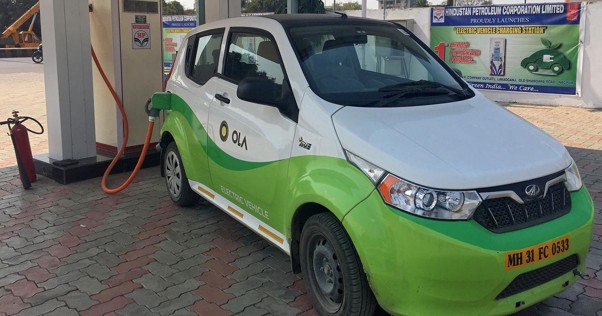 Fig 1: An electric vehicle charging station in Nagpur. | Aditi Shah/ Reuters
This distinction is crucial. While administrative reforms reduce transaction costs, they do not eliminate investment risk. Private investors remain concerned about utilisation, demand uncertainty and revenue recovery. Simply increasing the number of charging stations does not guarantee that they will become commercially viable. The success of the policy should therefore be measured not by the number of chargers installed, but by whether those chargers attract sufficient demand to sustain private investment over the long term.
There needs to be a fundamental shift in how charging infrastructure is viewed. It should no longer be treated as a standalone commercial asset expected to recover its costs through charging fees alone. Rather it should be recognised as essential public infrastructure, akin to roads, electricity networks or metro systems that generates wider economic, environmental and energy security benefits. Such infrastructure often requires innovative financing mechanisms during its early stages of development before attaining market maturity.
This is where India's financing architecture must evolve. As highlighted in Chintan Research Foundation's (CRF's) recent issue brief on EV financing, conventional lending models alone are unlikely to meet the scale of investment required. Blended finance, payment security mechanisms and risk-sharing instruments will be essential to improve project bankability and crowd in long-term private capital.
The next phase of EV deployment will require greater use of blended finance, viability gap funding, payment security mechanisms, first-loss guarantees and credit enhancement instruments to reduce investment risk and crowd in private capital. Public resources should increasingly focus on de-risking investments rather than financing projects directly. India's experience with RE demonstrates that appropriately designed risk-sharing frameworks can unlock significant volumes of private investment. Electric mobility now requires a similar approach.
Equally important is the need to move from supply-driven infrastructure planning towards demand-led deployment. Much of the current discourse continues to revolve around installing more chargers. But charging infrastructure without users is simply stranded capital. Commercial viability depends on utilisation, and utilisation depends on demand aggregation. Fleet operators, logistics companies, public transport agencies and shared mobility providers offer predictable charging demand that can significantly improve the business case for investment. Charging infrastructure located around these anchor users is far more likely to become financially sustainable than dispersed public chargers serving uncertain demand.
The Delhi EV Policy also leaves an important question largely unanswered: how will India finance the electrification of freight and heavy-duty transport? While the policy makes welcome progress in promoting electric buses, government fleets and commercial vehicles, heavy-duty trucks remain largely outside the financing conversation. This is significant because freight accounts for a disproportionately large share of diesel consumption and transport emissions.
Electrifying this segment will require an entirely different ecosystem comprising high-capacity charging corridors, depot-based charging, long-tenure leasing models, battery-as-a-service arrangements and innovative financing structures. Policies designed primarily around passenger vehicles cannot simply be extended to heavy-duty transport.
Beyond charging infrastructure, financing challenges also persist around battery technologies. The absence of robust secondary markets for EVs, uncertainty surrounding battery residual values, fragmented recycling ecosystems and evolving battery technologies continue to increase lender risk.
Establishing battery health certification systems, strengthening recycling markets and creating transparent valuation frameworks could substantially improve investor confidence while lowering financing costs. These issues receive relatively limited attention in the current policy despite their importance for long-term market development.
Perhaps the most important contribution of the Delhi EV Policy is that it shifts the conversation from vehicle incentives towards ecosystem development. But the broader energy transition perspective is equally important. India's transition should not be viewed merely as a shift from fossil fuels to renewable energy. It should increasingly be understood as a transition from ‘molecules to electrons’.
Today, much of India's transport system runs on imported fuel molecules, exposing the economy to volatile global energy markets. Electrification powered by an increasingly clean grid offers an opportunity not only to reduce emissions but also to strengthen energy security by replacing imported fuels with domestically generated electricity. Electric mobility is therefore not simply a transport intervention; it is a strategic component of India's long-term energy transition.
The Delhi EV Policy lays an important institutional foundation for this transition. However, implementation will determine whether it succeeds. The next generation of reforms must move beyond infrastructure deployment towards infrastructure financing. Stable policy signals, commercially viable charging models, dedicated financing mechanisms for charging and freight electrification, stronger battery markets and integrated planning between transport and electricity systems will determine whether private capital flows into the sector at the scale required.
India's EV transition will ultimately not be judged by how many charging stations it installs. It will be judged by whether it creates a financially sustainable ecosystem that allows those charging stations and the wider electric mobility ecosystem they support to thrive without perpetual public support. The engineering challenge has largely been solved. The financing challenge is only just beginning.
Dr. Ria Sinha is a Senior Research Consultant, Chintan Research Foundation. Views are personal.
About the Author


