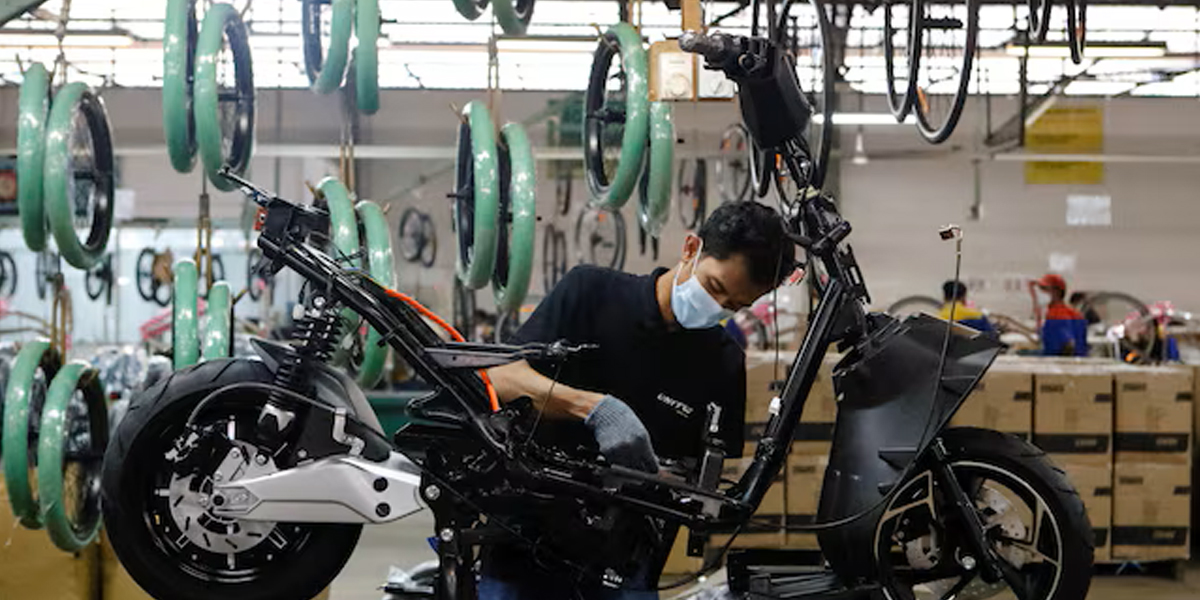
Going forward, policy frameworks need to adopt a more differentiated approach to accelerate motorcycle electrification and unlock the next phase of growth in India's electric two-wheeler market
India’s electric mobility ecosystem has undergone a huge transformation, beginning with a limited focus on pilot projects and purchase incentives to a comprehensive ecosystem encompassing vehicle manufacturing, battery production, charging infrastructure, financing, digital platforms to supply chains. However, the transition remains uneven across vehicle segments, highlighting the need for differentiated strategies.
As the backbone of India’s personal mobility market, two-wheelers account for a significant share of vehicles annually. Over the past years, electric scooters have emerged as the growth engine of India’s EV evolution. However, beneath the success of electric scooters, lies a critical challenge that is likely to define the next phase of mobility transition – the electrification of motorcycles. Despite their scale in the ICE segment, electric motorcycles have mostly remained a niche segment due to a combination of technological, economic and behavioural barriers.
According to a policy brief by UC Davis, while electrification in India has remained largely concentrated in the scooter segment, “several emerging markets including Vietnam, Kenya, and Rwanda have achieved success in electric motorcycles through stronger product availability, local manufacturing ecosystems, and targeted policy support.” The analysis highlighted various challenges affecting the electrification of motorcycles in India. Let's analyse some of them.
The brief highlighted that despite policy support and early momentum, EV sales share in the two-wheeler segment has “increased only gradually to around 6% in recent years” to reach around 8.1% in the first half of 2026. “One key reason for this differential uptake is not a lack of incentives or demand, but an imbalanced policy framework that does not account for the overall two-wheeler market structure in India,” it said.
 Fig 1: LiveWire — a whole new breed of Hog. Reuters
It defined two-wheelers in India into broadly three categories based on engine size: 50 to 125cc (typically mopeds at the lower end, and scooters between 110-125cc), 125 to 175cc (both scooters and motorcycles), and greater than 175cc (typically motorcycles).
Drawing a comparison between ICE and electric, It noted that India’s two-wheeler market is structurally dominated by motorcycles, although the segment mix has gradually evolved over the past few years. In 2025, motorcycles accounted for 61% of two-wheeler sales, followed by scooters at 37% and a small share of mopeds. “However, scooters have steadily increased their share from 33% to 37% between 2023 to 2025, essentially replacing motorcycles, reflecting changing urban mobility preferences,” it said.
On the other hand, it argued that the electric two-wheeler market has evolved very differently. EV adoption has been overwhelmingly concentrated in the scooter segment, reaching 16% EV sales share within the segment, driven by urban use cases and supported by a growing set of new players.
“Motorcycles, on the other hand, remain largely unelectrified (<0.5% sales share). While emerging players such as Ultraviolette, Odysse, Oben Electric, Revolt Motors and Matter have entered this space, current offerings remain limited in scale and market fit. This creates a fundamental divergence: while the overall two-wheeler market is motorcycle dominant, the electrification story remains largely scooter-led,” it pointed out.
The brief also found a critical difference between the scooters and the motorcycles in terms of upfront price and Total Cost of Ownership (TCO). While the sales weighted price was around INR 1,16,000, with electric models carrying an upfront price premium of roughly 15-40% over comparable ICE scooters, the price differential is “significantly larger” in motorcycles, where electric models are typically priced “more than 50% higher than high volume ICE commuter motorcycles, albeit a small and nascent market.”
“Our TCO analysis shows that electric scooters are approximately 37% cheaper to operate than ICE scooters, while electric motorcycles are nearly 25% cheaper compared to ICE motorcycles. However, despite favourable operating economics, the significantly higher upfront cost and lack of model-equivalent electric motorcycles continue to remain a key barrier to large-scale electrification in the segment,” it said.
The brief lays stress on the fact that policy design must include the distinct operational and performance requirements across vehicle form factors and segments. “Going forward, policy frameworks may need to adopt a more differentiated approach that better reflects the nuances of different E2W segments and reorient targeted support toward specific sub-segments. Such an approach could help accelerate motorcycle electrification and unlock the next phase of growth in India's electric two-wheeler market,” it added.
About the Author


