A broader range of markets, models and consumers is giving the global electric-car transition fresh momentum
The wider automobile market is navigating economic uncertainty, shifting consumer preferences and an increasingly volatile energy landscape. The geopolitical dimension is impossible to ignore. The conflict around the Strait of Hormuz and the wider disruption to Middle Eastern energy markets have brought the vulnerability of oil-dependent transport systems back into sharp focus.
Road transport remains deeply exposed to movements in crude prices and supply disruptions, making the electrification of passenger vehicles increasingly relevant to national energy-security strategies. Perhaps that is why electric cars are entering a new phase of global momentum. If latest trends are to be believed, growth is no longer concentrated in a handful of established EV markets but several emerging markets are registering strong electric car sales, helping offset softer demand in China and the United States.
Several factors are converging to drive this shift. Automakers are bringing a wider range of models to market, battery technology continues to improve, and the economics of EV ownership are becoming more compelling as running and maintenance costs compare favourably with conventional vehicles. Policy is also playing an important role, with emissions regulations, purchase incentives and industrial strategies supporting demand in different markets.
Perhaps most significantly, consumers are increasingly viewing electrification through the lens of energy security as well as climate change. India too is not far behind and is increasingly becoming part of this wider global shift. The country’s electric passenger-vehicle market has moved into a faster-growth phase, supported by a growing range of models, improving charging infrastructure and rising consumer familiarity with the technology.
A recent report by the International Energy Agency (IEA) spells hope. It found that “despite a challenging backdrop for the global car market, sales of electric cars surged in the second quarter of this year as the energy crisis sparked by the war in the Middle East brought fuel price volatility back into sharp focus”.
“The report finds that global car sales fell by around 5% year-on-year from January through June as purchases declined in the world’s two largest markets – China and the United States – amid economic pressures, higher fuel prices and changes in policy settings,” it said.
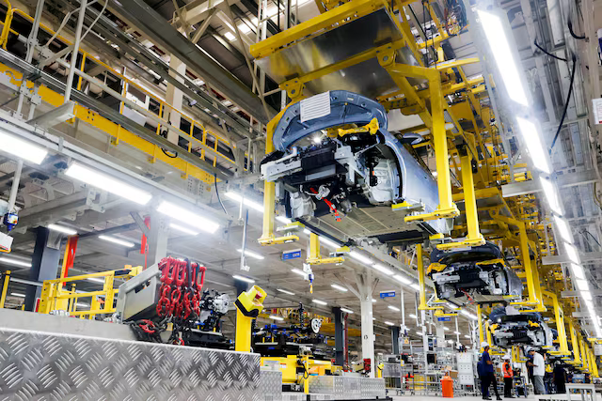 Fig 1: BYD vehicles in the production line at the company's new electric vehicle factory at the Industrial Complex in Camacari, Bahia, Brazil, February 3, 2026. REUTERS/Rafael Martins/File Photo
It found that in places like Australia, Brazil, India, Korea and Viet Nam which already have a significant electric car market, “sales roughly doubled between March and June compared with the same period in 2025.” It pointed out that more than 90 countries recorded year-on-year growth in electric car sales during the first half of 2026.
It predicted that electric car sales are expected to reach 29% of the total car sales globally in 2026 which is even one percent higher than what was predicted by the agency in its Global EV Outlook 2026. This, it said, will be primarily due to the already built momentum and “new and continued” policy support in a number of markets, including Europe, Latin America and Southeast Asia.
“Growing sales of electric cars, where Chinese manufacturers have established a particularly strong competitive position, are set to intensify competition for incumbent carmakers….With China and other emerging economies expected to account for around 60% of global car demand over the next decade, success in these markets will increasingly determine future market leadership,” it pointed out.
As far as India is concerned, the country’s next phase in its e-car journey is likely to be shaped by how effectively the market can combine consumer demand with affordability, product availability, charging infrastructure and domestic manufacturing. Recent momentum is already encouraging as newer models and manufacturers are adding depth to the market. At the same time, global developments—from oil-market volatility to intensifying competition among automakers—are creating a strong strategic case for India to accelerate its transition.
About the Author


