
India can move from aspirant to actor in the geopolitics of critical minerals, provided it treats AI no as an exotic add-on but as an institutional capability for exploration
Critical minerals have long been tools of statecraft in a world motivated by techno-mineral manoeuvres with geopolitically determined supply chains. India has been cast in the middle of this exchange for quite some time. With onerous efforts, the country has learnt that the best practice is to forge its own path, externally and internally: supplier diversification based on development-cooperation models to hedge against external risks, participation in consortia-based platforms to garner international support, stockpiling agreements and more.
Looking inward, the most touted solution which also takes the longest time to fruition is buttressing the domestic ecosystem encompassing the entire value chain. Taking them together, these strategies offer a holistic plan of action.
India has instituted different policy and regulatory mechanisms to mainstream the critical mineral governance into its national resource and energy security strategy. The Mines and Minerals (Development and; Regulation) Amendment Act, 2023 and 2025 provisioned certain minerals including rare earth elements for private sector exploration through the Exploration License (EL). In November 2025, the government approved a scheme to promote the manufacturing of sintered rare earth permanent magnets (REPM) with a financial outlay of Rs.7280 crore. In the long run, this will strengthen the domestic REPM manufacturing ecosystem and enhance competitiveness in the global markets.
These developments signal an ecosystem carefully manicured by the government in consultation with the private sector and the civil society to create an enabling ecosystem which puts India first. In the same vein, the Union Budget 2026-27 announced support for dedicated Rare Earths Corridor in key mineral-rich states - Odisha, Kerala, Andhra Pradesh and Tamil Nadu. These are also the same states where new REE deposits were recognised in 2025. Speaking of Critical Energy Transition Minerals (CETMs), India does house substantial reserves of Graphite and REEs, while remaining close to 100% dependent on Lithium, Cobalt, Nickel and few others.
However, most of these deposits remain at the reconnaissance or preliminary exploration stage, involving geological surveys and initial drilling programmes to assess the size, grade and commercial viability of the resources. Crucially, not all identified occurrences translate into economically mineable reserves, as factors such as mineral concentration, extraction costs, environmental considerations, and infrastructure access ultimately determine whether deposits can be developed commercially.
Globally, the time required to move from early exploration to operational mining averages well over a decade. In India, the mineral development cycle is typically prolonged, with exploration alone often taking four to five years. This is followed by government processing and auctioning of mineral blocks, which can extend over an additional two to three years, considering auctions are successful. Subsequent regulatory and environmental clearances may require another two to three years, while establishing mining and processing facilities can take up to two more years. This process is renowned to be marred with regulatory and bureaucratic delays.
For minerals central to energy transition technologies, advanced defence systems, and semiconductor manufacturing, such delays are increasingly troublesome. If India’s critical minerals strategy is to yield tangible industrial dividends, the next policy frontier must close the yawning temporal gap between discovery and commercial production, shortening this exploration-to-production cycle. Artificial intelligence (AI) and data-driven exploration technologies now offer a credible pathway to do precisely that.
The Global Shift In Exploration Practice
Across leading mining jurisdictions, AI is no longer experimental; it is fast becoming an operational tool. Major mining firms and public geological agencies are increasingly deploying machine learning to analyse vast geological and geophysical datasets, identify mineralisation patterns, and prioritise drilling locations with far greater precision than traditional methods allow. The most salient examples illustrate three recurring functions: (i) data integration and cleaning at scale, including reviewing of historical data; (ii) pattern recognition across multi-parameter geoscience layers; and (iii) prescriptive targeting that reduces the number of unproductive drill holes.
When integrated into India’s licensing framework, these capabilities can significantly enhance the effectiveness of both Exploration Licences (ELs) and Composite Licences (CLs). Under EL regimes, where firms undertake high-risk, early-stage exploration without guaranteed mining rights, improved data integration and predictive targeting can reduce exploration uncertainty and capital exposure, thereby making participation more commercially attractive.
Similarly, in CL blocks where licensees progress from exploration to mining, advanced targeting tools can accelerate resource delineation, reduce exploration timelines, and improve project economics before mining investments are committed. As India’s private sector stake in exploration is ramped up, the learnings from the following use cases can be quite informative.
A persistent challenge in mining operations arises from the natural variability of ore deposits, particularly fluctuations in ore composition and hardness, which directly influence processing efficiency within plants. At large-scale operations such as the Escondida copper mine in Chile, AI-enabled digital modelling tools are being deployed to anticipate how variations in ore properties or adjustments in operating conditions might impact plant performance.
Australia’s Rio Tinto has been among the most advanced mining companies in integrating AI and data science, setting precedents in how digital technologies can transform mineral extraction and processing. The Gudai-Darri mine is operated entirely remotely through a digital twin. Integrated across the value chain from exploration with 3D subsurface mapping & targeting, orebody modelling using machine learning, adopting advanced data analytics for mineral planning and operations. Their copper mine in Utah has adopted AI optimisation models throughout their data gathering process which has reduced human error to virtually nil and increased faster and accurate extraction of metal from ore. This has, in turn, helped reduce energy, water, mine tailings that directly contribute to the sustainability of the operations and circular economy.
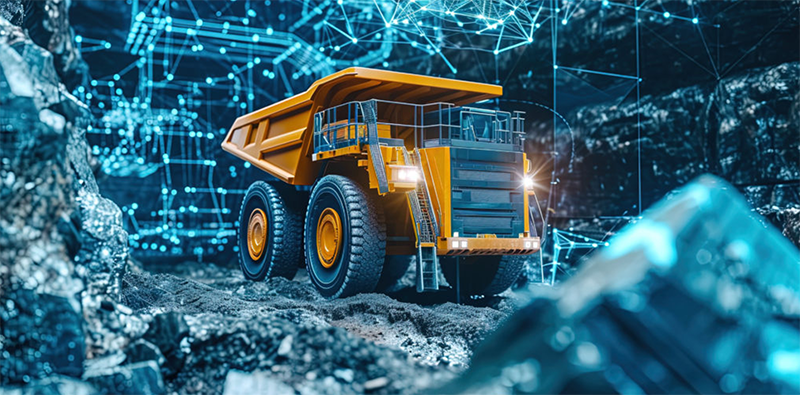 Fig 1: Artificial Intelligence is being increasingly used to explore critical minerals. Stock Image
Where India Stands
It would be incorrect to state that India is absent from this global shift. The recently concluded AI Impact Summit in New Delhi is an example. India’s decision to host a major AI convening, geostrategically a first led by a Global South country, signals not merely technological ambition but strategic intent. It reflects a conscious effort to position India as a solution-provider in emerging technology governance.
Linking AI deployment in critical mineral exploration to this broader diplomatic posture underscores coherence in India’s policy direction: the same digital capabilities being championed globally can and must be institutionalised domestically for mineral strategy. Moreover, the summit opens avenues for South–South cooperation who share common constraints: fragmented geological data, high exploration risks, environmental vulnerabilities, and dependence on a narrow set of mineral processors.
Integrating AI applications with resource governance, data-sharing frameworks, and responsible mining technologies can be built as a pillar of India’s leadership in responsible, technology-driven governance across the Global South.
An illustration of forward thinking can be seen in the case of Rajasthan where multiple mineral deposits have been notified. The Rajasthan State Mineral Exploration Trust announced the use of AI to generate mineral prospectivity to identify areas likely to contain mineral deposits. This falls under the G4 reconnaissance survey stage, often one of the longest phases in the exploration cycle due to the scale of area assessment required before viable targets are identified. Use of AI here shall be useful in determining accuracy and improving the lead times. Similar projects in other states are also being considered.
Policy Prescriptions For India
While the budgetary momentum is towards the downstream operations and one of the biggest roadblocks that India faces is in upstream midstream nexus, the following recommendations are positioned to nudge India towards the next era of mining.
- Embed AI within Exploration License and Composite License Frameworks: AI-led prospectivity modelling and predictive targeting should become standard practice within EL and CL regimes. Government agencies could mandate or incentivise digital prospectivity assessments before block auctions, improving block quality, reducing investor risk, and increasing auction success rates.
- Incentivise AI-to-Drill Pilot Projects: Funding support should prioritise end-to-end pilots where AI outputs are directly validated through drilling and field exploration. Success should be measured in reduced exploration time, lower drilling failure rates, and faster movement toward resource classification.
- Develop Processing-cum-Manufacturing Clusters within Rare Earth Corridors: India’s primary challenge lies in midstream processing. The proposed Rare Earth Corridors must integrate mineral separation, refining and downstream manufacturing within single industrial ecosystems. AI tools should also be deployed to optimise processing efficiency, reduce waste, and improve recovery rates.
- Build a Mining-Technology Innovation Ecosystem: Considering Budget’s strong push towards capacity building, India also has abundant data scientists and remote-sensing expertise, yet incentives and procurement routes that systematically connect these capabilities with exploration outfits are emergent rather than established. The government must consistently encourage partnerships between mining firms, technology start-ups, academic institutions and public agencies through challenge grants and procurement reforms. India’s strong data science ecosystem can overtime become a global supplier of mining analytics solutions.
Strategic Takeaways
India’s critical mineral ambitions will ultimately hinge not only on discovering resources, but on how quickly geological promise converts into commercial production and even geopolitical leverage. As the world rapidly upgrades itself, India’s critical mineral mining ecosystem needs to catch-up or risk being stuck in a loop of multi-layered dependency. If policy keeps pace with practice, India can move from aspirant to actor in the geopolitics of critical minerals, provided it treats AI not as an exotic add-on but as an institutional capability for exploration in the twenty-first century.
(Meheli Roy Choudhury is a research consultant at Chintan Research Foundation. Views are
personal)
About the Author


