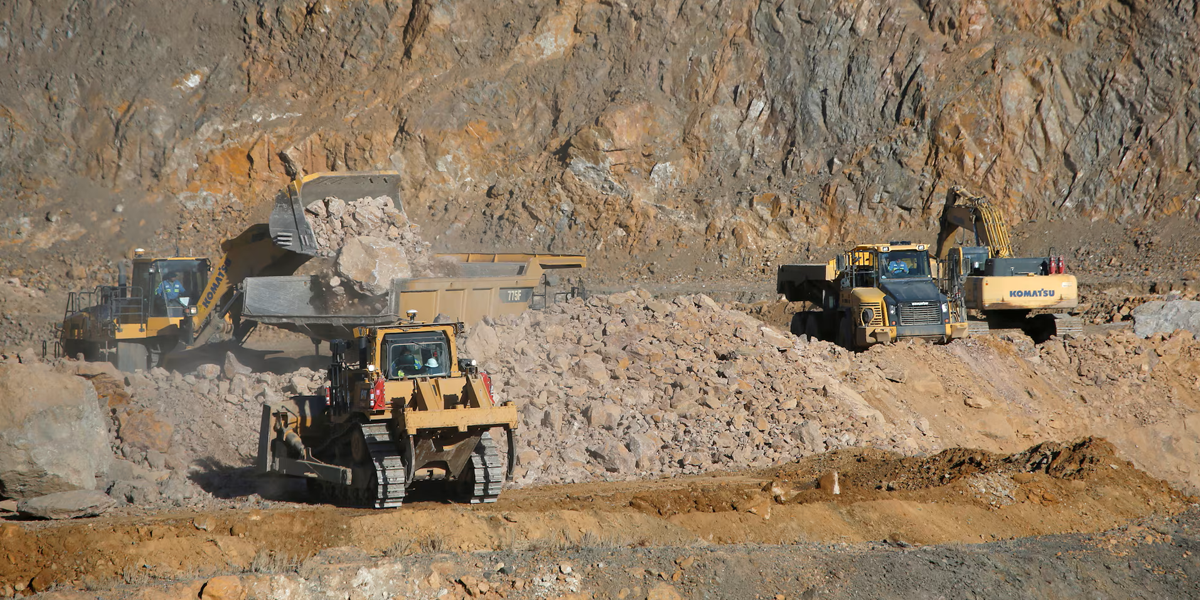
There is fresh urgency to aggressively ramp up domestic production capacities given how central these materials are to nearly every high-growth sector
India's ambitions in clean energy, electronics, and advanced manufacturing have been quietly hostage to its dependence on imports of critical minerals, with China towering as the dominant supplier across the global supply chain. Conflicts in different regions, supply chain vulnerabilities and unilateral trade measures have further put a chokehold on this critical segment.
Realising this, India is increasingly placing critical minerals at the centre of its economic and energy strategy, recognising their importance in clean energy, electric mobility, and advanced manufacturing. New Delhi has accelerated its push to build a self-reliant mineral ecosystem from the ground up, one that reduces exposure to geopolitical chokepoints and secures the raw material backbone of its industrial future.
First, the Indian government in its annual budget, emphasized creating a secure, diversified, and resilient critical minerals environment, a strategy that extends beyond immediate procurement to institution-building and aims at de-risking concentrated global supply chains and the country's current import dependence. It then announced the ambitious critical mineral corridors in key states and exempted basic customs duty on the import of capital goods required for processing of critical minerals.
Now, the country is aggressively ramping up domestic production capacities for critical minerals and rare earths, a move that has taken on fresh urgency given how central these materials are to nearly every high-growth sector. Scaling domestic production is increasingly seen as essential not only for meeting growing demand across key industries, but also for enhancing strategic autonomy in sectors that will define the future of energy and technology.
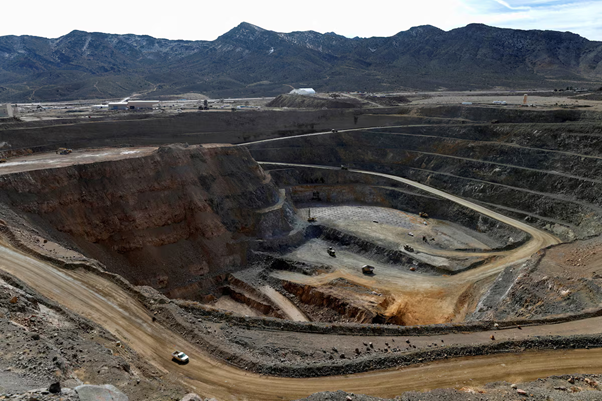 Fig 1: A view of the MP Materials rare earth open-pit mine in Mountain Pass, California, U.S. January 30, 2020. Picture taken January 30, 2020. REUTERS/Steve Marcus/File Photo
Critical Minerals: How Is India Scaling Up Its Domestic Production Capabilities
The Indian government recently said that it has intensified efforts to scale up domestic production of rare earth permanent magnets and accelerate exploration of critical minerals such as lithium, with production capacity targeted to reach 5,000 tonnes by 2030.
Replying to a series of questions during the Question Hour in the Parliament recently, Union Minister of State (Independent Charge) for Science and Technology and Earth Sciences, Dr. Jitendra Singh said that the country’s current requirement of rare earth permanent magnets is about 4,000 tonnes, which is projected to rise to nearly 8,000 tonnes by 2030, highlighting the need for rapid expansion of domestic capabilities.
The government has also launched a pilot project on neodymium-iron-boron permanent magnets, while a samarium-cobalt magnet plant at Visakhapatnam has been made operational with an initial production capacity of 500 tonnes per year. “This capacity will be scaled up to 2,000 tonnes in the next phase and further to 5,000 tonnes by 2030,” a government press release quoting him said.
At the same time, the government is looking to ramp up exploration activities within the country. Preliminary survey activities are already underway and further exploration is expected to begin soon, the minister said, adding that lithium exploration falls under the Ministry of Mines, and similar efforts are also in progress in Reasi district of Jammu and Kashmir.
Lithium and rare earth elements are critical for sectors such as electric vehicles, renewable energy, electronics, defence, aerospace, and space applications, and are poised to play a crucial role in supporting clean energy transition as well as emerging technologies requiring reliable energy systems. “Recent policy measures, including provisions under the Atomic Energy (Amendment) framework, have opened up exploration of several critical minerals to private sector participation, with safeguards in place for strategic resources such as uranium,” he informed.
The government has already announced rare earth corridors in Tamil Nadu, Odisha, Andhra Pradesh, and Kerala to strengthen the domestic ecosystem for processing and value addition.Some regions, including Rajasthan, Gujarat, and Jharkhand, have significant deposits of rock-based minerals which are relatively more complex to explore, the minister said.
“India is steadily strengthening its position in the critical minerals sector with a focus on reducing import dependence, enhancing domestic production, and building a resilient supply chain to support future industrial and technological growth,” he stressed.
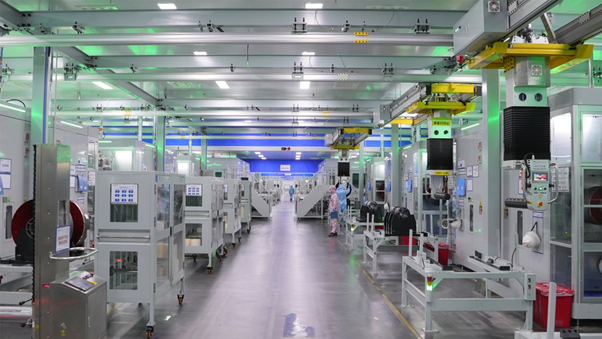 Fig 2: Employees work on the production line of lithium batteries at a workshop in Chi Neng New Energy, Yichang, China April 4, 2025. (Reuters photo)
Other Measures Taken By India To Secure Critical Minerals
India formally joined the Pax Silica coalition, marking a significant milestone in the strengthening of strategic technology and supply chain cooperation between India and the United States.
According to the Indian government, Pax Silica is envisioned as a “strategic coalition of trusted nations committed to securing the ‘silicon stack’, from critical minerals and semiconductor fabrication to advanced AI systems and deployment infrastructure.” The initiative aims to reduce “overconcentration” in global supply chains, prevent “economic coercion”, and ensure that emerging technologies are developed and governed by “open, democratic” societies.
Membership in Pax Silica would allow India to diversify its sourcing, forge valuable partnerships, and elevate its industrial capabilities internationally. Furthermore, India's substantial semiconductor production initiative, valued at approximately Rs 1.6 trillion, offers significant prospects for both global and domestic industry participants.
The government has already announced the establishment of ‘Dedicated Rare Earth Corridors’. This comes in the backdrop of a scheme approved by the Union Cabinet in 2025 to boost the domestic manufacturing of sintered Rare Earth Permanent Magnets (REPM). This is a crucial component for EV traction motors and various other automotive uses. With a total financial outlay of Rs 7,280 crore, the REPM scheme aims to build 6,000 metric tonnes per annum (MTPA) of integrated manufacturing capacity.
India has already joined the Minerals Security Partnership, or MSP, a US-led alliance of 14 developed economies aimed at ensuring uninterrupted supply of critical minerals and rare earth essential for sustained economic growth. Its stated objectives include efforts to strengthen information sharing between partner countries, increase investment in secure critical minerals supply chains and develop recycling technologies.
India has also entered into bilateral agreements with mineral-rich countries such as Australia, Argentina, Zambia, Mozambique, Peru, Zimbabwe, Malawi, and Côte D’Ivoire. India is also part of the Indo-Pacific Economic Framework (IPEF), which includes cooperation on clean energy and critical mineral supply chains.
About the Author


