
In a fragmented world order, the country is prioritising diversification, domestic capability and trusted partnerships to safeguard future mineral needs
Developments over the past several days have underscored a decisive shift in India’s strategic priorities, bringing critical minerals, resilient supply chains and calibrated self-sufficiency at the heart of its economic and energy policy. Critical minerals have not been left as a peripheral concern of the mining ministry, but it has been central to sustainable development and geopolitical positioning.
First, the Indian government in its annual budget, emphasized creating a secure, diversified, and resilient critical minerals ecosystem, a strategy that extends beyond immediate procurement to institution-building and aims at de-risking concentrated global supply chains and the country's current import dependence, particularly from China.
The Union Budget announced the ambitious critical mineral corridors in key states and exempted basic customs duty on the import of capital goods required for processing of critical minerals. It outlined placing India in a position of strength amid an uncertain and fragmented global order, while also preparing the country for the next phase of sustainable growth, in line with its net-zero targets.
More recently India took another crucial step towards its goal of securing critical minerals and achieving self reliance. India formally joined the Pax Silica coalition, marking a significant milestone in the strengthening of strategic technology and supply chain cooperation between India and the United States.
According to the Indian government, Pax Silica is envisioned as a “strategic coalition of trusted nations committed to securing the ‘silicon stack’, from critical minerals and semiconductor fabrication to advanced AI systems and deployment infrastructure.” The initiative aims to reduce “overconcentration” in global supply chains, prevent “economic coercion”, and ensure that emerging technologies are developed and governed by “open, democratic” societies.
India’s decision to join PAX Silica signals recognition that mineral security is foundational to energy security and industrial competitiveness. In a world where fractured trade regimes and strategic rivalry is increasing, participation in cooperative mineral frameworks offers India both insulation against disruption and leverage in shaping the next phase of the clean energy economy.
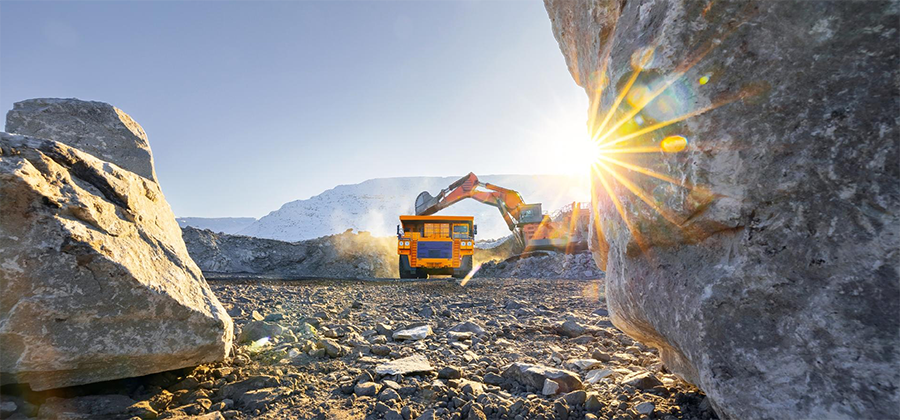 Fig 1: A critical Mineral Mine.
What Does Joining The Pax Silica Initiative Mean for India
According to the US State Department, India brings to Pax Silica a “deep talent pool, processing and refining capacity for critical minerals, investments in AI infrastructure, and an understanding of the importance of trusted technologies.” The membership is likely to provide India access to global markets and capital and boosting domestic manufacturing.
The decision to join the initiative was clear. The bulk of critical mineral processing capacity is concentrated and lies with China. Dependence on one country for its supplies comes with its own set of challenges. Membership in Pax Silica would allow India to diversify its sourcing, forge valuable partnerships, and elevate its industrial capabilities internationally. Furthermore, India's substantial semiconductor production initiative, valued at approximately Rs 1.6 trillion, offers significant prospects for both global and domestic industry participants.
Apart from positioning India strategically, the decision to join the Pax Silica initiative should not be seen in isolation. The government has already announced the establishment of ‘Dedicated Rare Earth Corridors’ to support the mineral-rich states of Odisha, Kerala, Andhra Pradesh and Tamil Nadu to promote mining, processing, research and manufacturing.
This announcement came in the backdrop of a scheme approved by the Union Cabinet in 2025 to boost the domestic manufacturing of sintered Rare Earth Permanent Magnets (REPM). This is a crucial component for EV traction motors and various other automotive uses.
With a total financial outlay of Rs 7,280 crore, the REPM scheme aims to build 6,000 metric tonnes per annum (MTPA) of integrated manufacturing capacity. This capacity will encompass the entire value chain, from rare earth oxides to the production of finished magnets. This apart, to bolster the ecosystem, the government has announced the launch the India Semiconductor Mission (ISM) 2.0 to produce equipment and materials, design full stack Indian IP, and fortify supply chains with focus on industry led research and training centres for developing technology and skilled workforce.
Other Initiatives Taken By India To Secure Critical Minerals
India has already joined the Minerals Security Partnership, or MSP, a US-led alliance of 14 developed economies aimed at ensuring uninterrupted supply of critical minerals and rare earth essential for sustained economic growth. Its stated objectives include efforts to strengthen information sharing between partner countries, increase investment in secure critical minerals supply chains and develop recycling technologies.
Through MSP, India will gain access to a wider range of critical minerals. Nations, part of the initiative, are committed to sharing technology and expertise in the mining and processing of critical minerals, helping India develop its own mining and processing capabilities. The partnership is also likely to bring in large investments into India.
Apart from this, India has also entered into bilateral agreements with mineral-rich countries such as Australia, Argentina, Zambia, Mozambique, Peru, Zimbabwe, Malawi, and Côte D’Ivoire. India is also part of the Indo-Pacific Economic Framework (IPEF), which includes cooperation on clean energy and critical mineral supply chains, providing India with opportunities to collaborate on technology, investment, and sustainable mining practices, reducing the risks of supply disruptions.
About the Author


